
Related videos:
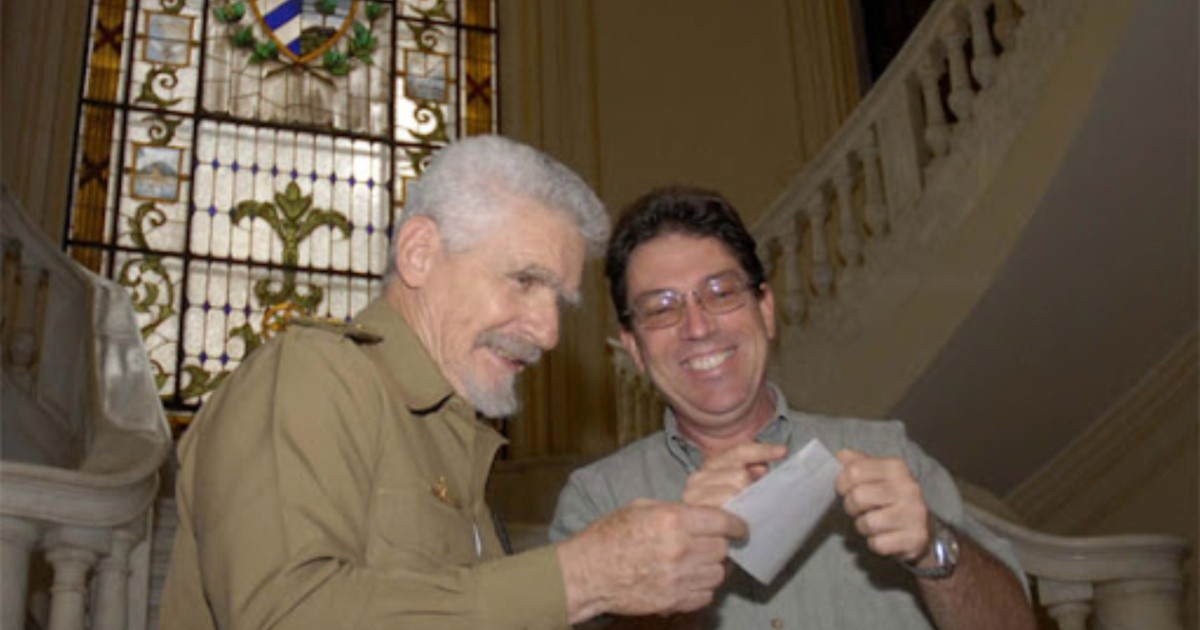
The Cuban Foreign Minister Bruno Rodríguez Parrilla posted a message of condolences on his X account this Sunday for the death of Ramiro Valdés Menéndez, who passed away at the age of 94, and the response from Cubans on social media was a deluge of rejection that starkly contrasted with the official tone of the tribute.
In his post on X, Rodríguez described Valdés as "Hero of Moncada, Granma, the Sierra Maestra, and the revolutionary process" and stated that "his commitment to the Homeland, to Fidel, and to Raúl made him one of the most selfless, prominent, and recognized leaders of the Cuban Revolution."
The post accumulated 45 comments, and most of the visible responses were not expressions of grief, but open hostility toward the regime and Valdés himself.
"That's a pity, he won't go to jail, but he did see how socialism failed," wrote one of the users.
Another responded with a parody of the official language itself: "We feel deep sorrow for not seeing you imprisoned. Hopefully, we will see you instead."
A third comment was more direct: "Ramiro Valdés has just died. That's great, I'm glad he's dead. He can no longer hurt innocent people!"
A fourth user warned the chancellor: "One less snake. Pack your bags and run while you can. You will be judged and condemned as a vile accomplice of your satanic masters."
The popular reaction reflects the widespread perception among opponents of the regime that Valdés was one of the main architects of the Cuban repressive apparatus, as founder of the MININT and minister of the Interior during two terms.
Born in Artemisa on April 28, 1932, Valdés participated in the assault on the Moncada Barracks in 1953, was part of the Granma yacht expedition in 1956, and fought in the Sierra Maestra. After the triumph of the Revolution, he built and directed the State Security apparatus, the institution responsible for the surveillance and political repression of the population for over six decades.
His name resurfaced strongly after the protests of July 11, 2021, when he was accused of having awarded medals to officials of the National Revolutionary Police who participated in the repression of those demonstrations in Palma Soriano, Santiago de Cuba. The U.S. Department of the Treasury sanctioned the PNR and two of its officials for those actions.
In recent months, Valdés had disappeared from the public stage. On June 6, 2026, Díaz-Canel paid tribute to Valdés in his absence, which was interpreted as a sign of his deteriorating health.
It was Díaz-Canel himself who announced his death this Sunday, while the MININT bid farewell to him as the "founder of the state's security apparatus." For the opposition and the Cuban diaspora, however, Valdés embodied decades of systematic repression, and his death brought not grief but relief to many Cubans.
Filed under: