
Related videos:
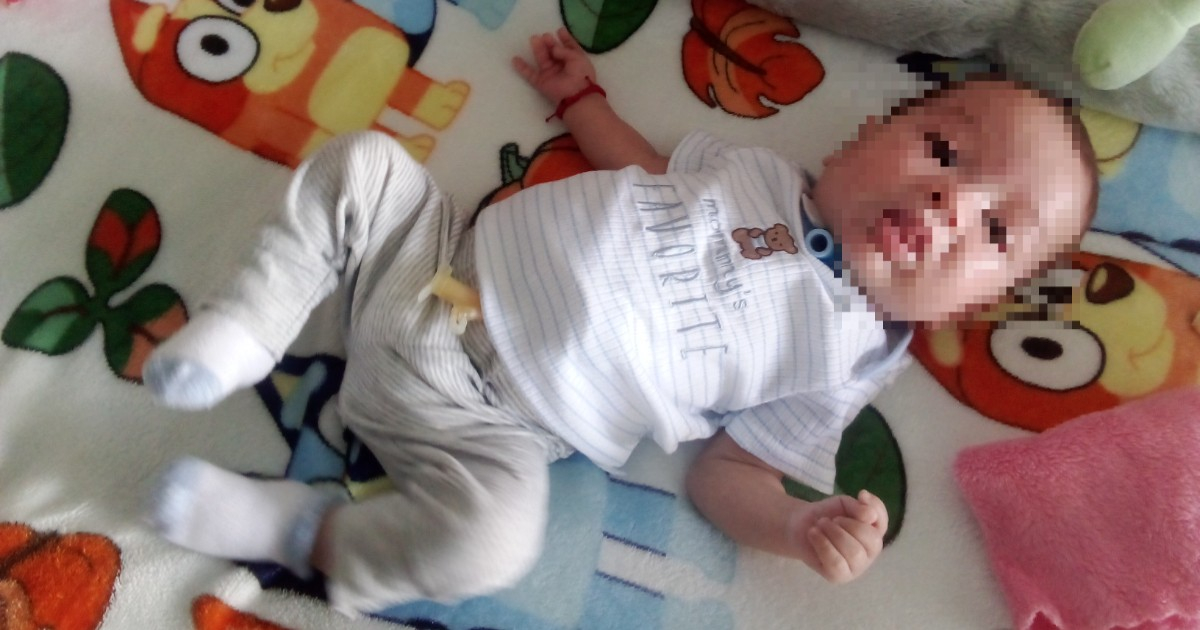
A mother residing in Santa Clara, Villa Clara, reports that her seven-month-old son has been hospitalized since the day he was born at the José Luis Miranda Provincial Pediatric Hospital due to what she describes as medical negligence that occurred during childbirth.
"It was total and brutal negligence what was done to us, a child who could be healthy and at home," the woman wrote directly to the editorial office of CiberCuba.
He reported that the baby was diagnosed with cerebral palsy, epilepsy that is difficult to control, and grade two hypoxic-ischemic encephalopathy, and that he also has a tracheostomy and a gastrostomy.
Neonatal hypoxic-ischemic encephalopathy is a brain injury caused by a lack of oxygen during or immediately after childbirth; in its moderate form, it can lead to permanent neurological consequences like those exhibited by this child, and its occurrence is often associated with reports of obstetric negligence.
To authorize home discharge, the doctors at the center require the mother to have equipment that is virtually unattainable in the current Cuban context: a photovoltaic kit of solar panels—essential due to the constant blackouts—air conditioning, a vacuum cleaner for managing secretions, and an emergency oxygen tank.
"The doctors tell me that in order to take him home, I need to have a photovoltaic kit of solar panels, as he cannot be without power due to his underlying condition," explained the mother, who added that any respiratory infection, even a common cold, could destabilize the child and send him to intensive care on a ventilator.
In addition to the demands for equipment, there is a lack of basic supplies within the hospital itself: "The hospital doesn't even provide my son's medications, and no one asks anything," he reported.
The baby's gastrostomy tube, which urgently needs to be replaced due to its deterioration, was also not provided by the center, even though the mother points out that the same hospital did supply it to another patient in similar conditions.
It was only thanks to the solidarity of an individual that he/she was able to obtain it.
This situation is part of a healthcare crisis affecting pediatric hospitals across Cuba: in July 2025, the Minister of Public Health, José Ángel Portal Miranda, acknowledged before the National Assembly that the country had only 30% of the essential medicines available.
In April 2026, a baby died in Granma after not receiving an essential antibiotic in time, and in May it was reported that more than 15 newborns had died in Camagüey due to deplorable sanitary conditions.
Similarly, in October 2025, a mother in Holguín reported a similar situation: her son with hypoxic ischemic encephalopathy and epilepsy was admitted to the "Octavio de la Concepción de la Pedraja" Pediatric Hospital, lacking adequate conditions to manage his convulsive crises.
Without any income and with a two-year-old daughter to care for, the mother also demands that Social Welfare acknowledges her entitlement to a pension as a caregiver mother, a right that is theoretically supported by the Decree-Law 121/2025, which recognizes the care of children with severe and irreversible disabilities as compensated work.
However, the gap between the norm and its practical application is a recurring problem in Cuba: the mother claims to have approached all possible instances without obtaining a concrete response.
"We can't live on peas and pumpkin any longer, and there's hardly anywhere left to get them," the woman summarized before concluding her complaint with a direct appeal: "Enough with all the lies and injustices; I hope to get some response, this is unbearable."
Filed under: