
Related videos:
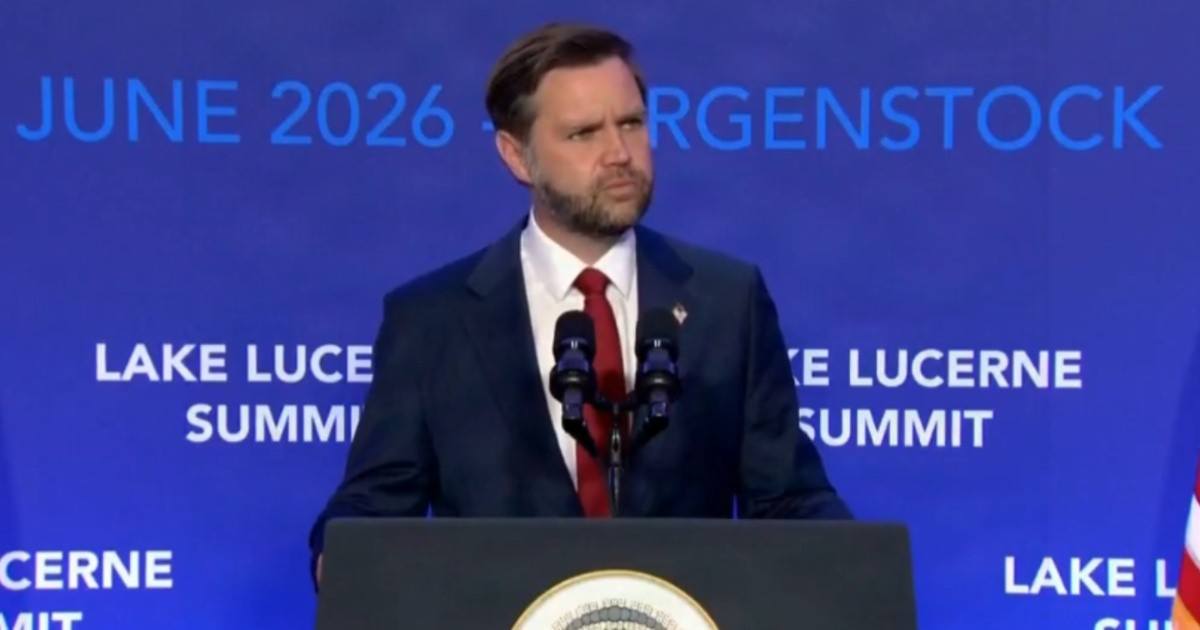
The Vice President of the United States, JD Vance, stated this Monday from Bürgenstock, Switzerland, that the Strait of Hormuz "is open" and that oil and gas prices have decreased following the negotiations with Iran held on Sunday.
"We have seen oil and gas prices drop, millions and millions of barrels of crude oil and natural gas circulating through the Strait of Hormuz that weren't before," Vance stated before the media.
The official noted that the discussions on Sunday yielded "very good progress" and that a "very solid foundation" has been established for a final agreement between Washington and Tehran.
As a result of these negotiations, the foreign ministries of Pakistan and Qatar —mediating countries— confirmed the establishment of a High-Level Committee responsible for politically overseeing the mediation, along with a 60-day roadmap to reach a final agreement.
The Iranian delegation left Switzerland for Tehran after a busy day, while the technical teams from both countries will continue discussions throughout the week on the implementation mechanisms of the memorandum of understanding.
Vance also announced that Iran has accepted the return of inspectors from the International Atomic Energy Agency (IAEA) to the country, a point he described as a historic milestone.
"Iran has agreed to invite IAEA inspectors back to their country. This is an important milestone for the American people and the first step towards permanent denuclearization, that is, the definitive end of the nuclear weapons program in Iran," the vice president stated.
Since the attacks by Israel and the United States on Iranian nuclear facilities in June 2025, Tehran had barred access to inspectors to verify the status of those facilities and the whereabouts of around 440 kilograms of highly enriched uranium with potential civil and military use.
A second joint offensive by Israel and the United States on February 28, 2026, further exacerbated the situation, prompting Iran to partially block the Strait of Hormuz—a route through which approximately 25% of the world's oil transits—and causing the price of Brent to exceed 126 dollars per barrel.
The United States responded with a naval blockade starting in April 2026 and launched the "Operation Freedom" to escort merchant ships in the area.
On June 19, the Trump administration lifted the maritime blockade, and Iran reopened the strait, paving the way for the Bürgenstock negotiations.
Vance also emphasized that one of the central objectives of the process is to create "mechanisms" to maintain the ceasefire and manage potential future incidents, so that "if there is another attack, if Hezbollah strikes or Israel responds," there is "communication to know how to make the region safer."
The vice president described the overall progress achieved in Switzerland as "great advances" that "everyone" should "celebrate," marking the most concrete round of negotiations since the conflict began over a year ago.
Filed under: