
Related videos:
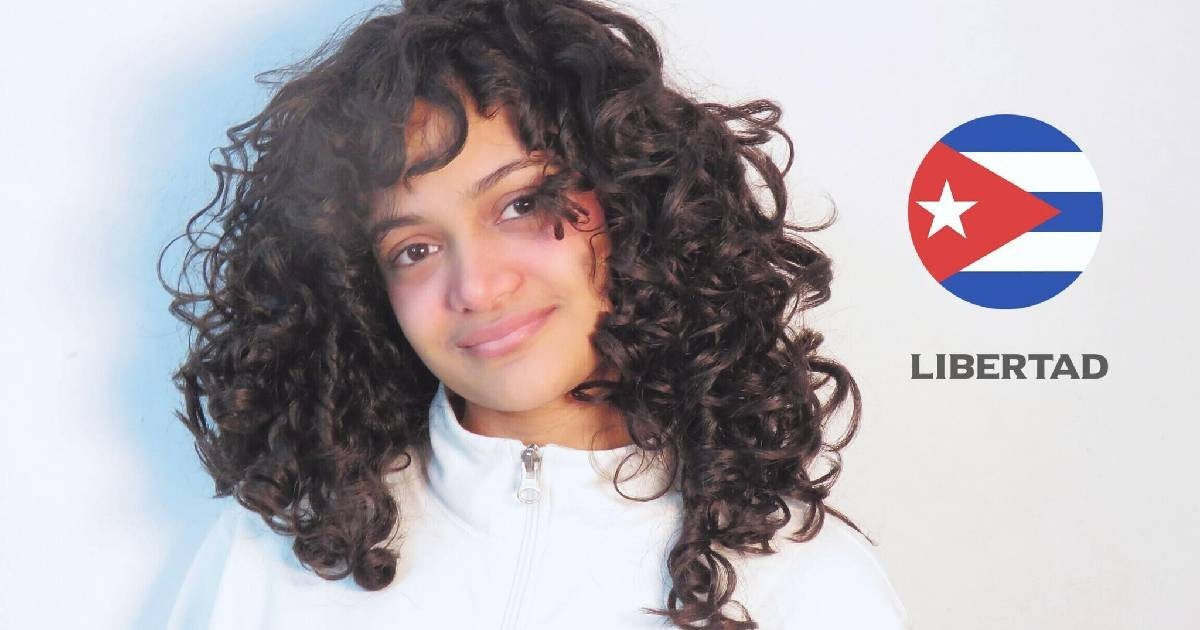
The Cuban activist and influencer Anna Bensi posted a message on her X account in which she reflected on the pride of being Cuban, national identity, and the burden of living under a dictatorship, in a post that generated a wide response among her followers.
"Sometimes I wonder why some people don't feel proud to be Cuban. I don't judge them. Maybe they are hurting. Cuba hurts a lot every day," wrote Bensi, 21, a resident of Alamar, Havana, who has been under house arrest since March 25.
Instead of pointing fingers at those who have lost their connection to their identity, the young woman chose understanding and pointed directly to the regime as the responsible party.
"There is a dictatorship that destroys families, values, traditions, customs, hopes, and dreams. And it is precisely because of this dictatorship that we have so much to learn and change as a people," he elaborated.
However, the tone of the message was not one of defeat but of reclamation.
Bensi described Cuban identity as something that transcends one's place of birth: "To be Cuban is to carry Cuba in your heart, even when you are far from it. We Cubans are memories, a way of speaking, feeling, and loving."
The central point of his publication was a distinction he frequently repeats in his public statements: "THE DICTATORSHIP IS NOT CUBA! We are Cuba, each one of us and all those who dream of seeing this island FREE."
The message concluded with a call for the freedom of political prisoners and the hashtags #JusticeIsComing and #GodBlessCuba.
The context from which Bensi writes makes his words particularly meaningful.
Since March 25, she and her mother Caridad "Cary" Silvente have been placed under house arrest imposed by the Ministry of the Interior, after the young woman recorded and spread on social media the moment an MININT agent delivered a summons at her home.
She was charged as a co-author of the crime of "acts against personal and family privacy," under Article 393 of the Cuban Penal Code, with a penalty that can range from three to five years in prison.
Despite those restrictions, Bensi has continued to publish.
In April, intelligence agents tried to recruit her, offering support for her music career in exchange for silence. Her response was emphatic: "I will never work for a dictatorship."
Her case has gained international attention.
The United States Special Envoy for Cuba, Mike Hammer, visited her at her home in Alamar and described her as "brave," while Secretary of State Marco Rubio sent his regards through him. Congressman Mario Díaz-Balart called her a "heroine" and Amnesty International documented her situation.
Artistically, he released the song "Mi tierra" in March, featuring Cuban Christian artist Dayron Gavilán. The song was included by Billboard magazine in its list of recommended new Latin music, described as "a melancholic folk song, accompanied by an emotive guitar and a powerful cajón rhythm."
A video of hers published in June about resignation in the face of the Cuban crisis surpassed 317,000 views on Facebook, confirming the reach of her voice even from house arrest.
"We were not born to endure, we were born to prosper," Bensi stated in another recent post, encapsulating the conviction that underlies each of his messages from Havana.
Filed under: