
Related videos:
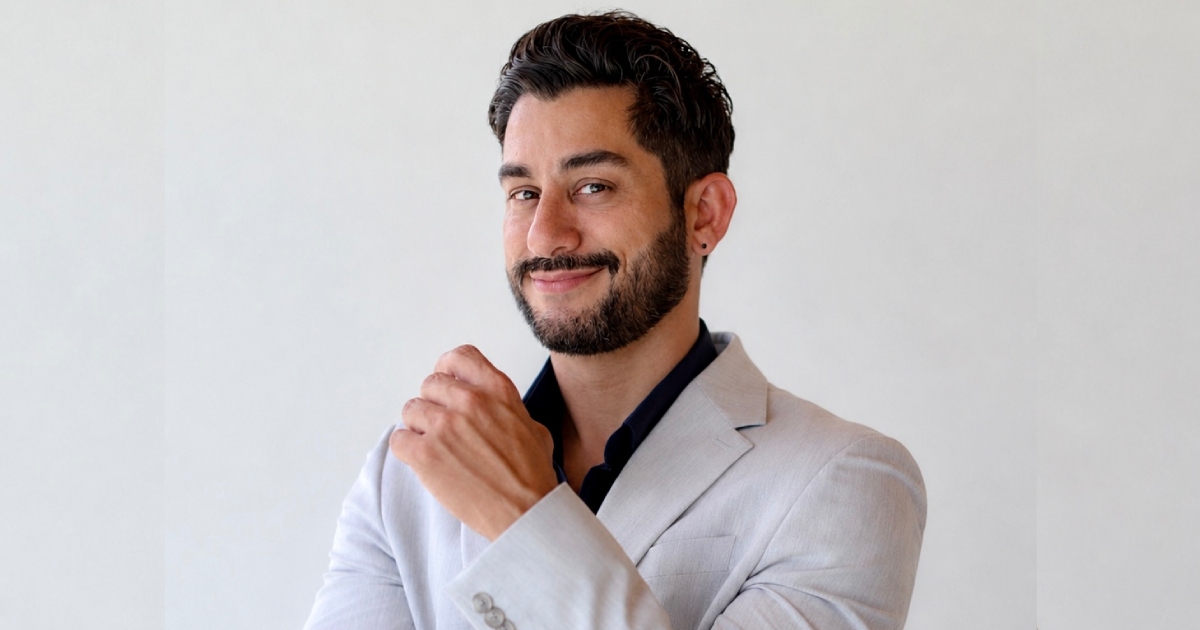
When I learned about the existence of Rubens Riol, his connection to Princeton, and his work as a film critic, I became curious to learn more about his story. Additionally, Princeton is part of the Ivy League, a select group of eight universities in the northeast of the United States that are among the most prestigious in the world, which includes institutions like Harvard, Yale, and Columbia.
On June 26, this writer will return to Miami to present The Hedgehog's Ambush: Juggling and Certainties of a Film Critic, a book published in 2025 by the Casa Vacía publishing house.
It's a pleasure to be able to chat with you up close and share a bit of your day-to-day life, Rubens. I know you were born in Pinar del Río and now live in Philadelphia, United States. What do you bring us with this book?
Julita, the pleasure is mine. Who would have thought that you could announce the launch of my book and share with you and the readers of CiberCuba part of my experiences?
Well, let me tell you. I plan to share with the public a work that condenses 20 years of reflection on Cuban and world cinema. Rather than providing definitive answers, this book aims to contribute to the education of the Hispanic audience in South Florida in understanding cinematic language and to invite reflection on the various roles a film critic can play today.
What is your relationship with cinema, did it come to you from a young age?
I discovered cinema from a young age. My grandmother worked at the Avellaneda Theater in Consolación del Sur, a small tobacco village in Pinar del Río. I spent my afternoons there after school.
My grandmother even organized cleaning marathons on weekends with the neighborhood kids, as we enjoyed sliding down the granite hallways while carrying endless buckets of water.
When I was 12 years old, they opened an Interest Circle where we were taught to project and rewind 35mm films. Watching movies on the big screen had a hypnotic effect.
There I watched Fresa y Chocolate, by Titón and Tabío, and Carne trémula, by Almodóvar, among many others that were prohibited for my age and that I watched from the booth. That was my sentimental education, can you imagine? From there, my passion for cinema was also born.
And how did you go from being an innocent spectator to becoming a film critic?
In the year 2000, when I started my pre-university studies, my first book on film criticism came into my hands: Beyond the Lantern, by my friend and fellow countryman Frank Padrón.
From that initial motivation arose the idea of studying Art History. Later, I specialized in film analysis with a thesis, still unpublished, on nudity in Cuban cinema, a fun and controversial topic.
Did you manage to pursue that profession and make a living from it in Cuba?
Well, actually, I believe that no one could live solely from film criticism, as the print or digital media, both in Cuba and abroad, do not pay enough for it to be considered a stable profession.
In my case, after graduating from the University of Havana, I taught Art History for six years at the San Gerónimo University College in Old Havana. In addition to teaching my classes to workers from the Historic Center, I founded two film-debate spaces with the support of Eusebio Leal, who was our dean.
My work as a teacher barely covered my living expenses, but I always found time to publish in magazines, newspapers, and websites. Although the money from those contributions took a while to arrive, it saved me on multiple occasions.
Moreover, I was the compiler of The Caress of the Whip (ICAIC Editions 2016), a tribute book to Rufo Caballero, an eminent Cuban cultural critic of recent decades, who was my teacher and mentor.
I published the anthology The Burial of the Slogans (Hypermedia Editorial 2018), dedicated to exploring the tensions between Cuban art and politics. That same year, I made my debut in children's literature with a collection of stories, thereby expanding my work to other genres and audiences.
You currently live in Philadelphia. How did that change affect your life and your career?
In 2015, I emigrated alone to the United States. That year was the hardest, as I did not have immediate family in Miami. I lived in the houses of friends and distant relatives. However, my first job contract was as a journalist for El Nuevo Herald, just three months after my arrival. Soon after, I started working as a clerk in a bookstore and studied English in the mornings.
I wrote my articles and interviews for the newspaper at night. Later, I was assigned a weekly column where I promoted movie premieres in Miami, and that’s how I got to interview personalities like Richard Gere, Monica Bellucci, Salma Hayek, Rossy de Palma, and Fernando Pérez.
You will understand that for someone who grew up in a neighborhood cinema in the heart of Cuba, the opportunity to converse with those celebrities felt like achieving the American dream.
My story seemed to close in a perfect circle when, in 2017, I accepted a position as the administrator of the Tower Theater on Calle Ocho, a local cinema managed for many years by Orlando Rojas, the director of Una novia para David. Truly, I believe I have been very lucky.
My happiness at this moment is complemented by Max, my boyfriend, who will be coming to Miami to accompany me for the book presentation. He is a very attractive and talented young man. Although he was a wrestling champion in the past, he is now dedicated to the world of entertainment and acting. Recently, he participated as an extra in the horror film A Quiet Place.
How has distance influenced your family life? Do you have the opportunity to travel to Cuba frequently?
I go less often now. The last time I was in Cuba was in the summer of 2024. The situation has become very difficult. On the other hand, my family is small. In 2025, I was able to bring my mother to the United States through the family reunification process, and she now lives with me in Philadelphia. My sister resides in Canada, while my uncle and his wife live in Miami.
Thanks to their support and that of my friends, I can now present my book in Miami, a city where I lived for six years and to which I have very special memories, just as I am about to finish my doctorate.
I just learned that you are completing your doctorate at Princeton University. What are you studying there?
I am a doctoral candidate in the Department of Spanish and Portuguese, where I specialize in Latin American Studies. My research examines bodily friction as a consequence of mass politics in Cuban culture since 1959. In other words, I analyze diverse phenomena such as mobilizations, parades, acts of repudiation, protests, and queues.
At Princeton, I teach Spanish and Film to American students. The doctoral program will help me become a professor of Caribbean Language and Culture, and it will allow me to continue researching the topics I am passionate about.
Would you say that your book is designed solely for an academic audience?
No. While some of the topics addressed in the book may interest the academic realm, most of the texts were written for a general audience. The language is very accessible. Furthermore, many of the reflections are influenced by my experience as a Cuban immigrant in the United States, an experience that I believe many Hispanic readers will be able to relate to.
The anthology includes, for example, reviews of recent films, analyses of LGBTQ+ cinema, reports on exhibitions and festivals, interviews with actors and filmmakers from Cuba, Latin America, and Spain—among them some Hollywood celebrities—as well as personal stories and reflections related to two film clubs and a blog.
What does that suggestive title mean: The Hedgehog's Ambush. Juggling and Certainties of a Film Critic...?
The “hedgehog ambush” that I chose as the title serves as a metaphor that encapsulates the role of the critic as strategist, spiky demon, gentle intermediary, and invisible executioner, whose ultimate mission is to translate cinematic language and its narrative essence, even if they cannot help but throw an occasional fiery dart as a thrust against audiovisual mediocrity when necessary. Each film is a unique universe. Knowing how, when, and in what way to approach it is a weapon that arises from study, experience, and intuition.
I am almost certain that many readers will enjoy finding some of their favorite actors and films that have accompanied or left a mark on them in these pages.
I take this opportunity provided by CiberCuba to inform you that the presentation of my book will take place at the Latin Art Core Gallery, located at 1646 SW 8th St., Miami, FL 33135, on Friday, June 26 at 7:00 p.m. It will be a pleasure to share that moment with the readers and friends who wish to join me.
Conversing with Rubens Riol is to discover the story of a Cuban who transformed the passion born in a small-town cinema into an intellectual vocation capable of crossing borders.
In The Hedgehog's Ambush: Juggling and Certainties of a Film Critic, Riol not only shares two decades of film analysis but also fragments of a life shaped by emigration, teaching, research, and a commitment to art.
We thank you for your time in sharing memories, challenges, and dreams, and we wish you the greatest success in the presentation of your book, in the completion of your doctorate, and in your new projects.
Filed under: