
Related videos:
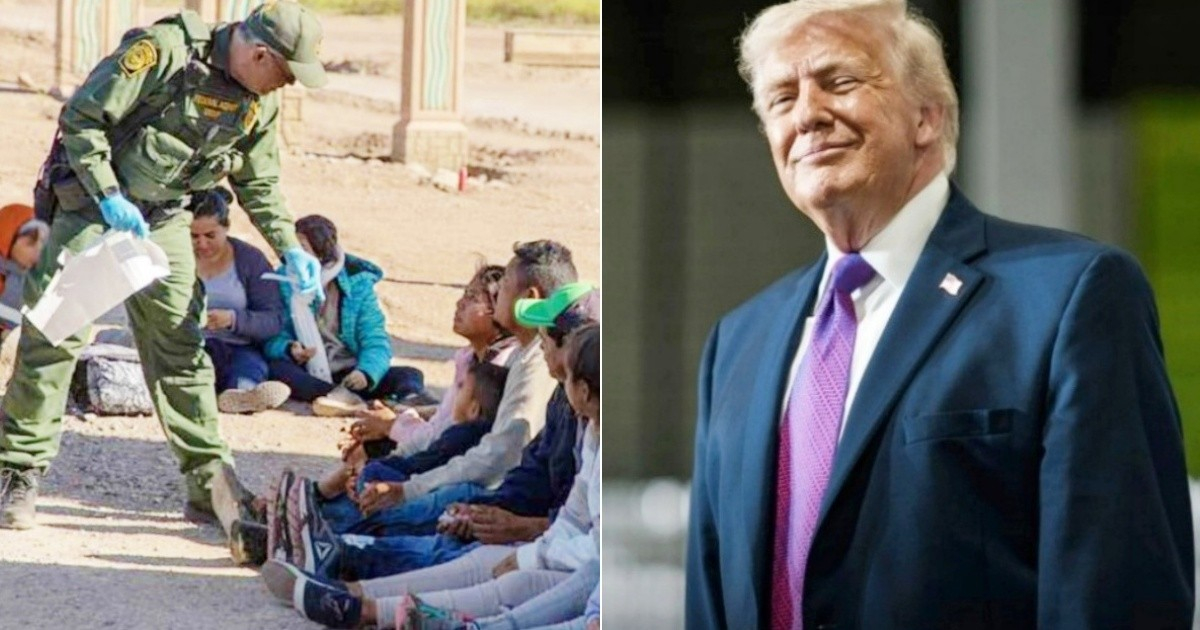
The Supreme Court of the United States issued a ruling this Thursday that allows the government of Donald Trump to reject asylum seekers at the border with Mexico without processing their applications, in a decision that strengthens the most restrictive immigration agenda of the last few decades.
The court resolved the case Noem v. Al Otro Lado with six votes in favor and three against, with the conservative majority supporting the Executive and the three liberal justices voting in dissent.
The legal key: What does it mean to "arrive" in the United States?
The legal debate revolved around a specific question: Has a migrant detained on the Mexican side of the border "arrived" in U.S. territory according to the Immigration and Nationality Act?
The majority's response was negative.
The magistrate Samuel Alito, author of the majority opinion, argued that "in ordinary language, no one would say that a person 'arrives at' a place - for example, a house, a city, or a country - before that person enters that place."
With that reasoning, the court determined that migrants detained in Mexico have not activated the legal rights recognized by federal law for those who "arrive" in the country, allowing authorities to indefinitely refuse to process their requests.
The policy of “metering” and its history
The ruling supports the practice known as metering or access control, which limits the number of asylum seekers who can present their cases each day at border crossings.
This policy was first implemented in 2016 under the Obama administration in response to a surge of Haitian migrants at the San Diego-Tijuana crossing, and it was formalized and extended to the entire southern border during Trump's first term in 2018.
President Joe Biden repealed it in 2021, and that year a federal judge in California declared it illegal.
The Ninth Circuit Court of Appeals confirmed that decision in October 2024, but the Supreme Court agreed to review the case and this Thursday overturned that ruling.
Human rights defenders pointed out that when this policy was in effect, it created a humanitarian crisis with thousands of people staying in makeshift shelters waiting for their turn.
Reactions: Official Celebration and Alarm from the Plaintiffs
James Percival, General Counsel of the Department of Homeland Security, celebrated the decision stating that “it opens an important tool to continue securing our southern border.”
Melissa Crow, attorney for the plaintiffs -the organization Al Otro Lado, which initiated the litigation in 2017-, warned that the ruling "should sound the alarm for anyone concerned about human rights and the rule of law"; and that "it suggests that the president can unilaterally overturn decades of established law and trample on people's legal rights if it serves his political agenda."
The dissent of Justice Sonia Sotomayor: "More people will die"
The judge Sonia Sotomayor read from the bench a detailed summary of her dissenting opinion, accompanied by Elena Kagan and Ketanji Brown Jackson, signaling strong opposition.
“More people will die. More people will attempt to cross the border illegally, and some will succeed while others will not. More people will be forced to walk along the border in dangerous conditions, seeking a port that will inspect them,” the magistrate warned.
In an unusual move, Alito responded from the bench to Sotomayor's criticisms, noting that he would have included more arguments in his summary had he known in advance.
A second blow that strikes Haitians and Syrians
This Thursday, the Court issued a second 6-3 ruling, also written by Alito, which allows the Trump administration to revoke Temporary Protected Status (TPS) for approximately 350,000 Haitians and 6,100 Syrians, leaving them vulnerable to deportation.
Both decisions reinforce the judicial support for Trump's immigration policy, which still has a pending case before the Court regarding birthright citizenship that could be decided before the session ends.
Filed under: