
Related videos:
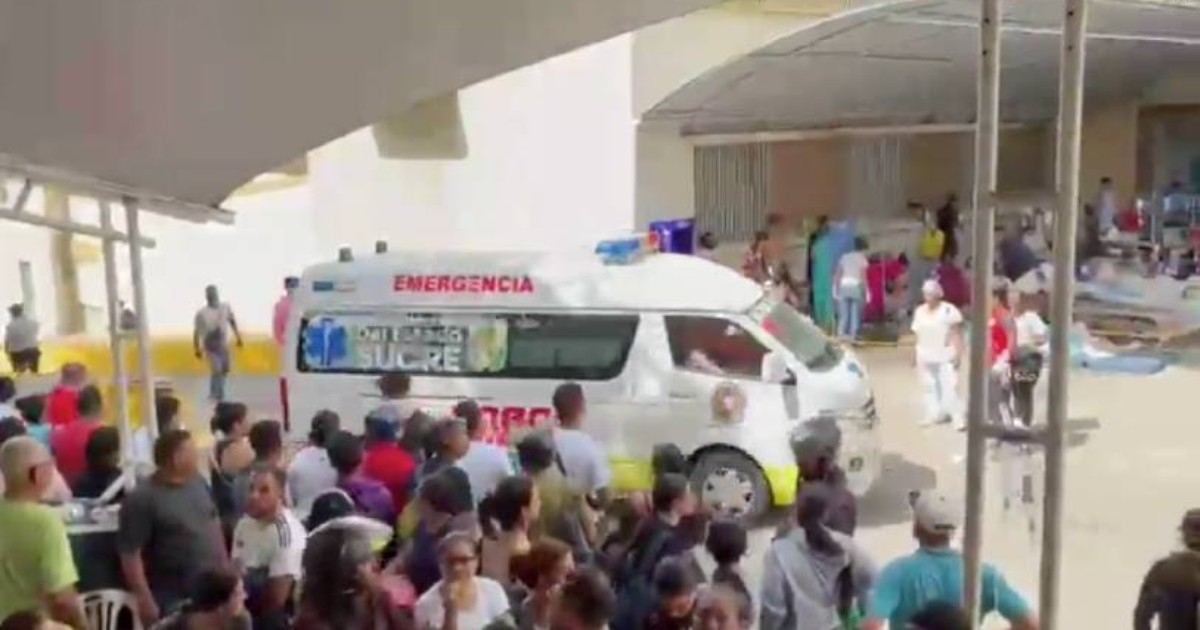
The Dr. José María Vargas Regional General Hospital in La Guaira exceeded its capacity on Thursday following the devastating earthquakes that shook Venezuela, forcing the triage to be moved to the parking lot of the health center to accommodate the influx of patients that kept arriving.
Images and videos circulated on social media show the extent of the hospital collapse. “This is the situation here in La Guaira, at the José María Vargas hospital. This is how triage looks.”
This is the hospital parking lot. And over there in the stands, we have patients with fewer injuries," described journalist Cristian Crespo in a video posted from the scene.
According to the Venezuelan media TalCual from the hospital emergency room, the health center was managing at least 17 lists with the names of injured people being treated, while ambulances continued to arrive with new patients at regular intervals.
The hospital collapse is a direct consequence of the two earthquakes of magnitudes 7.2 and 7.5 that struck Venezuela on Wednesday at 6:04 PM local time, occurring just 39 seconds apart, with the epicenter in the state of Yaracuy and a shallow depth of between 10 and 13 kilometers.
The state of La Guaira was declared a disaster zone and experienced the most severe damage. In addition to José María Vargas, the Periférico Hospital of Pariata, also in La Guaira, suffered the collapse of a wall.
In total, eight hospitals were affected by the seismic activity across the country, along with 20 shopping centers and 250 damaged buildings.
The Venezuelan hospital system had been suffering from severe deterioration for years before the catastrophe: shortages of medications, outdated equipment, a massive exodus of medical personnel, and lack of infrastructure maintenance.
That pre-existing structural fragility worsened the response to the emergency, causing health centers to quickly become overwhelmed by the demand.
The death toll has continued to rise throughout this Thursday. Jorge Rodríguez, president of the National Assembly, updated the figures to 188 dead, 1,520 injured, 157 missing, and 200 people trapped under rubble, with 2,927 families affected.
The United States Geological Survey (USGS) issued a Red Alert —its highest level— and estimated with a 42% probability that the final number of fatalities could range between 10,000 and 100,000 people, which would place this event among the worst natural disasters in the recent history of Latin America.
The Venezuelan government declared a constitutional state of emergency and suspended classes, the supply of gas, and services at Maiquetía Airport, the Caracas Metro, and the Tuy Valley Railway. The acting president, Delcy Rodríguez, made a dramatic call for doctors and nurses to immediately report to their workplaces.
The earthquakes on Wednesday were classified as the strongest recorded in Venezuela since 1900, with over 137 aftershocks counted as of this Thursday. The Trump administration announced the immediate deployment of search, rescue, and humanitarian assistance teams to support the affected population.
Filed under: