
Related videos:
More than 800,000 vessels have passed through the Panama Canal since Cuba's expulsion from the Organization of American States (OAS) to date. This event occurred in Punta del Este, Uruguay. The dictator Fidel Castro stated as early as 1960 that "with the OAS or without it, we will win the fight."
I had not yet been born when Carlos Puebla released his song "The OAS is a Laughing Matter." "How can I not laugh at the OAS, if it is such an ugly thing…" said the groveling propagandist of the communist dictatorship.
Raúl Castro and Díaz-Canel have maintained the same policy and critical statements towards the OAS. Their Sandinista and Chavista allies have followed suit. Any organization or forum that defends freedom, democracy, and human rights is too uncomfortable for the dictatorships of Cuba, Venezuela, and Nicaragua.
If something has changed since Cuba's departure from the OAS to today, it is that in those years, Fidel Castro's regime was on the rise, consolidating itself with the support of the Soviet empire, and today the dictatorship under the leadership of his brother Raúl and family is collapsing at an accelerated pace and has fewer and fewer friends.
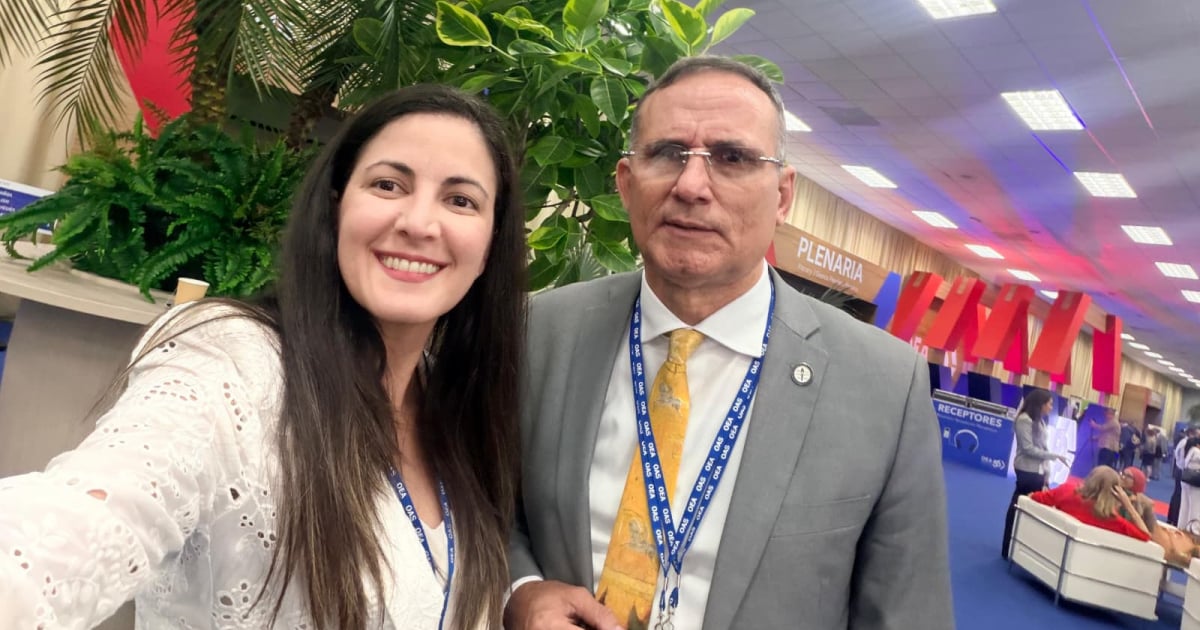
The 56th General Assembly of the OAS has just concluded in Panama, with the lack of freedom, democracy, and serious human rights violations in Cuba, Venezuela, and Nicaragua at the center of the discussion.
The main statement came from the Secretary General, Albert Ramdin. At the opening on June 22, he asserted that the OAS must expand the democratic space where it is non-existent or insufficient, explicitly mentioning Cuba, Nicaragua, and Venezuela. Two days later, the General Secretariat called for the restoration of fully democratic systems in the three countries, expressed concern for political prisoners, and demanded their urgent and unconditional release.
At that inauguration, Panamanian President José Raúl Mulino lamented the deterioration of human rights in Nicaragua, expressed hope that Cuba would achieve full democracy, and called for a swift transition in Venezuela, with free and monitored elections. On June 23, during the dialogue between member states and permanent observers, the European Union demanded the unconditional release of all political prisoners in Caracas; condemned the situation in Nicaragua, including the death in custody of Brooklyn Rivera, and urged Cuba to respect the rights of its citizens and address its humanitarian crisis.
In the first plenary session, U.S. Under Secretary of State Christopher Landau urged the OAS for results, not just statements. He described Cuba as a failed and authoritarian state, recalled the absence of free elections for decades, and demanded zero tolerance for the totalitarian regimes in Cuba and Nicaragua. Costa Rican Foreign Minister Manuel Tovar condemned the Nicaraguan repression and
The Panamanian and international coverage reflected the significance of these claims and the gap between diplomatic language and reality. La Prensa and La Estrella de Panamá detailed the interventions from Mulino, Landau, and the European Union; EFE reported on the call from the General Secretariat; and El País noted that the texts refrained from declaring the regimes illegitimate. This caution confirms that the issue is not a lack of diagnoses, but rather a deficiency in concrete actions.
Human rights defenders from the three countries under dictatorship on the continent participated in advocacy activities within the framework of the Assembly. Our presence sparked a campaign to discredit groups aligned with the Cuban regime. The platforms of Cubaminrex and Prensa Latina disseminated statements from allied organizations that labeled us as "mercenaries" and denounced an alleged anti-Cuban maneuver.
The continental response cannot stop at mere statements. Democratic states must clearly condemn repression, demand political freedoms and genuine elections, and impose individual, verifiable, and coordinated sanctions against those who order imprisonments and tortures of peaceful opponents and citizens expressing their discontent.
The Cuban communist regime deserves particular attention due to its prolonged regional projection. Initially, this was associated with support for armed insurgencies, and later with anti-democracy political networks and alliances that influence Latin America. Confronting this dangerous influence is essential to protect freedom, democracy, the market economy, and continental security.
The OAS and all the governments of the continent truly committed to democracy and human rights must make the Cuban regime, as well as those of Venezuela and Nicaragua, understand that "with the OAS or without the OAS, they will lose the fight" very soon. It is time for our peoples to win!
Filed under:
Opinion article: Las declaraciones y opiniones expresadas en este artículo son de exclusiva responsabilidad de su autor y no representan necesariamente el punto de vista de CiberCuba.