
Related videos:
The U.S. Under Secretary of State, Christopher Landau, directly held the dictatorship of Daniel Ortega and Rosario Murillo responsible for the death of the Miskito indigenous leader Brooklyn Rivera Bryan, which occurred on Saturday in Managua, Nicaragua, while he was hospitalized under state custody, following more than two years of arbitrary detention and enforced disappearance.
Landau expressed it unambiguously this Monday in a message posted on the social media platform X: "The Ortega-Murillo dictatorship in Nicaragua is responsible for the death of Brooklyn Rivera, leader of the YATAMA political party aligned with the indigenous people. He died this weekend as a prisoner of the regime after three years of inhumane treatment, wrongful detention, and enforced disappearance."
The senior U.S. official also conveyed Washington's solidarity with those, like the Nicaraguan indigenous leader, who are fighting for full freedoms in their country. "The United States stands in solidarity with those, like Brooklyn, who are committed to a free Nicaragua," he expressed.
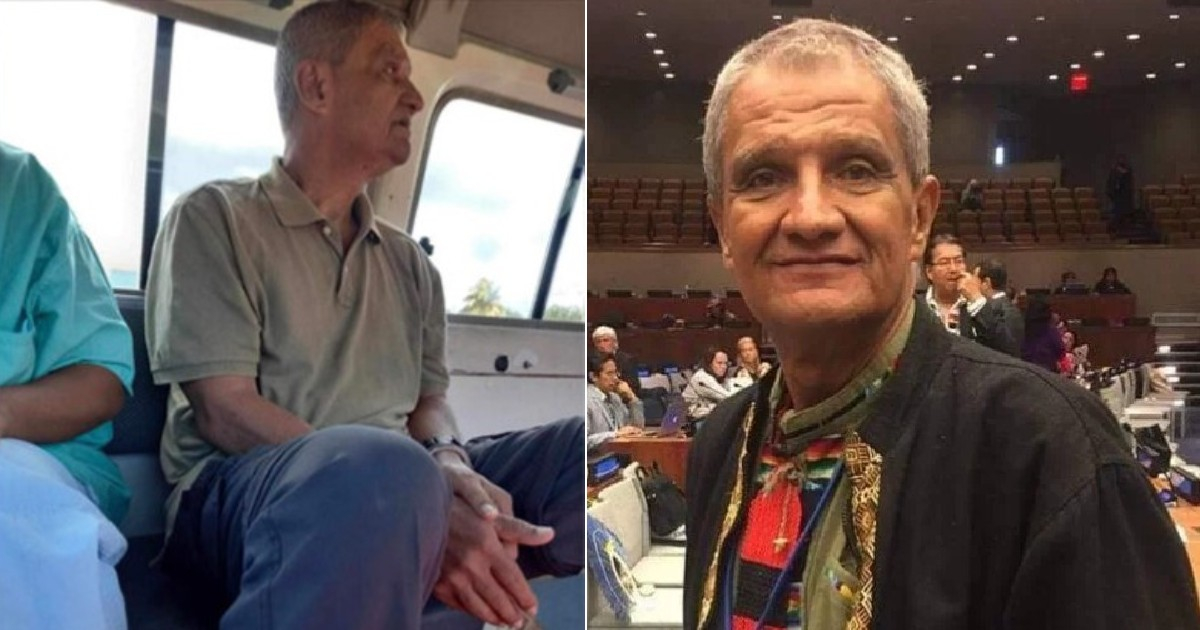
Rivera, 73 years old and founder of the indigenous party YATAMA, passed away on the night of May 30 at the Fernando Vélez Paiz hospital in Managua while being detained by the regime, as confirmed by the Ministry of Health. His death occurred after several months of physical deterioration, a situation that was reported by relatives, human rights organizations, and opposition sectors.
He had been detained on September 29, 2023, at his residence in Bilwi, on the North Caribbean Coast, without his parliamentary immunity as a member of the National Assembly being respected.
After his arrest, he was transferred to Managua and held in the detention center known as El Chipote, where he remained incommunicado and without access to independent medical care for nearly three years.
The Ortega and Murillo regime attributed the death to medical complications, a claim that was outright rejected by experts and international organizations.
In a press release, the government stated that Rivera's death occurred despite "the enormous and intense efforts" made to restore his health. The statement, which refers to him as "our brother Brooklyn," attributed his physical and neurological deterioration to complications from a "bacteria generated by Covid-19," cited the news agency EFE.
Days before the death of the influential indigenous leader, his daughter Tininiska Rivera publicly blamed the spouses and co-presidents of Nicaragua for her father's critical health condition.
"I hold directly responsible the Sandinista regime of Daniel Ortega and Rosario Murillo, along with the necessary collaborators, for the deterioration and harm to the life, health, and physical and psychological integrity of my father," he stated in a public letter from exile.
The United Nations Group of Experts on Human Rights in Nicaragua (GHREN) condemned the death of Rivera on Monday and demanded an independent investigation and an impartial autopsy. It also expressed "deep concern over reports indicating that the authorities took control of his remains, limited the family's participation in his wake and burial, and detained several relatives and allies who attempted to pay their respects."
"Nicaragua must conduct an independent investigation into the death in custody of Brooklyn Rivera, ensure a transparent autopsy, return his remains to his family without delay, and guarantee accountability for his enforced disappearance and other related human rights violations," stated Jan-Michael Simon, president of GHREN.
The Hungarian expert Reed Brody was emphatic: "He did not die from illness, but as a result of his enforced disappearance for over two years, without contact with his family, without independent medical services, and without any accountability."
The Uruguayan lawyer Ariela Peralta, also a member of GHREN, stated that the forced disappearance from the moment of detention "constitutes an international crime for which the State of Nicaragua is legally responsible," and warned that the actions leading to her death "may constitute multiple crimes against humanity, such as murder, torture, and persecution."
The UN expert group also warned that the lack of an impartial investigation "strengthens the strong presumption of state responsibility for his death."
Additionally, it was noted that a 2024 report documented at least 46 murders of indigenous leaders in Nicaragua since 2018, and that another nine individuals remain in arbitrary detention in the country, their whereabouts unknown.
Brooklyn Rivera Bryan, born on September 24, 1952, dedicated more than four decades of his life to advocating for the rights of the Miskito people and founded YATAMA (Yapti Tasba Masraka Nanih Aslatakanka, in Miskito, which means ‘Sons of Mother Earth’) in 1987, unifying various currents of indigenous resistance to create a political force in the Caribbean Coast.
In the 1980s, he led the armed resistance of the MISURASATA organization, an indigenous grassroots guerrilla that initially aligned itself with Sandinismo but later took up arms against the first Sandinista dictatorship (1979-1990). He then founded YATAMA and served as a deputy in the National Assembly of Nicaragua, which has been controlled since 2007 by the second Sandinista dictatorship led by the Ortega-Murillo regime, reported the news portal Nicaragua Actual.
Filed under: