
Related videos:
The Cuban seismologist Enrique Diego Arango Arias, head of the National Seismological Service of Cuba, officially addressed the alarms circulating on social media regarding alleged imminent earthquakes and tsunamis in the Bartlett trench and the Caribbean Sea. He did so in a public message on Facebook, prompted by the flood of inquiries he received from concerned citizens.
The specialist was emphatic: «None of these alerts or earthquake alarms have been issued by any scientific institution dedicated to the study or research of seismic activity in Cuba or the Caribbean».
Arango also questioned the credibility of those spreading such predictions: "None of those engaged in these alarms are seismologists, as far as I know. No names of reputable experts appear, with their published articles on earthquake forecasting."
The seismologist explained that there is an essential difference between citizen preparedness and the dissemination of unsupported forecasts: "Being prepared and knowing that we live in a seismic zone is one thing, while forecasting earthquakes and tsunamis to alarm the population is another."
As a reference for the public, Arango specified that if a real danger existed, "the first to inform the population would be the CENAIS and the National Civil Defense."
The panic that prompted the publication has a specific seismic context. On June 24, two earthquakes with magnitudes of 7.1 and 7.5 shook the northern coast of Venezuela, causing the collapse of buildings in Caracas, over 100 fatalities, and a tsunami alert for several Caribbean countries that was later canceled.
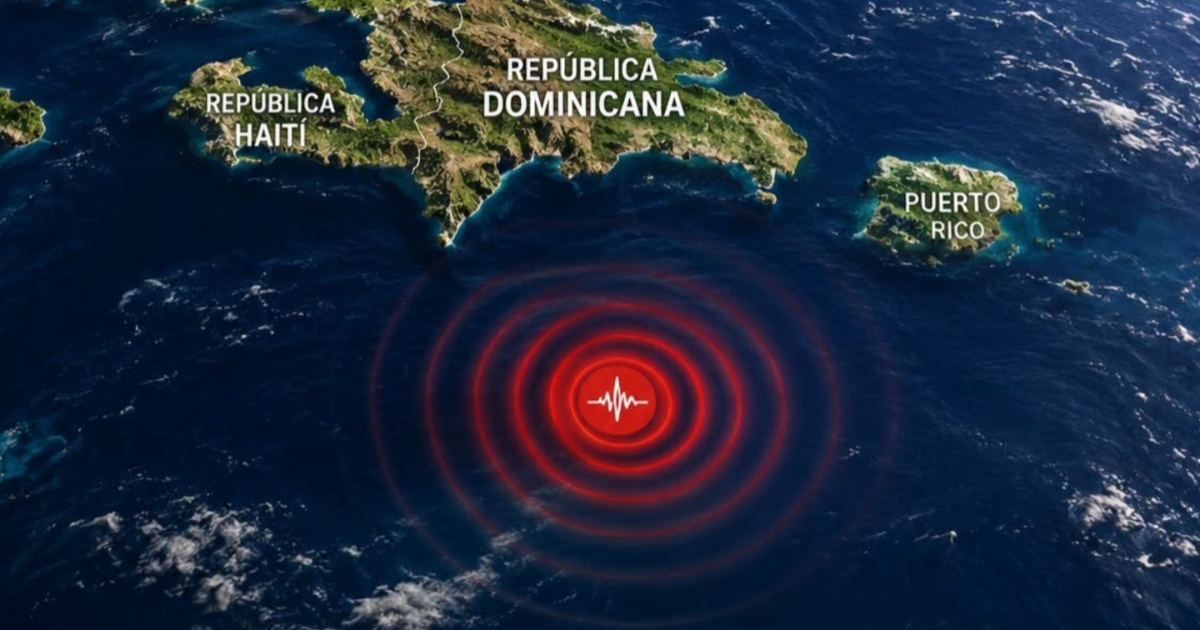
This Friday, a magnitude 5.0 earthquake, centered 58 km south of Boca de Yuma in La Altagracia, was felt in the east of the Dominican Republic, adding another episode to the series of regional seismic activity that fuels misinformation.
To that sequence, the 6.2 magnitude earthquake that shook Pinar del Río on June 8 is added, which also generated false rumors about tsunami alerts for eastern Cuba and Florida.
Among the publications circulating on social media that Arango included as examples are infographics that warn of a "Caribbean on alert: Eastern Cuba must prepare," featuring maps of the Caribbean Sea and a zoom-in on the eastern provinces of the island, as well as screenshots from accounts like @focepointreal that announce alerts in several countries in the region.
It’s not the first time that the seismologist has intervened to combat misinformation. In November 2024, he also debunked theories from foreign geologists following the earthquakes in Pilón, in Granma, and in 2025 he reported that Cuba recorded over 3,000 earthquakes in the first half of that year.
The Bartlett Trench, also known as the Cayman Trench, is the deepest point in the Caribbean Sea at 7,686 meters and poses the greatest seismic risk to Cuba due to its proximity to the eastern part of the island, where Santiago de Cuba experiences between 10 and 15 detectable earthquakes per year, the highest frequency in the country according to CENAIS.
Filed under: