
Related videos:
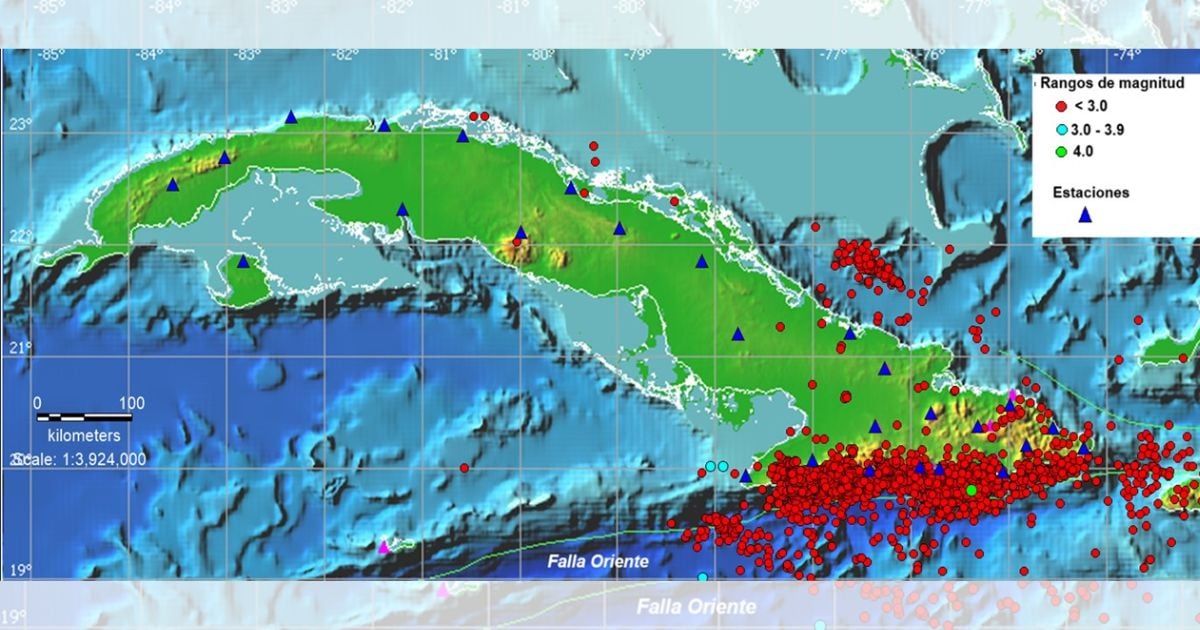
During the first half of 2025, 3,623 earthquakes were recorded in the region, of which 3,273 occurred within the geographical area of Cuba.
According to a report on Facebook by seismologist Enrique Diego Arango Arias, head of the National Seismological Service of Cuba and specialist at the National Center for Seismological Research (CENAIS), the most active area was Pilón–Chivirico, with 1,849 earthquakes recorded, mostly aftershocks of the earthquake that occurred on November 10, 2024.
It also highlighted the activity in the Santiago–Baconao area, regarded by Arango Arias as the most active of the period, although he clarified that no significant events were recorded.
Despite the high number of seismic movements, only 10 were noticeable to the population, nine of which were related to the plate boundary zone south of eastern Cuba.
The remaining one was an earthquake of magnitude 7.6 north of Honduras, whose tremors were felt in tall buildings in the western part of the country.
The day with the highest seismic activity was January 27, when 60 earthquakes were recorded in 24 hours.
On the other hand, outside the plate boundary, significant activity was reported north of the province of Las Tunas, in Bahamian territory.
Among the perceptible events, three had their epicenter southwest of Pilón and were identified as aftershocks of the earthquake on November 10, 2024, which had a magnitude of 6.7.
In all cases, the maximum intensity felt in the national territory was III on the EMS/98 scale.
Additionally, on July 1st, a magnitude 3.4 earthquake was recorded east of Moa, although no reports of perceptibility were received from the population.
The report also raised concerns about technological limitations in seismic monitoring. Since May 28, the Río Carpintero station, near Santiago de Cuba, has been out of service due to communication issues.
This is compounded by frequent interruptions at other stations in eastern Cuba due to power outages in the transmitters.
Currently, the national network operates with a 98.5% technological availability, although the Cascorro station in Camagüey remains out of service due to technical issues.
The installation of the solar backup system at the Central Station in Santiago de Cuba is expected to be completed soon, which will ensure total energy autonomy for the National Seismological Service.
Frequently asked questions about seismic activity in Cuba in 2025
How many earthquakes were recorded in Cuba during the first half of 2025?
During the first half of 2025, 3,623 earthquakes were recorded in the region, of which 3,273 occurred in the geographical area of Cuba. Most of these were aftershocks of previous earthquakes, particularly in the Pilón–Chivirico area.
How many of these earthquakes were perceptible to the population?
Only 10 earthquakes were felt by the population during the first half of 2025. Nine of these tremors were related to the plate boundary zone south of eastern Cuba, and one was a magnitude 7.6 earthquake north of Honduras.
Which areas of Cuba have experienced the most seismic activity?
The Pilón–Chivirico area has been the most active in terms of the number of earthquakes, while the Santiago–Baconao area has been considered the most energetic. Both regions have experienced a high number of aftershocks from the earthquake on November 10, 2024.
Are there issues with monitoring seismic activity in Cuba?
Yes, the seismic monitoring in Cuba faces technological limitations. The Río Carpintero station is out of service due to communication issues, and there are frequent interruptions at other stations due to power shortages in the transmitters. Despite this, the national network operates with 98.5% technological availability.
Filed under: