
Related videos:
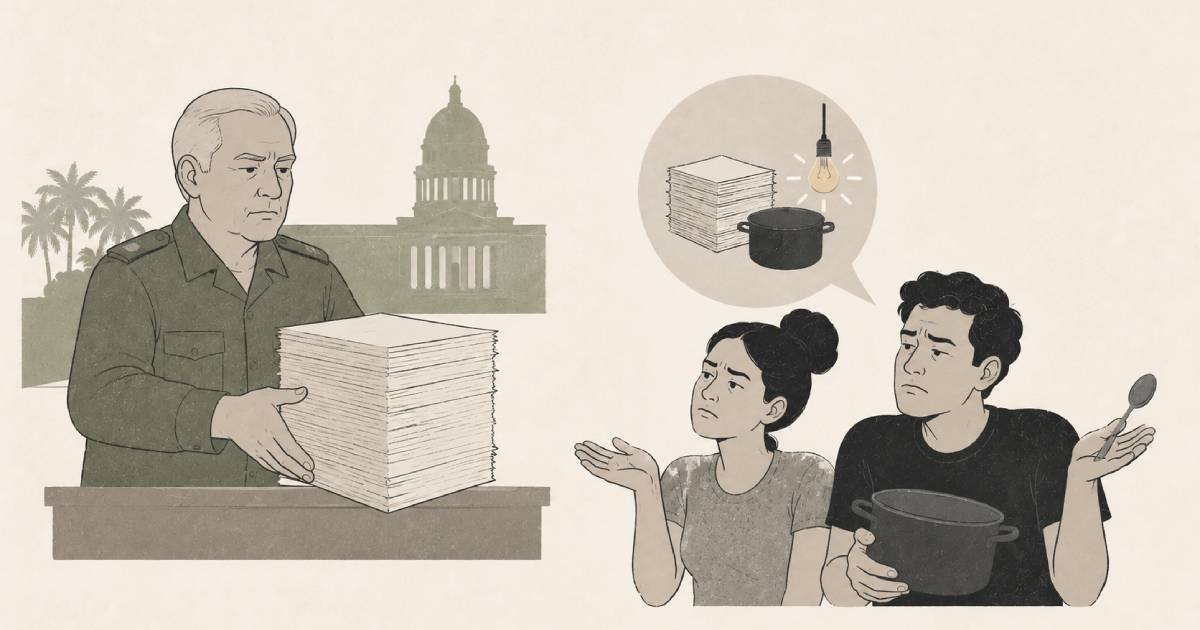
The official publication of the 176 Economic and Social Transformations approved by the Cuban regime sparked a wave of criticism on social media this Thursday, where many citizens questioned the timing of the document amid a crisis characterized by blackouts, food shortages, lack of medications, and connectivity issues.
Although the Government presented the measures as the result of a process of consultations and debates within the main structures of political power, much of the reaction focused less on the document's content and more on the daily reality faced by millions of Cubans.
One of the comments that generated the most impact summarized the feeling of frustration among many users: "Download them and you will eat and light up with the measures on paper," wrote an internet user, referring to the lack of food and the prolonged power outages affecting the country.
Irony dominated much of the debate. Several users pointed out that they could not even access the document because they had no internet or because the download link was not working. "When ETECSA improves the internet, I will be able to download it," commented one person, while others simply claimed that the PDF wouldn't open.
There were also many who compared this new package of announcements with previous initiatives promoted by the government that, in their opinion, ended without visible results. Some recalled the Monetary Ordering, the Party Guidelines, or legislative projects that, they said, remained promises.
Others questioned the text for containing general proposals but few immediate actions for implementation. "I see many ideas, but no concrete measures to put them into practice," wrote another user, reflecting the skepticism that prevailed among the comments.
The most frequently expressed concerns were related to issues that directly affect daily life. Many Cubans asked whether among the 176 transformations there is any solution for power outages, the shortage of medications, food production, or the deterioration of the healthcare system.
While the Government disseminated the document, several citizens took the opportunity to report that they had been without electricity for over 30 hours, that they barely received service a few hours a day, or that they continued to lack potable water in different areas of the country.
The official document includes changes in nearly every sector of the economy, from state-owned enterprises, foreign investment, and the banking system to tax policy, tourism, trade, and the gradual elimination of subsidies for products to replace them with subsidies directed at individuals. It also includes plans to expand private participation in various economic activities and to deepen the partial dollarization of the economy.
However, the conversation on social media made it clear that, for many Cubans, the priorities remain much more immediate: having electricity, access to water, affordable food, and medicine, before new reform packages whose effectiveness is still to be proven.
Amid the sarcasm, fatigue, and criticism, the official announcement ultimately became a platform where hundreds of citizens expressed the growing disconnect between government promises and the most urgent needs of the population.
Filed under: