
Related videos:
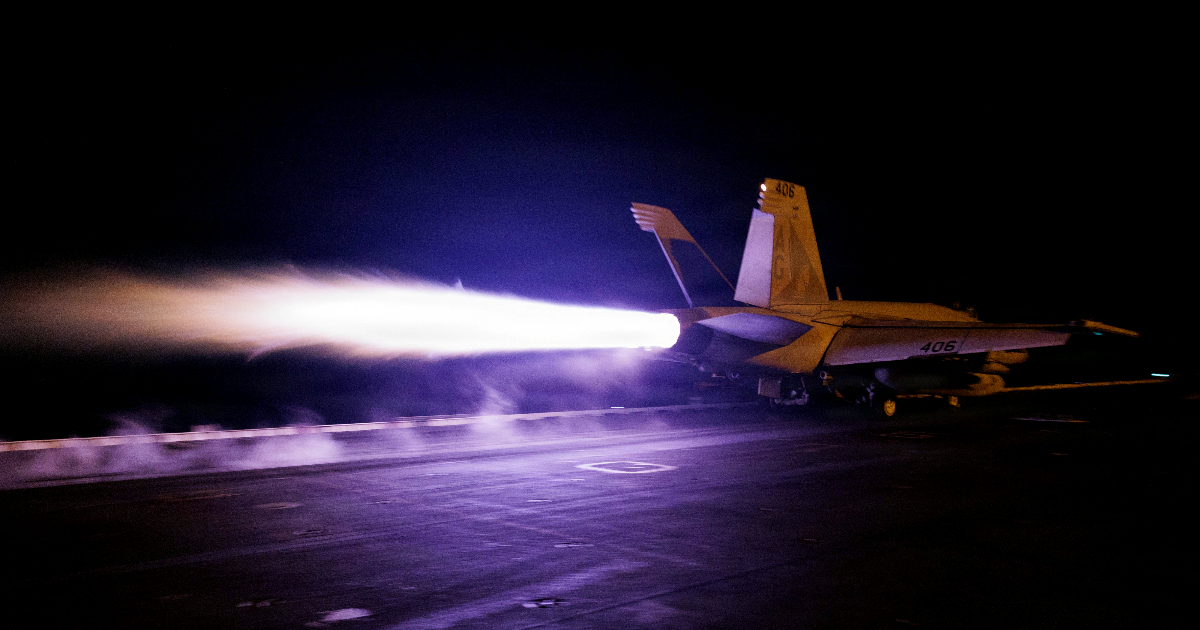
The United States Central Command (CENTCOM) conducted precision airstrikes on Iranian military installations this Friday in direct response to the drone attack that Iran launched on Thursday against commercial vessels in the Strait of Hormuz.
According to the official statement from CENTCOM, the attacks were carried out at 5:00 PM Eastern Time (10:00 PM GMT) and targeted missile and drone depots, as well as Iranian coastal radar sites located near the strait.
On Thursday, Iran launched at least four one-way attack drones against vessels navigating the maritime route. U.S. forces shot down three of them, but one managed to hit the upper deck of the cargo ship M/V Ever Lovely, registered under the Singapore flag.
The vessel sustained material damage, but it was able to continue its journey without any injuries or environmental consequences.
Donald Trump described the Iranian attack as an "insensate" and "foolish" violation of the ceasefire signed just days earlier between Washington and Tehran, according to reports from media outlets such as RTVE and El Financiero.
A U.S. official clarified that the bombings on Friday "do not indicate a return to large-scale combat operations," thereby aiming to limit the extent of the military response.
Iran's state television reported damage to air defense areas along the Persian Gulf coast, including the cities of Abbas Qesh and Sir.
The episode represents a new fracture in the fragile process of détente between the two powers. The memorandum of understanding between the USA and Iran had been signed between June 17 and June 19 in Switzerland, with mediation from Pakistan and Qatar, establishing a 60-day moratorium to negotiate a definitive agreement on the Iranian nuclear program, the reopening of the strait, and the lifting of sanctions.
However, the agreement began to falter almost immediately. Iran once again closed the Strait of Hormuz on June 20, citing Israeli attacks in southern Lebanon, and on Thursday, it attacked commercial vessels again, triggering military responses on Friday.
The conflict between the U.S. and Israel against Iran began on February 28, 2026, with the so-called "Epic Fury Operation," a joint offensive that destroyed more than 500 Iranian targets, including nuclear facilities in Isfahan, Natanz, and Fordow.
In the following weeks, massive bombings occurred, including the attack on Kharg Island —Iran's main oil terminal— on March 14, and the destruction of the underground headquarters of the Revolutionary Guard on April 6 with B-2 bombers.
The Strait of Hormuz is one of the most critical energy arteries on the planet, through which approximately 16 million barrels of oil daily pass, making any closure or attack in the area a destabilizing factor for global markets.
Only on June 23, Trump had stated that Iran accepted the presence of UN nuclear inspectors on its territory, a development that is now overshadowed by the escalation on Friday.
Filed under: