
Related videos:
A new earthquake measuring 4.9—classified as preliminary—shook Venezuela again this Friday, recorded instrumentally at 22:16 Universal Time by the Santo Domingo seismic station, according to the seismogram published by the monitoring platform SASSLA.
The record shows that this event was the most pronounced signal of the entire day at that station, with an additional, less intense disturbance detected around 22:06 Universal Time.
The SASSLA platform warned that the sequence of replicas will not end soon: "The sequence of replicas—from hundreds to thousands—will stretch over several more weeks or months, although the frequency of events per day will gradually decrease over time," noted the verified account @SasslaMx on X.
This replica is produced two days after the worst seismic disaster Venezuela has experienced in over a century.
On June 24, two earthquakes with magnitudes of 7.2 and 7.5 struck the northern part of the country just 39 seconds apart, with their epicenter in the state of Yaracuy, in the municipalities of Yumare and Morón, at a depth of between 10 and 13 kilometers.
The United States Geological Survey (USGS) classified that double event as the strongest earthquakes recorded in Venezuela since 1900 and issued a Red Alert, while the phenomenon also triggered a tsunami warning for the Caribbean.
Since then, the official toll has risen to 920 dead and 3,360 injured, a figure announced by Jorge Rodríguez, president of the Venezuelan National Assembly.
Delcy Rodríguez, acting president, had previously confirmed 589 deceased and 2,980 injured in a morning update this Friday.
The humanitarian figures are even more alarming according to international organizations: the UN estimates up to 50,000 missing, while the International Organization for Migration estimates that up to 6.76 million people could have been affected.
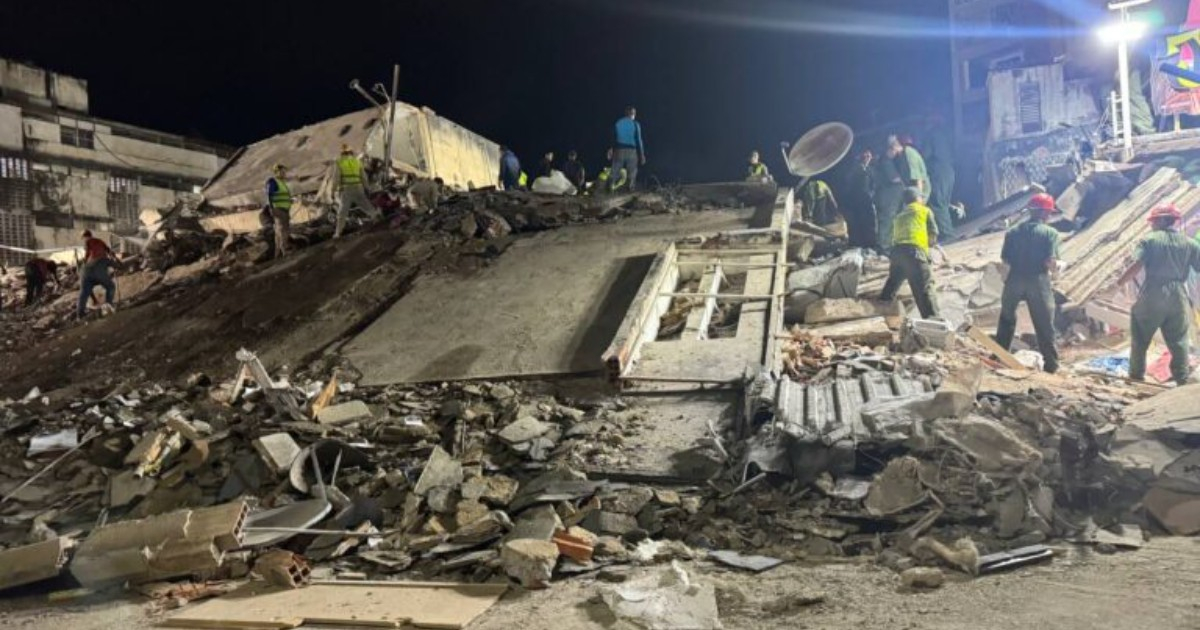
346 buildings have collapsed or been severely damaged, more than 200 people are trapped under debris, and around 4,000 individuals have been affected.
Since the main doublet, more than 200 aftershocks have been recorded, among which stands out one with a magnitude of 4.4 that caused panic early this Friday, with an epicenter in Morón, Carabobo, and now this one with a magnitude of 4.9, the most significant of the day.
Among the victims of the tragedy, there is also a Cuban presence: two Cuban children remain missing after the earthquakes, according to reports from this Friday.
The aftershocks pose an additional danger to rescue efforts, as they can collapse structures that were weakened by the main quake. Experts warn that this sequence could continue for weeks or even months.
Filed under: