
Related videos:
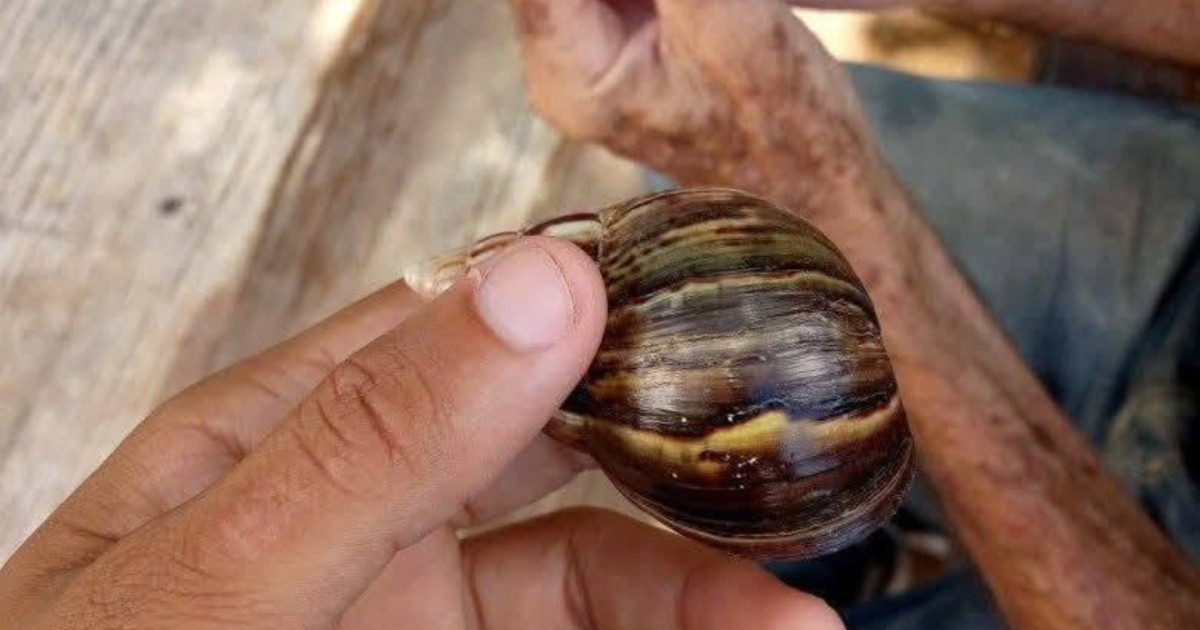
Specialists from the Center for Environmental Research and Technology (CITMA) confirmed this month the presence of the African giant snail (Achatina fulica) in several areas of the province of Matanzas, a species classified among the 100 most invasive and dangerous in the world according to the International Union for Conservation of Nature (IUCN).
The discovery was announced by Dr.C. Enrique Ramón Soto Ramírez, a biologist from the Provincial Delegation of CITMA, along with research professor Esteban Pérez Peña, following a publication by journalist Fabio López Martínez.
The specimens were systematically located in the Reparto Camilo Cienfuegos and in the surrounding areas of the old Bus Terminal, near the railway line, in the city of Matanzas.
"It is an invasive exotic species that creates a quite significant conflict," stated Soto Ramírez. "We have observed specimens on the ground and even on top of the vegetation. We are concerned because we need to make an urgent decision."
The danger of the mollusk lies in its ability to harbor flatworms, roundworms, bacteria, and other microorganisms, serving as a vector for the parasite Angiostrongylus cantonensis, which causes eosinophilic meningoencephalitis, a disease that affects the central nervous system and can be fatal.
In addition to the health risk, the African snail can affect more than 120 different crops, including bananas, cassava, citrus fruits, and rice. Its reproductive capacity—up to 1,800 eggs per year with a viability rate of between 85% and 95%—greatly complicates its control once established.
Although there is still no official confirmation, researchers have expressed concern about potential sightings in the municipalities of Cárdenas and in areas near Varadero, indicating a risk of expansion into regions of high tourist and agricultural value.
In response to the threat, CITMA is working on an action plan and has issued an urgent call to the public to refrain from handling snails without protection.
"These mollusks must not come into direct contact with our skin, eyes, or nostrils. It is mandatory to handle them wearing a mask and gloves," warned Soto Ramírez.
The established elimination protocol includes collection with gloves, exposure to intense fire or immersion in water until the animal is suffocated —since they are air-breathing mollusks, they cannot survive submerged— and subsequent burial at a minimum depth of 0.4 meters.
The confirmation in Matanzas represents the most recent episode of an expanding plague across Cuba. Since its first detection on the Island in 2014, the species had already impacted by October 2020 14 of the 16 provinces of the country, with more than 1,000 active hotspots in 59 municipalities.
In the months leading up to April 2026, new outbreaks were reported in Granma, and earlier in Camagüey and Artemisa.
"We need to take decisive and swift actions to eliminate these specimens and prevent their population levels from rising," stated the biologist, who warned that the threat "is becoming more frequent every day" in the Matanzas territory.
Filed under: