
Related videos:
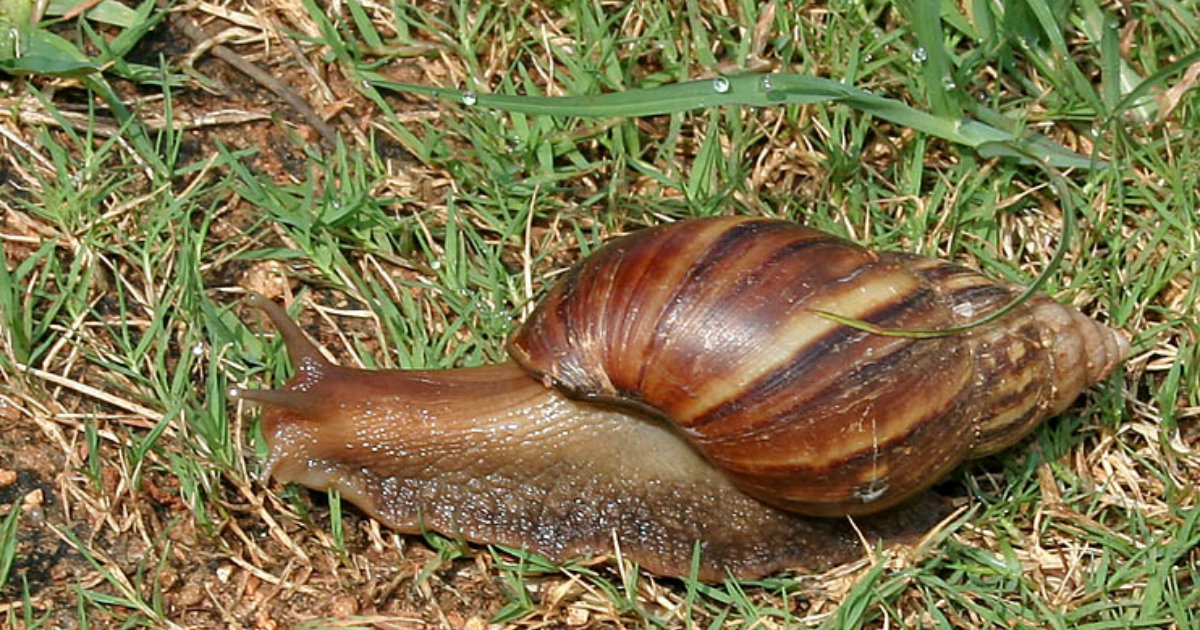
Authorities in the municipality of Bahía Honda, in the province of Artemisa, remain on alert due to the rise of the giant African snail, one of the most harmful invasive alien species in the world.
The mollusk, detected in the area since 2019, has spread to areas near the Bahía Honda dam, the Manilla neighborhood, and regions close to the children's circle in the municipal capital, according to a report from Radio Artemisa.
Although local authorities claim that no significant damage has been reported, experts warn that the African snail poses a risk to agriculture and human health, as it can transmit parasites capable of causing diseases.
Yanni Vieyto Vigoa, a plant health specialist in the municipality, explained that control and early detection are essential to stop its spread, and emphasized that residents should avoid direct contact and report its presence to the authorities.
But on social media, dozens of Cubans claim that the situation is out of control. “In Caimito we have them as pets,” wrote Cecilia Valdés Sagué, while Lidia Torres commented that in her house “they can be collected by the sacks, they reproduce in large numbers and destroy the plants.”
From Mariel, Alejandro Enrique Sánchez joked: “In Cabañas, the African snail competes with the santanilla to see who owns the yards. Just like the blackout.”
Other users described the magnitude of the infestation. “In Güira de Melena, in front of the courthouse, there are thousands. It's the home of the African snail,” reported Cándido García.
From San Cristóbal, Dainerys Iglesias warned that “they are even in the schoolyards and no one has ever come to ask anything.”
In Guanajay, Olga Lidia Beltrán warned that “they are already in the yards of the prefabricated houses and weigh almost a pound; they are very big.”
Some Cubans chose humor or resignation. “At least here in my area that snail is like family, we've even grown fond of it,” joked Lionar Núñez from Bahía Honda.
Others, such as Anabel López and Taimir Alain Morales Ceballos, recalled that in Africa the mollusk is eaten and is "a source of protein."
There were also direct criticisms of the authorities. “We are going to be overrun by pests, including mosquitoes, rats, flies, snails, and the red devil. They keep warning us, but where is the action?” wrote Odalys Lemus.
From Caibarién, in Villa Clara, Renier Rodríguez stated that “it is an invasive plague in total freedom, without any form of combat.”
Other users, like Agustín Ledesma Oliva, offered a more bitter reflection: “No one cares about the African snail, the mosquito, or the misery we live in, because in Cuba everything depends on the topic chosen by those in power. Then they forget.”
Meanwhile, local authorities insist on maintaining vigilance, and the population complains that the African snail, like so many other pests on the island, has come to stay.
Filed under: