
Related videos:
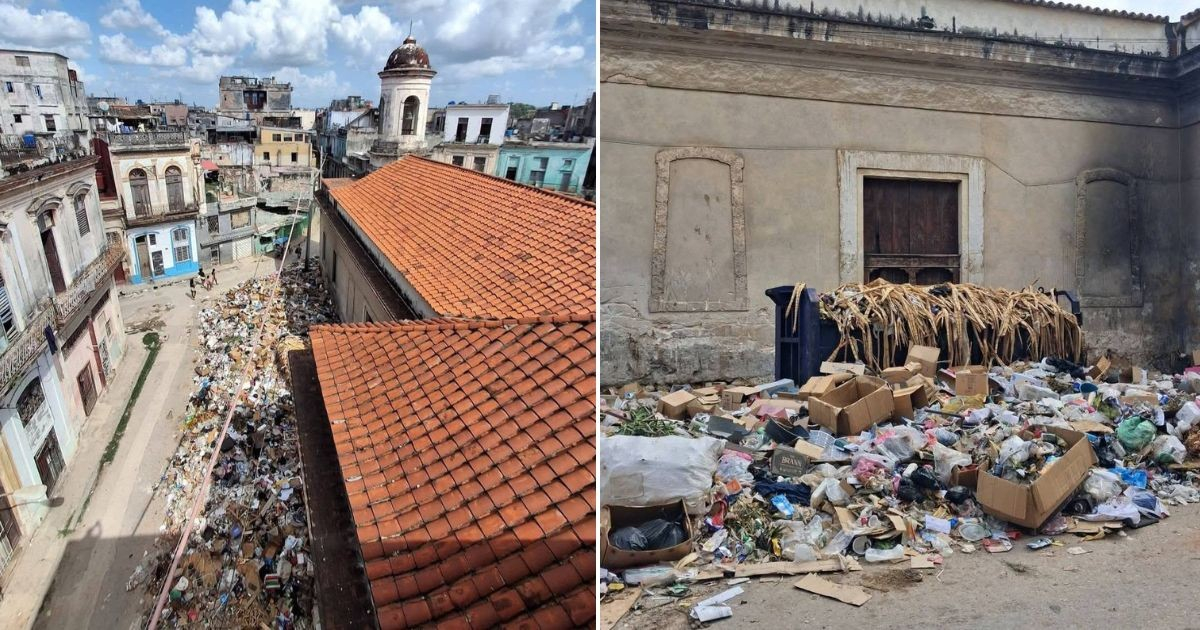
The chronic accumulation of waste in front of the Church of San Judas Tadeo and San Nicolás de Bari, in the Los Sitios neighborhood of Centro Habana, has reached a point that the Cuban historian and professor Carlos Jesús Alfonso described with biting irony: even the patron saint of impossible causes has been unable to ensure that the garbage truck passes regularly by the front of his own temple.
Alfonso posted on Facebook a complaint that combines indignation and sarcasm to portray the negligence of Cuban authorities regarding an issue that the Padres Escolapios —who manage the temple and the Calasanz Cultural Center, located at San Nicolás Street #830— have been reporting for months without receiving an effective response.
"Right on the outskirts of the temple, the buildup of waste every so often is no longer just a hygiene issue; it is a living monument to negligence," wrote Alfonso, who added that even the "continuous, polite, and desperate pleas" from the priests have not moved the relevant authorities.
The images accompanying the post show mountains of cardboard boxes, plastic bags, debris, and organic waste blocking the entrance of the building, with a blue container completely overflowing.
The situation is far from new. Since April 9, 2026, the accumulated trash in front of the temple has caused three fires: the first completely destroyed the main door of the parish; the second, which occurred on April 23, generated toxic smoke while firefighters did not respond to the call for help; and the third, in the early morning of June 19, destroyed the side door of the temple.
After each incident, the Escolapios publicly documented their efforts with the three levels of government—municipal, provincial, and national—without achieving concrete results.
"They have listened to us. They have made plans. They have promised. But actions have not materialized," they wrote in their statement on April 24.
The background is the collapse of the waste collection system in the Cuban capital, aggravated since February 2026: only 44 out of the 106 collection trucks in Havana are operational, leaving between 13,000 and 23,814 cubic meters of waste uncollected daily.
The city barely has 10,000 containers when it needs between 20,000 and 30,000, and the regime has responded with temporary measures — the so-called "Cleaning Operation," the "Cuba Recicla 2026" program, and the deployment of young people from the Military Service to collect garbage — which have not addressed the structural problem.
The case of the Escolapios church is not the only one. On June 2nd, the San Antonio María Claret Parish of Santiago de Cuba issued a similar public appeal, describing the accumulation of trash, rodents, and fires in front of its temple, labeling the situation as "unsustainable."
The health consequences of this crisis are deadly: in 2025, Cuba recorded 81,909 infected individuals and 65 deaths from dengue and chikungunya, and in June 2026, the Ministry of Public Health warned of a possible new dengue epidemic, with the first confirmed cases of the season in Matanzas.
Alfonso concluded his complaint with a direct demand: "Faith sustains the soul of our people, but filth and pests make our bodies sick. Keeping the city clean does not require faith, but rather shame and administration."
Filed under: