
Related videos:
Two Cuban poets—one from the island and the other from exile in the United States—turned to the décima espinela to express their solidarity with Venezuela following the devastating double earthquake on June 24, and their verses circulated on social media, moving dozens of followers within the Cuban community both inside and outside the country.
The post, shared on the Facebook profile of the poet Juan Carlos García Guridi, brings together two stanzas that precisely name the horror: rubble, buried families, homes that no longer exist, and a nature that "collapsed without warning."
García Guridi, born in Batabanó, Mayabeque, in 1968, is a repentista, writer, and literary researcher with several published books. He wrote verses that transform the grief of others into personal wounds: “The pain of Venezuela / bleeds beneath my skin, / a pain of flesh and threshold, / a tremor of all that is human. / The mourning of a brothered people / invites me to sadness, / why did nature / collapse without warning / and leave / beauty in Venezuela / emaciated?”
Juan Antonio Díaz Pérez, a master of Cuban improvisational poetry from San Diego de los Baños, Pinar del Río, and currently residing in the United States, is considered one of the great figures of décima espinela on an international level. He even envisioned the sadness of the liberator Simón Bolívar in the face of the magnitude of the disaster: «Today you are drenched, Venezuela, / among handkerchiefs of astonishment; / the noise of your debris / is impossible not to feel the pain. / Even the shine of the spur / of your Simón is sad. / How much sadness you wear / between a wet face, / a buried family / and a home that no longer exists».
The post generated dozens of comments from Cubans expressing helplessness, tears, and prayers. "It's impossible to see the images and not cry. A beautiful tribute to the sorrow of a brotherly people," wrote one follower. Another noted, "Very painful, I have Venezuelan neighbors and they are devastated." A third comment summarized the collective sentiment in a single phrase: "It hurts... it hurts!!!!" Other netizens asked God to place "His hand on such disaster" and remembered those who "lost their families."
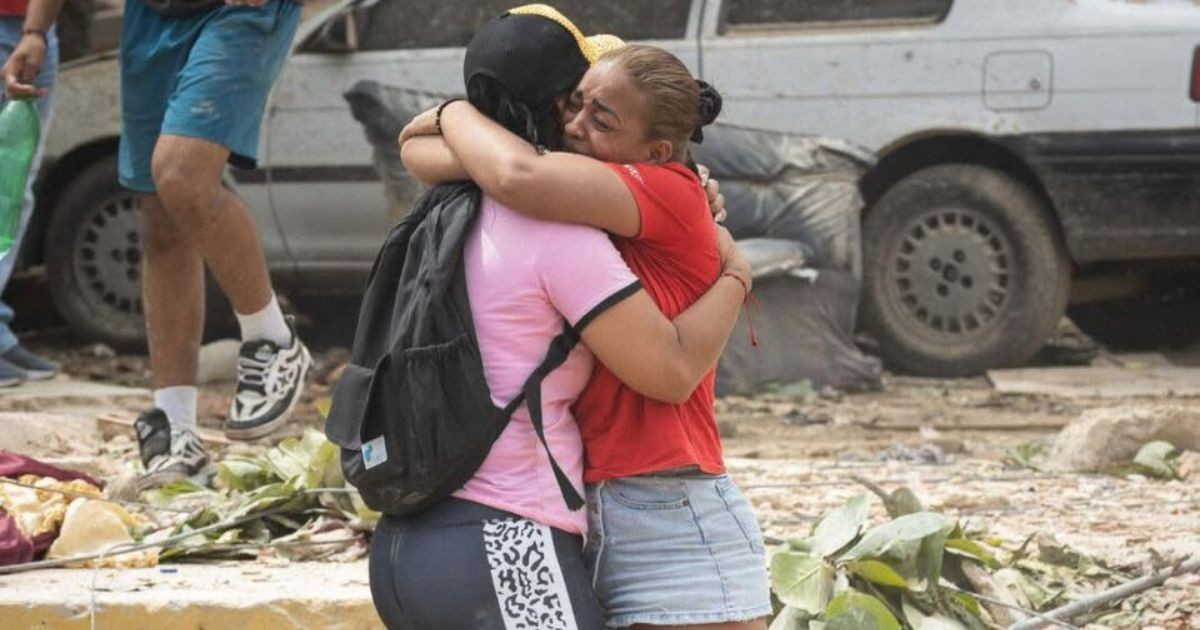
The context surrounding these décimas is one of a tragedy of historical proportions. The two earthquakes of magnitudes 7.2 and 7.5 shook Venezuela with just 39 seconds apart, with epicenters in the state of Yaracuy and near Morón, in Carabobo, and are considered the most powerful recorded in the country since 1900.
The death toll had risen to 1,430 fatalities and more than 3,238 injuries as of June 27, with 346 collapsed buildings. The UN estimated that up to 50,000 people could be missing and over six million affected.
Among the victims and the missing, there are also Cubans: at least 29 compatriots were reported as missing in Venezuela following the earthquakes, which intensified the pain of the Cuban community in the face of this tragedy.
The décima espinela —ten verses of eight syllables each with consonant rhyme— is the most deeply rooted poetic form in Cuban popular culture, with origins in the 16th century and a long tradition as a medium for celebration, social criticism, mourning, denunciation, and solidarity in the face of collective tragedies. The fact that two of its most prominent contemporary practitioners, separated by the ocean and by the circumstances that have dispersed millions of Cubans, choose to use it to support Venezuela speaks volumes about the significance of that tradition and the bond that unites both peoples.
The Cuban singer-songwriter Pavel Urkiza, who is also based in the United States, has joined in solidarity with the Venezuelan people by posting a video on Facebook this Friday, performing "La vaca mariposa," by Simón Díaz, the great Latin American composer from Venezuela.
The Catholic Church of Cuba expressed its solidarity with Venezuela through a letter from the Conference of Bishops to the Venezuelan Episcopal Conference, and Cuban doctors are participating in the assistance for the victims, as part of the historical cooperation between both countries. On Saturday, a new earthquake measuring 4.8 shook Venezuela, adding to the at least dozens of aftershocks recorded since the day of the disaster.
Filed under: