
Related videos:
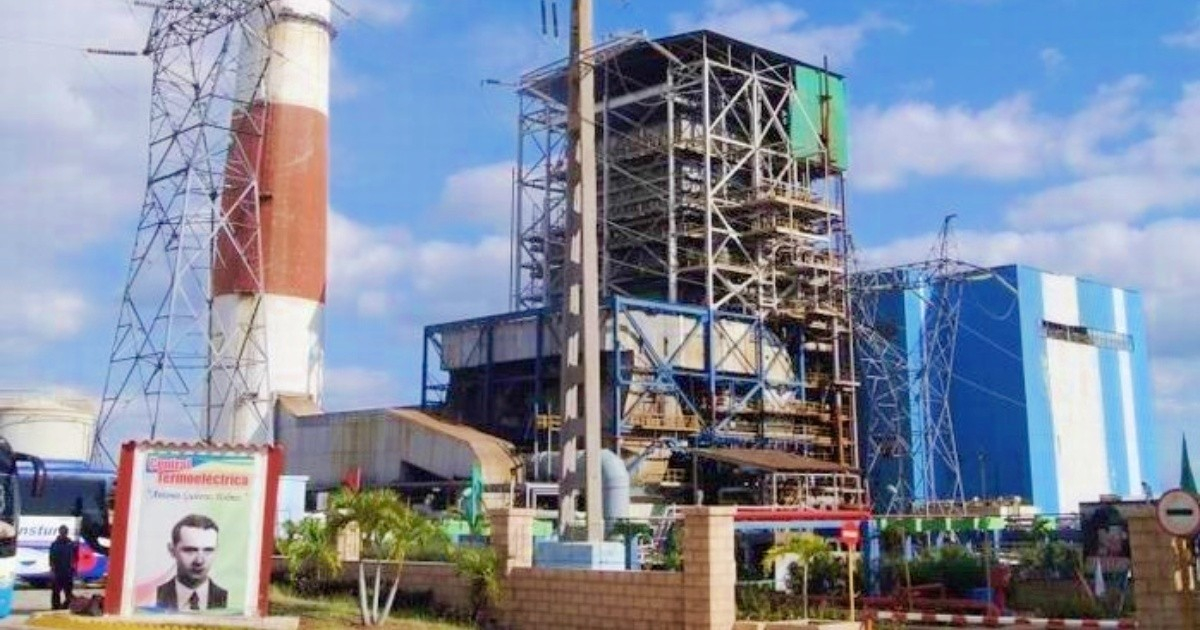
The Antonio Guiteras Thermoelectric Plant synchronized with the National Electric System in the early hours of this Monday, as confirmed by the Electric Union on its official Facebook profile: "In the early hours of today, the Unit of the Antonio Guiteras Thermoelectric Plant synchronized with the SEN."
The return of the plant -the largest in Cuba, with a nominal capacity of 250 MW- does not change the situation for Cubans: according to the informative note from UNE on June 29, the system's availability at 6:00 AM was only 1,100 MW compared to a demand of 2,800 MW, with 1,673 MW affected.
For the peak night hours, the forecast is equally grim: availability of 1,100 MW against a demand of 3,150 MW, resulting in a deficit of 2,050 MW and an estimated impact of 2,080 MW.
On Sunday, the peak impact reached 2,140 MW at 8:50 PM, and just four days earlier, on June 25, the largest electrical deficit in the country's recent history was recorded: 2,208 MW at 8:50 PM, when over 70% of the national territory was left without electricity.
The return of the Guiteras comes after several failed attempts. The plant left the SEN on June 24 at 5:48 PM due to water loss in the boiler, just two days after returning on June 22. On Sunday, a hydraulic test revealed new leaks that prevented its reintegration, marking what would have been its 16th departure from the system in 2026.
The pattern repeats with a regularity that even the regime can no longer disguise: the plant goes out, receives partial repairs, returns briefly, and fails again.
The root of the problem is structural. Guiteras has been in operation for over 38 years and has not received major maintenance since 2010. Between January and May 29, 2026, the plant was out of service for a total of 293 hours solely due to defects in the economizer.
Specialists estimate that approximately 500 pipes need to be repaired and between 1,000 and 1,200 weld seams, an intervention that would require at least 180 days of downtime. The director of UNE, Román Pérez Castañeda, publicly acknowledged this need but admitted that “the situation in the country still does not allow for it”.
The Minister of Energy and Mines, Vicente de la O Levy, promised that the capital maintenance would be completed by the end of 2025. He postponed it in December, citing a "situational problem," and announced it again in April 2026 without setting a specific date.
In addition to the structural weakness of the Guiteras, there is the paralysis of 106 distributed generation plants due to a lack of fuel, totaling 890 MW, alongside another 1,203 MW inactive in strategic facilities such as the Patana de Regla, the Patana de Melones, the Central Fuel of Mariel, and the Central Fuel of Moa.
Cuba needs between 90,000 and 110,000 barrels of oil daily to sustain its electrical system, but it only produces 40,000.
The impact on the population is devastating: Matanzas, the province where Guiteras is located, experienced up to 85 consecutive hours without electricity in June, while Havana endures blackouts lasting up to 22-24 hours daily.
The 54 new photovoltaic solar parks contributed 4,870 MWh on Sunday, with a maximum output of 759 MW delivered at noon. However, this generation disappears at nightfall, right when demand reaches its peak and the deficit skyrockets.
Filed under: