
Related videos:
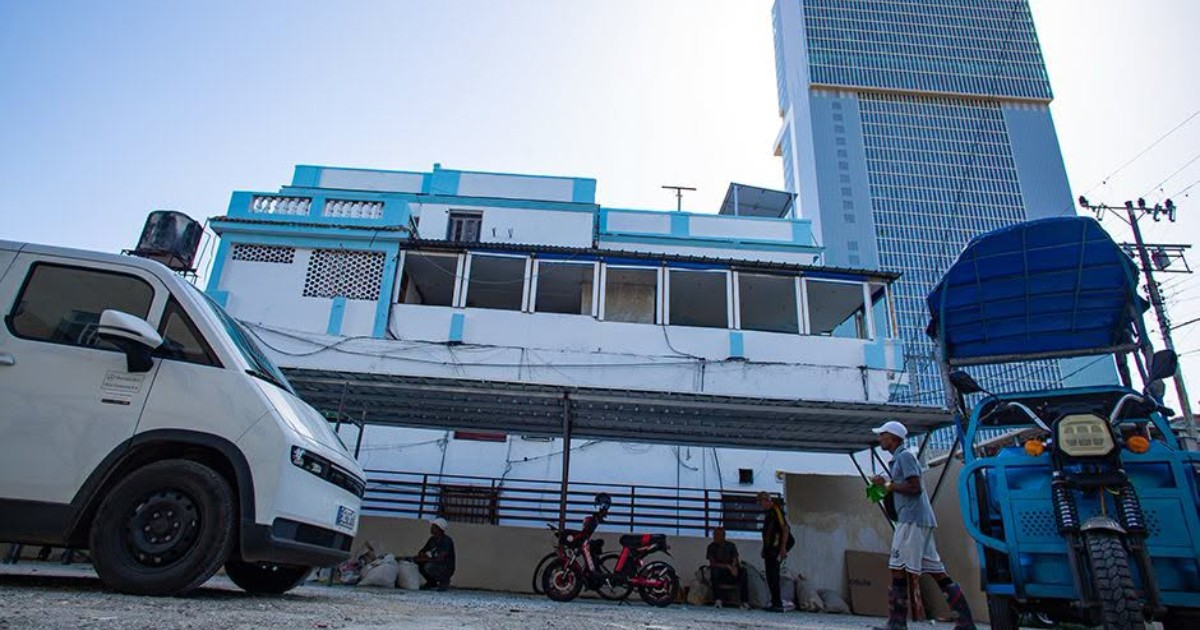
The start of construction on a solar charging station at the intersection of 23 and J in Vedado, Havana, aimed at promoting a waste collection system using electric tricycles, has sparked a wave of reactions on social media ranging from irony and astonishment to restrained hope.
According to a report from the state media Cubadebate, published on June 29, the works of the Local Development Project "El Rampeño" are progressing in the Rampa Popular Council, Plaza de la Revolución municipality.
The project includes 30 electric tricycles for the door-to-door collection of solid waste in 14 districts, with two fixed schedules: 7:00 a.m. and 8:00 p.m. At the time of the publication of the report, the Community Council already had five of the 30 planned tricycles.
The central infrastructure is a "solinera" —a charging station with solar panels— that will also provide charging for private electric vehicles, motorcycles, cell phones, and lamps, and will contribute energy to the National Electric System.
Pedro Lizardo Garcés Escalona, president of the Rampa Popular Council, explained the scope of the installation: "Here, a facility is being constructed that will take on, based on the intention of the Party and the central government, the allocation of 30 electric tricycles for the collection of solid waste in the Rampa Popular Council, as well as for the recovery of raw materials."
The service will have a cost of 100 Cuban pesos per month per household, with differentiated rates for the state and non-state sectors, and exemptions for elderly individuals without income and persons with disabilities.
Street containers will be removed and four strategic points will be established for bulky waste such as rubble, furniture, and appliances. The project also includes a team of inspectors with the authority to impose fines and even escalate cases to criminal prosecution for repeat offenses of littering.
Garcés Escalona attributed the need for the project to the fuel shortage, blaming the United States government: "This stems from the situation that not only the Popular Council is facing, but the entire country, due to the suffocating economic measures imposed by the United States government, where we do not have fuel for solid waste collection and we all suffer."
However, the garbage crisis in Havana is structural and is the result of decades of deterioration in the vehicle fleet and sanitation infrastructure under the dictatorship.
The data illustrates the magnitude of the problem: in February 2026, only 44 of the 106 garbage trucks in the capital were operational, barely 41.5% of the fleet.
The city generates between 24,000 and 30,000 cubic meters of waste daily, but up to 23,814 cubic meters were left uncollected each day. The crisis has triggered outbreaks of dengue, chikungunya, leptospirosis, and hepatitis A.
In the face of the collapse of state services, the residents themselves have taken the initiative. In May, residents of the Casino Deportivo neighborhood organized their own waste collection; in Centro Habana, two community-funded neighbors monitor a corner to prevent waste abandonment.
The reactions on social media to the article from Cubadebate reflect accumulated frustration. "What a marvel! A news story that leaves us stunned: they are picking up the garbage!", wrote a user with evident irony.
Another noted, "The good news is that they won't lack raw materials."
A third party emphasized the leadership of the president of the Popular Council: "He has shown skill in serving his community. Others should take him as an example and stop waiting for everything to come from the State."
Several commentators called for the initiative to be replicated nationwide, while one reminded that the first cleanliness ordinances in Cuba date back to between 1898 and 1902, highlighting the historical dimension of a problem that, in the midst of 2026, remains without a structural solution.
Garcés Escalona stated that the citizen response to the project has been positive: "We have socialized through our digital networks, Facebook, WhatsApp, Telegram, and the group Gente de Barrio, and the response has been tremendous. People have contributed ideas that have enriched and perfected what we initially conceived." The exact start date for the service has not yet been officially determined.
Filed under: