
Related videos:
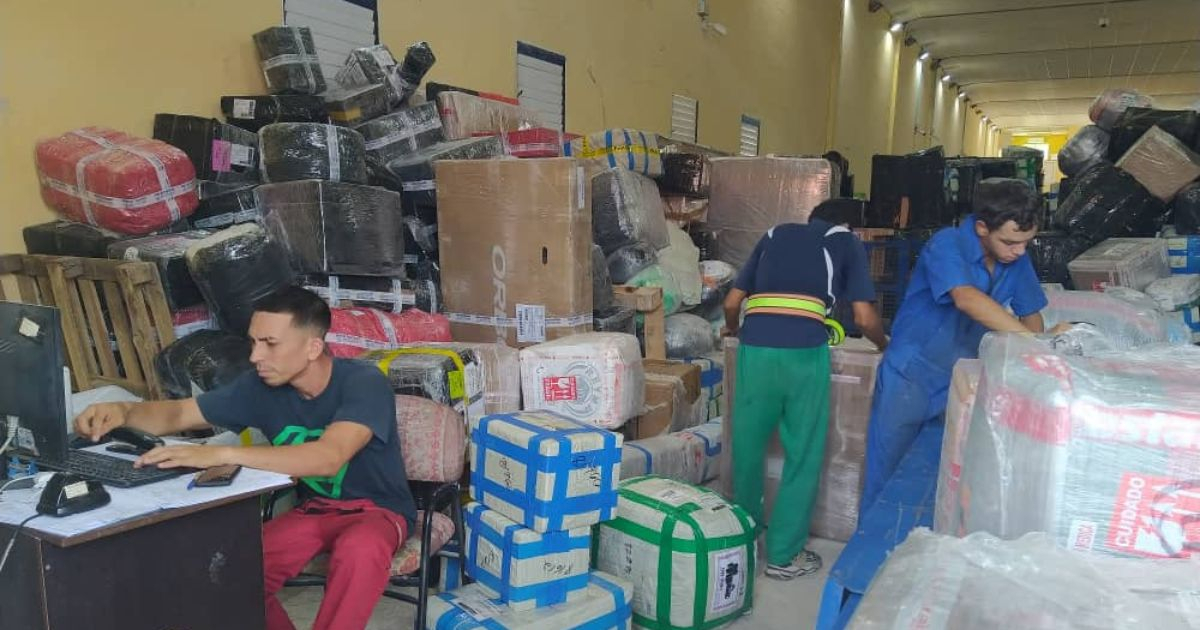
Correos de Cuba publicly acknowledged that the fuel shortage is paralyzing the distribution of international packages to the provinces, leaving thousands of Cuban families without receiving shipments that have been stuck in Havana for weeks or months.
The confession was recorded on the official Population Attention portal of the entity, where dozens of users have recently complained about shipments from Spain, Italy, Sweden, and Mexico that are not progressing toward their final destinations.
One of the most illustrative cases is that of a user identified as Diosmany, who reported on Monday that a package sent from Sweden has been held in Havana for almost two months without reaching Villa Clara.
The response from the Cuban Business Group Correos de Cuba (GECC) was direct: "We are experiencing delays in transportation processes due to the current situation with fuel."
The same justification is repeated in other inquiries. In response to a user who asked about a shipment from Italy that left on May 14 with a scheduled delivery for the 27th of that month, the company replied that the package "has not yet entered Correos for processing" due to "delays in transportation to the courier company caused by a fuel shortage."
Among the most urgent cases is that of Yolaida Carinano, who reported that two packages containing medications for her mother with heart disease have been stuck at the international exchange center since May, without leaving for Holguín.
The postal service did not authorize direct withdrawal in Havana and referred it to a phone number to assess the situation individually.
Yanetsy Ramos Borges, from Baracoa in Guantánamo, has not received her packages since April.
The official response was brief: "The delay and backlog in processing and delivering shipments is due to the existing fuel shortage; we apologize for the inconvenience caused."
The pattern is consistent: some shipments are classified in the system but do not leave for the provinces; others have not even been entered into processing because transportation from the Messaging Company is halted.
The bottleneck is not in the arrival of packages to the country, but in the land route that distributes them from Havana to the rest of the island.
This problem has direct antecedents. In June 2025, more than 4,000 shipments were accumulated in Havana unable to reach Sancti Spíritus due to a lack of fuel, resulting in three million pesos in losses for the entity.
In July of that same year, Correos admitted that the average delivery time exceeded 60 days.
The situation in 2026 is significantly more severe. Cuba has exhausted all its reserves of diesel and fuel oil, as declared by the Minister of Energy on May 14: "We have absolutely nothing."
The collapse was triggered by the interruption of Venezuelan supply, the sanctions from Executive Order 14380 signed by Donald Trump in January 2026, and a fire at a processing plant in Havana in February of that year.
The interprovincial transport is practically paralyzed: the trains between Havana and the east run every 16 days, and state buses operate with one to three departures per week. In this context, the delays with Correos are a direct consequence of a logistical collapse that affects all public services in the country.
For thousands of Cuban families, the wait translates into essential items, food, and medications that do not arrive, while the Correos portal has already accumulated 81,724 responses from users who are complaining without receiving concrete solutions.
Filed under: