
Related videos:
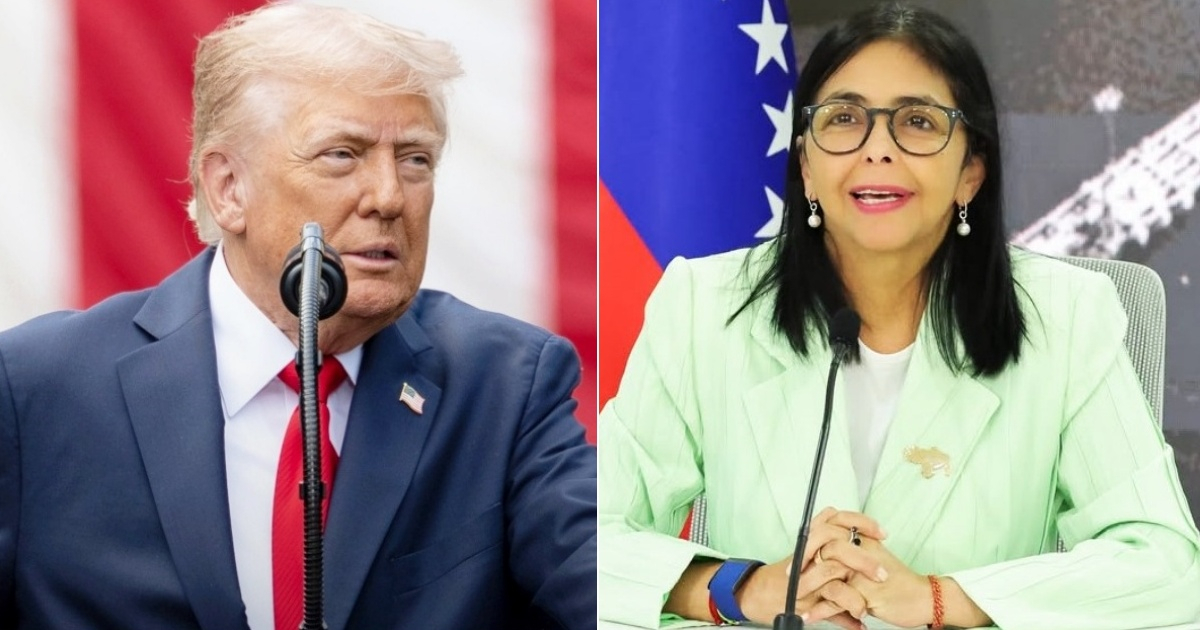
Donald Trump declared this Friday that the relationship between the United States and Venezuela is at its best moment, in an interview with journalist Joe Kernen from CNBC which generated wide international repercussions.
“Our relationship with Venezuela is excellent. They are doing better than ever with oil,” said the leader, who added that large international companies are entering the country and that Washington is also getting its share of the crude, “as it should be.”
The statements come at a time of profound transformation in bilateral relations, which began after the capture of Nicolás Maduro on January 3, 2026, leaving Delcy Rodríguez as the acting president and opening the door to an unprecedented diplomatic shift between Washington and Caracas.
Since then, oil has become the central focus of the agreement between both governments. Venezuelan exports reached 1.25 million barrels per day at the beginning of June, their highest level in seven years, as confirmed by the U.S. chargé d'affaires in Venezuela, John Barrett.
The Organization of the Petroleum Exporting Countries (OPEC) also recorded an increase of 27.6% in production between January and May 2026.
The Secretary of State Marco Rubio revealed in May that over 10 million Venezuelan barrels arrived in the U.S. since January 3, with the revenues deposited in accounts supervised by the Department of the Treasury and audited by KPMG.
What Trump did not mention in the interview was the impact of the devastating earthquakes of magnitude 7.2 and 7.5 that struck Venezuela on June 24, the most powerful recorded in the country since 1900, with an official toll of 2,295 deceased and more than 11,000 injured.
Barrett assured that the earthquakes did not affect the oil sector and that production will continue, but the catastrophe has generated political tensions that complicate the situation Trump describes as "excellent."
One of these tensions involves the opposition leader María Corina Machado, who attempted to return to Venezuela amid the humanitarian emergency. White House officials described the attempt as "grotesque political opportunism," according to a report by Axios on Wednesday.
"A high-ranking official cited by that media outlet stated, 'He wants a photo session distributing our aid,' adding that the return 'is related to his own interests.'"
Venezuelan opposition organizations in the United States, mainly concentrated in Doral, Florida, are demanding that Trump reconsider his support for Rodríguez's government, which they accuse of hindering civil rescue efforts and the distribution of humanitarian aid.
In parallel, Trump and Rubio called Delcy Rodríguez on June 26 to reaffirm Washington's support following the earthquakes, signaling that the White House continues to back the interim government despite opposition criticism.
This Friday also marks the end of the constitutional deadline of 180 days that requires declaring the absolute absence of the Venezuelan president and calling for new elections, a point that Trump also did not address in his statements about the "excellent" relationship with Caracas.
Filed under: