
Related videos:
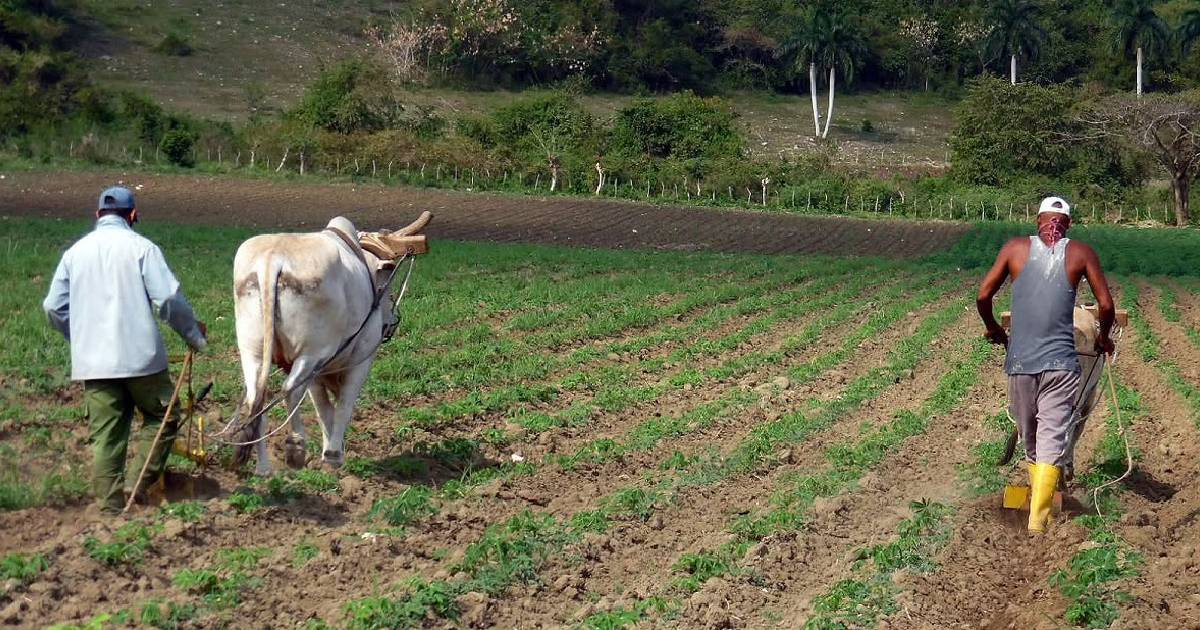
Researchers from Villa Clara are working on two projects aimed at reducing reliance on imported food, focusing on the production of native potato seeds in four municipalities and the cultivation of coffee varieties adapted to flatland areas.
The announcement was made by Raciel Lima Orozco, Vice Rector of the Central University Marta Abreu of Las Villas and coordinator of the Food Group of the Villa Clara Productive Scientific Pole, who acknowledged that the context is challenging.
"The outlook is challenging for achieving innovation; there are results, but current conditions do not allow for their application. Even those that are already accepted and have proven impacts find it very difficult to be implemented," emphasized Lima cited this Thursday by the provincial broadcaster CMHW.
In terms of potatoes, the goal is to achieve domestic production that eliminates dependence on imported seed, primarily from Brazil, in collaboration with the National Institute of Tropical Roots (Inivit).
The urgency of that goal is clear from the numbers. The 2024-2025 potato harvest in Villa Clara was a complete failure, with only 2,240 tons across more than 200 hectares and a yield of 11 tons per hectare, less than half the normal standard of 22.5 and far from the potential of 30.
Nationally, potato production fell by 51% by the end of September 2025, driven down by rising costs of technological supplies and imported seed.
As for coffee, researchers are developing varieties capable of growing in the lowlands, specifically in the municipalities of Remedios and Placetas, in order to break with the traditional notion of cultivation in the mountainous areas of eastern Cuba.
"We are working with four municipalities to obtain a potato seed to achieve local production that does not depend on imports, as well as a group of coffee varieties to produce coffee even in flat areas, with a different approach in the municipalities of Remedios and Placetas," Lima explained.
The researcher also mentioned the commercialization, alongside Geominera del Centro, of a mineral supplement for livestock, a premix for pigs, and a poultry supplement for egg production, all developed in collaboration with experts from the esteemed educational institution in Villa Clara.
The backdrop of these projects is a food crisis that the regime itself recognizes as a national emergency, considering that Cuba imports between 70% and 80% of the food it consumes, more than one-third of households face severe difficulties accessing sufficient food, and 98.8% of Cubans report that prices have risen dramatically.
On June 19, Prime Minister Manuel Marrero Cruz presented 176 economic and social transformations to the National Assembly, featuring a focus on agricultural reforms that include indefinite land usufruct, price decentralization, and greater freedoms for cooperatives.
Lima is confident that this set of measures will create room for validated scientific results to reach consumers: "Everything consumed in Villa Clara involves science, technology, and innovation; perhaps the recently approved package of measures will allow those results that have proven to be valid to make an impact, increase production, and ultimately be reflected on the plates of Cubans with lower-cost food."
Filed under: