
Related videos:
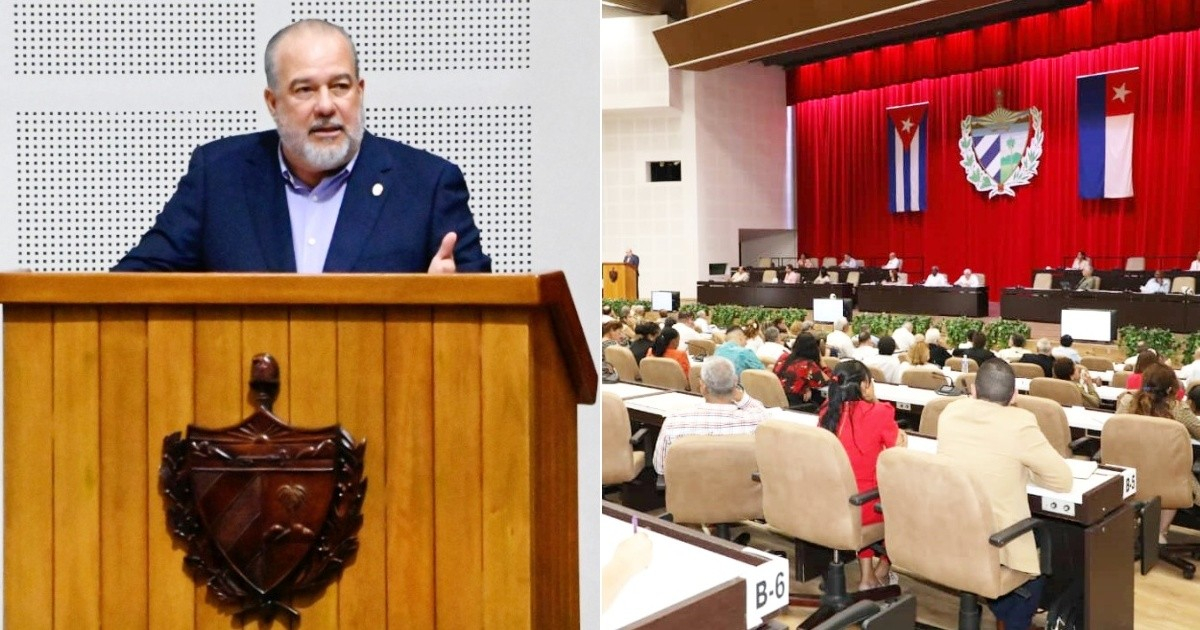
The Cuban government presented this Thursday to the National Assembly a package of 176 economic and social transformations that represent, due to their scope, the largest attempt at structural reform since the most challenging years of the Special Period.
The measures were outlined by Prime Minister Manuel Marrero Cruz as part of a strategy to confront the worst economic crisis the country has faced in decades, which has led to widespread shortages, inflation, blackouts, a decline in production, and an unprecedented migratory exodus.
Although the official discourse insists that these transformations aim to "preserve socialism", the content of the document implies an unprecedented opening to market mechanisms, private capital, foreign investment, private banking, stock trading, partial dollarization, and economic decentralization.
The proposal groups the 176 measures into 23 key areas.
What areas do the 23 fundamental axes address?
Axis 1. Economic Actors
More autonomy for state-owned companies, wage flexibility, the possibility of creating subsidiaries and state-run small and medium-sized enterprises, stock purchases, bankruptcies, financial investment, expansion of powers for the private sector, private agricultural companies, supply markets, and productive linkages.
Axis 2. Property and Management
Maintain formal social ownership but allow the purchase of shares and participation of private actors, both foreign and Cuban émigrés.
Axis 3. Planning
Less centralized allocation of resources and greater use of market mechanisms.
Axis 4. Budgeted Sector
Reduction and reorganization of ministries and state structures.
Axis 5. Municipal Autonomy
More economic, budgetary, and local development competencies.
Axis 6. Energy
Private and foreign investment in fuels and incentives for renewables.
Axis 7. Agriculture
Expanded usufruct, direct foreign trade, liberated prices, and productive incentives.
Axis 8. Social Policy
Digitalization of aid and mandatory social responsibility for economic actors.
Axis 9. Subsidies
Gradual shift from subsidies for products to targeted subsidies for individuals.
Axis 10. Work and Wages
Salary reform, changes in pensions, multiple employment, and telecommuting.
Axis 11. Banking and Finance
Private banking, virtual assets, currency reforms, and private exchange houses.
Axis 12. Taxes
Gradual VAT, electronic invoicing, and sectoral tax incentives.
Axis 13. Prices
Decentralization and greater market reference.
Axis 14. Foreign Investment
More facilities, fewer procedures, and expanded access to sectors.
Axis 15. Foreign Trade
More open export and import for private enterprises and cooperatives.
Axis 16. Partial Dollarization
Expansion of foreign currency operations.
Axis 17. Tourism
Real estate businesses, franchises, marinas, private agencies, and new investment modalities.
Axis 18. Transport
Import and marketing of electric vehicles.
Axis 19. Trade and Services
Increased private and foreign participation in trade, gastronomy, and services.
Axis 20. Insurance
New products and mandatory insurance.
Axis 21. Digitalization and AI
Data governance, private data centers, and the knowledge economy.
Axis 22. Statistics
Modernization of the national statistical system.
Axis 23. Control and Inspection
Comprehensive review of the framework for state supervision and control.
Next, the measures announced in each area are presented.
1. State enterprise and economic actors: the acknowledgment that the socialist enterprise does not function
The first set of measures aims to radically transform the operation of the state enterprise, historically regarded as the backbone of the Cuban socialist model.
The government proposes:
Grant autonomy to state-owned enterprises.
-Allow them to engage in any lawful economic activity.
-Decentralize price approval.
-Reduce the role of the OSDE.
-Authorize mergers, liquidations, and restructurings.
-Streamline the use of profits.
-Remove the state salary scale.
-Connect salaries to the economic capacity of each company.
-Eliminate permanent subsidies.
-Allow financial investments.
-Create capitalization mechanisms.
-Conduct asset valuations.
-Allow the leasing of state assets.
-Create bankruptcy procedures.
-Transform state-owned enterprises into joint-stock companies.
-Authorize the purchase of shares by private companies and individuals.
For the first time, it is explicitly acknowledged that many state-owned enterprises will need to compete under similar conditions to the private sector, and that some may disappear if they are not economically viable.
At the same time, the powers of micro, small, and medium enterprises (mipymes) and cooperatives are being significantly expanded
-Approval of pending companies.
-Less bureaucratic procedures.
-Private companies with more than 100 employees.
-Opportunity to have multiple businesses.
-Anonymous societies.
-Multiple shareholding.
-Usufruct and surface rights.
-Deposits in foreign currency.
-Reduction of prohibited activities.
-Private agricultural enterprises.
-Input markets.
-National platform for productive linkages.
In practice, this axis implies the recognition of a private sector that is much broader and more complex than what has been officially acknowledged until now.
2. Property and management: the opening to private ownership of state shares
The second axis seeks to redefine the relationship between ownership and management.
The State formally maintains social ownership over the fundamental means of production, but opens the door to:
-Purchase of shares in state-owned companies.
-Participation of individuals.
-Participation of private companies.
Participation of cooperatives.
-Participation of foreign investors.
-Participation of Cubans residing abroad.
Additionally:
The legitimate growth of private wealth is acknowledged.
-An investment program is being promoted for Cubans both inside and outside the country.
This is one of the most important ideological changes in the document, as it accepts mechanisms similar to mixed economies where state ownership and private shareholders coexist.
3. Economic Planning: Less Centralization, More Market
The government proposes to gradually abandon planning based on the administrative distribution of resources.
The measures include:
-Medium and long-term financial planning.
-Inclusion of the private sector in economic plans.
-Use of market signals.
-Decentralized access to supplies and foreign currency.
-Contracting for state assignments.
-Maintenance of strategic balances.
-Decentralization of investments.
Essentially, the State acknowledges that it can no longer control all economic flows through administrative orders.
4. Resizing of the State
This axis proposes a significant reduction of the bureaucratic apparatus. It includes:
-Reduction of ministries.
-Reorganization of bodies.
-Reduction of administrative structures.
-Reduction of workforce.
-Restructuring of provincial and municipal governments.
The stated objective is to reduce expenses and make public administration more efficient.
5. More autonomy for the municipalities
The municipalities would receive greater powers to:
-Strategic planning.
-Urban planning.
Food security.
-Community services.
-Local economic development.
-Export and import.
- Currency management.
-Attraction of foreign investment.
-Budget management.
Tax administration.
-Human resources.
This represents an unprecedented decentralization within the Cuban model.
6. Energy: opening fuel to private capital
In response to the energy crisis, the government proposes:
-Private and foreign participation in fuels.
-Private marketing of fuels.
-Modernization of service stations.
- Mandatory photovoltaic systems.
-Solar charging stations for electric cars.
- Credits for energy transition.
-International payments through foreign platforms.
-Tax of up to 1% on fuel imports.
Tax benefits for renewable energy.
It is one of the most striking economic openings as it impacts a sector that has historically been monopolized by the state.
7. Agriculture: the largest agrarian reform since the 1990s
Agriculture encompasses one of the largest amounts of transformations. Among them:
- Indefinite usufruct.
-Removal of the direct work requirement.
-Access for individuals.
-Access for private companies.
-Access for joint ventures.
-Access for cooperatives.
Furthermore:
-Cooperatives will be able to import directly.
-Cooperatives will be able to export.
-Cooperatives will be able to manage external financing.
-Cooperatives will be able to open accounts abroad.
The marketing is also being made more flexible:
-Prices set by producers and buyers.
- Free hiring.
- Public price information.
- Foreign currency input markets.
-Access to the foreign exchange market.
And it is proposed:
-Create an Agricultural Development Bank.
-Decentralize the Agricultural Development Fund.
The implicit message is clear: without market incentives, there will be no productive recovery.
8. Social Transformations
The government is trying to offset the impact of the economic reforms. The measures include:
-SOVEREIGNTY platform to identify vulnerable individuals.
-Business support for retirees.
-Support for elderly homes.
-Support for unprotected children.
-Support for health centers.
-Support for schools.
-Discounts for vulnerable individuals.
-Local emergency funds.
Employment and training for vulnerable individuals.
Basic modules.
-Funeral support.
-Popular fairs.
Also:
-Strengthening of social work.
-Delivery of assets for self-employment.
-Educational services with income generation.
Differentiated rates for children's circles.
Tax benefits for workshops for individuals with disabilities.
9. From subsidy for products to subsidy for people
This axis represents one of the most significant changes. The government proposes:
-Remove generalized subsidies.
-Transfer actual costs to prices.
-Eliminate subsidies for fuels.
-Remove electricity subsidies.
-Remove subsidies for transportation.
-Eliminate subsidies for water.
-Eliminate other productive subsidies.
In exchange: Create a Social Protection Fund.
10. Labor and wage reform
The measures include:
-Comprehensive salary reform.
-Adjustment for inflation.
- Increase in the minimum wage.
-Pension adjustment.
-Removal of limits on social contributions.
-Recognition of years dedicated to family care.
-Removal of obstacles to multiple employment.
-Incentives for young people.
- Financial assistance for those separated from employment.
-Reduced working hours.
-Remote work from abroad.
- Flexible suspension of social service.
-Work restructuring with severance pay.
It is an acknowledgment that the current wage system has lost its ability to retain the workforce.
11. Banking, financial, and exchange system
Probably the most revolutionary aspect of the package. It includes:
-Private banking.
-Private financial institutions.
-Private microloans.
-Accounts in foreign currency without authorization.
- Virtual assets.
-Cryptocurrencies.
-Fintech.
-Transfermóvil as a financial entity.
-Removal of limits on transfers.
In the area of currency exchange: Private exchange houses.
-Digital exchange market.
-Currency auctions.
-Successive devaluations.
-Participation of private actors.
Private formalization of remittances.
12. Tax reform
The measures include:
-Gradual implementation of VAT.
-Electronic invoice.
-Bonuses for banking services.
-Lower tax on profits.
-Tax on companies with recurring losses.
-Agricultural tax benefits.
-Accelerated depreciation.
-Incentives for social investment.
-Update on personal income tax.
-Lower minimum exempt.
-Simplified regime.
-Increase in taxes on vehicles, vessels, documents, and advertising.
13. Pricing Policy
The government is partially abandoning the price administrative system. It proposes:
-Decentralization.
-Use of market references.
-Training through value chains.
-Removal of the method based solely on costs.
It is an acknowledgment that price caps failed to control inflation.
14. Foreign investment
The measures aim to attract foreign capital. They include:
Foreign investment in private companies.
Investment in cooperatives.
-Surface rights for 99 years.
-Usufructs exceeding 50 years.
-Accounts abroad.
- Real estate transactions.
- Elimination of mandatory employer entities.
-Exchange rate flexibility.
-Less bureaucracy.
-Positive administrative silence.
Investment in Old Havana.
15. Foreign trade
The transformations aim to break the state monopoly. They include:
-Decentralized export.
- Foreign trade for private individuals.
- Foreign trade for cooperatives.
-Negative nomenclature.
-International sale of brands and patents.
16. Partial dollarization
The government acknowledges the increasing dollarization. It proposes:
-Expand operations in foreign currencies.
- Business use of the dollar.
-New currency contribution schemes.
- Greater circulation of foreign currency.
17. Tourism
Tourism is opening up significantly to new modalities. The measures include:
-Leases.
- Tourist usufructs.
-Concessions.
-Real estate sale.
Real estate development.
- Tourist marinas.
Joint ventures.
-Private agencies.
-Private guides.
-Destination managers.
-Online corporate banking.
-Cuban franchises abroad.
-Ecotourism.
- Specialized tourism.
18. Transport
The measures aim to accelerate electrification. They include:
-Elimination of restrictions for purchasing vehicles.
-Direct import of electric cars.
-Tax exemptions.
-Private assembly of electric motorcycles and tricycles.
19. Trade, gastronomy, and services
The State makes it clear that the private sector will play a more prominent role. Among the measures:
-Priority to non-state forms.
-Wholesale markets open.
-Foreign entities providing services.
Private trade chains.
-International franchises.
-Bidding for parks and zoos.
-Formalization of street vendors.
-Digital bidding system.
-Gradual replacement of the ration book.
-Commercial imports by individuals.
20. Insurance
The transformations include:
- Supplemental life insurance.
-Currency policies.
- Transportation insurance.
-Travel insurance.
-Medical insurance.
-Mandatory insurance for drivers.
21. Artificial intelligence and digital economy
The government is betting on digitalization. The measures include:
-National AI framework.
-Data governance.
-Export of digital services.
Foreign investment in data centers.
-Private data centers.
- VoIP (Voice over Internet Protocol).
-Cloud services.
-Private mobile and fixed networks.
-IA in public procurement.
-Mixed postal management.
-Recognition of data as a factor of production.
22. National Statistical System
The reforms include:
-Update of the statistical system.
-Change of the base year for national accounts.
-Recovery of producer price indices.
-Recovery of foreign trade statistics.
23. Control and inspection
The last axis acknowledges that this entire transformation requires a profound legal restructuring. It proposes:
-Create a working group led by the PCC.
-Review control mechanisms.
-Modify more than 148 legal regulations.
-Repeal 15 regulations.
-Completely modify 22.
- Partially modify 79.
Approve 32 new higher regulations, distributed among 10 laws; 14 decree-laws and 8 decrees.
An implicit admission of economic failure
Beyond the official language regarding the defense of socialism, the content of the 176 measures signifies an acknowledgment that many of the mechanisms that have defined the Cuban economy for decades have not succeeded in generating growth or well-being.
The document opens avenues for private enterprise, allows private banking, permits the buying and selling of shares, facilitates foreign investment in previously restricted sectors, recognizes market-driven price formation, and proposes the gradual elimination of general subsidies.
In other words, the government is attempting to rescue a struggling economy using tools that have been rejected or limited for years due to ideological reasons.
The success or failure of this ambitious program will depend not only on the approval of the announced regulations but on the state's actual ability to implement them in a context marked by a lack of foreign currency, a decline in production, and the increasing deterioration of living conditions for Cubans.
Filed under: