
Related videos:
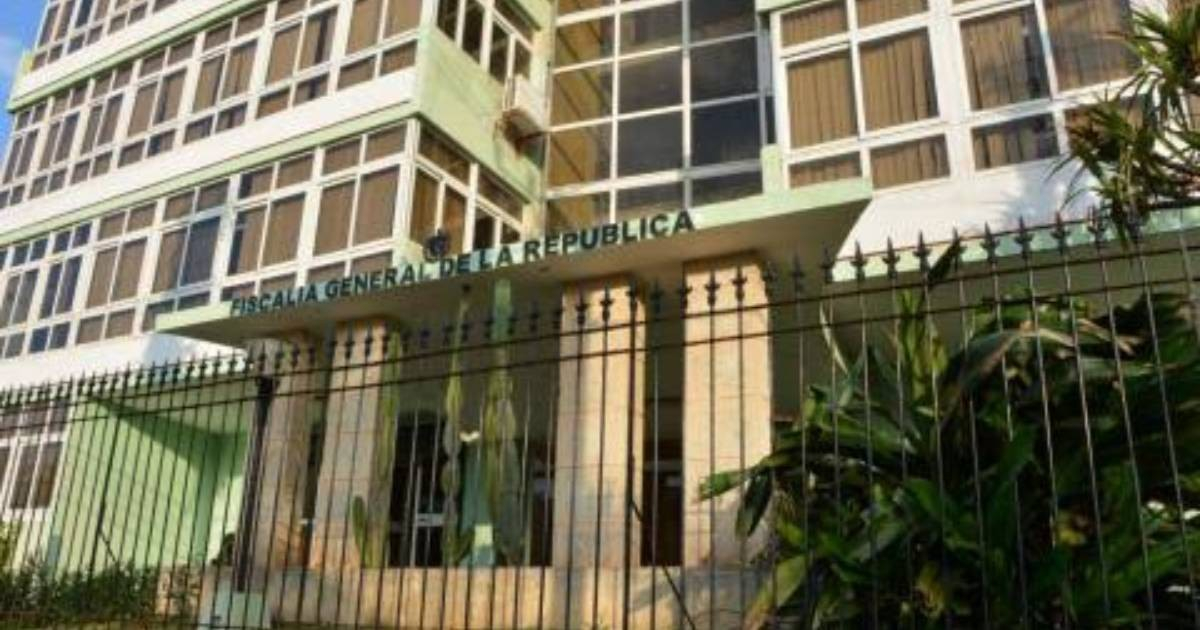
The Attorney General's Office published an article this Monday to explain the scope of the new , which came into effect this month after the 180-day deadline set from its publication in the Official Gazette was met.
The regulation, approved by the National Assembly of People's Power on July 18, 2024, and officially published on January 9, 2026, represents the first Cuban legislation that comprehensively governs citizens' access to public information and the transparency obligations of state institutions.
In its publication, the Prosecutor's Office states that the law develops principles included in the 2019 Constitution. Among them, Article 53, which recognizes the right of all individuals to request and receive "truthful, objective, and timely" information from the State; Article 97, regarding the protection of personal data; and Article 101, which requires State organs and their officials to act transparently.
According to the agency, the legislation establishes the National System of Transparency and Access to Public Information, the implementation of which will be coordinated by the Ministry of Science, Technology, and the Environment (CITMA).
The law establishes that the so-called "obligated subjects" —including state agencies, public enterprises, and entities that manage state resources— must proactively disclose information of public interest, without waiting for it to be requested by citizens.
It also establishes a deadline of 15 business days to respond to information requests, with an extension possible only in duly justified cases.
However, the regulation also includes exceptions that allow for restricting access to information related to national security and defense, sovereignty, ongoing judicial processes, personal data, and trade secrets, among other cases.
The entry into force of the law coincides with a situation in which Cuba continues to be among the countries with the greatest restrictions on the practice of journalism and access to information.
In the 2026 edition of the World Press Freedom Index by Reporters Without Borders, the Island ranked 160 out of 180 countries, placing it among the lowest results in the Americas.
On the other hand, independent organizations monitoring freedom of expression reported 1,188 violations against journalists, activists, and citizens during 2025, while in January 2026 they documented 114 new aggressions, including dozens of arbitrary detentions.
The Cuban constitutional framework also establishes that the fundamental means of communication are state or socially owned, a model that restricts the existence of independent media and has been criticized by international organizations dedicated to the defense of press freedom.
In its publication, the Prosecutor's Office asserts that the new legislation will help to "strengthen the culture of transparency" and to establish "a more efficient, organized, and participatory public management." The practical application of the law and the effective scope of the right to access information will now be some of the key aspects that will define its implementation.
Filed under: