
Related videos:
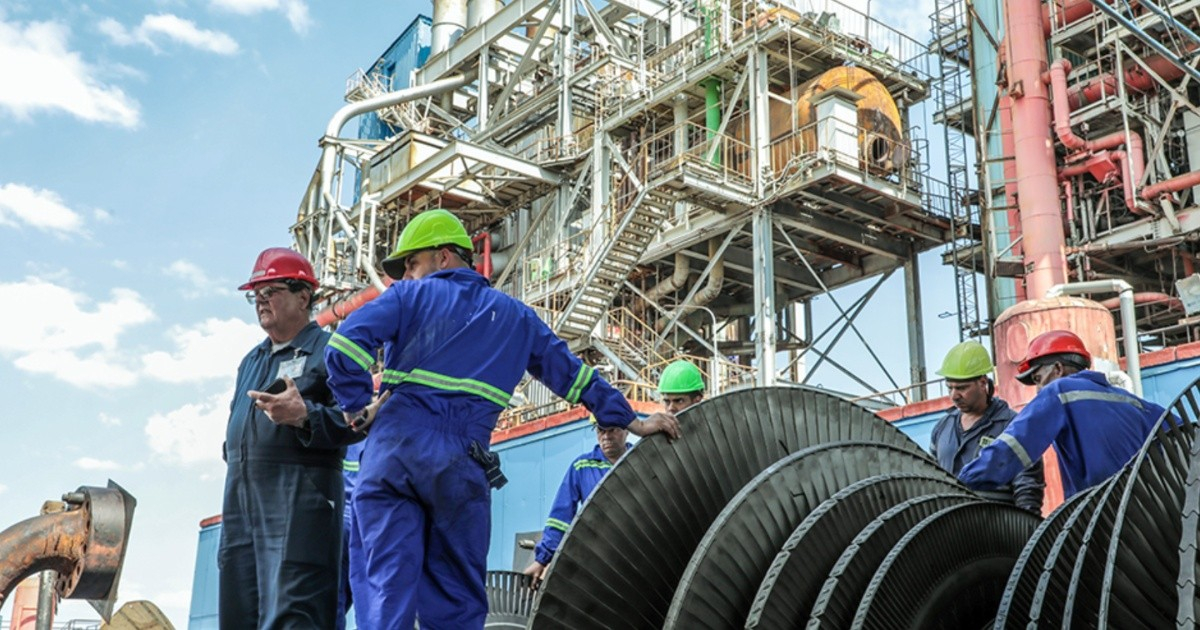
The Electric Union (UNE) announced that at 1:10 AM this Wednesday, the National Electroenergetic System (SEN) was interconnected across all provinces of the country, including the commissioning of Unit 1 of the Lidio Ramón Pérez Felton CTE in Holguín.
However, the technical reconnection does not mean the end of power outages for Cubans.
At six in the morning this Wednesday, the availability of the SEN was just 1,000 MW against a demand of 2,750 MW, with 1,780 MW affected.
The outlook for the peak nighttime schedule is even more critical: the UNE projects an availability of 1,083 MW against a demand of 3,100 MW, resulting in an estimated deficit of 2,017 MW and a projected impact of 2,047 MW.
This reconnection process was a result of the mass blackout on Monday, when Cuba experienced its seventh total disconnection from the SEN in 18 months and the third in 2026, triggered by the shutdown of Unit No. 6 at the Nuevitas thermoelectric plant in Camagüey.
The restoration was gradual: on Tuesday, the SEN was interconnected from Pinar del Río to Holguín, and in the early hours of this Wednesday, the national reconnection was completed.
Despite the formal reconnection, multiple thermal power units remain out of service due to breakdowns: units 5, 6, and 8 of the Mariel thermoelectric power plant, the unit at the Guiteras thermoelectric plant, unit 4 of the Cienfuegos thermoelectric plant, unit 6 of the Diez de Octubre thermoelectric plant, and unit 2 of the Felton thermoelectric plant.
Unit 3 of the CTE Habana, Unit 5 of the CTE Nuevitas, and Units 5 and 6 of the CTE Renté are currently under maintenance, resulting in thermal generation limitations totaling 255 MW.
During peak hours, the commissioning of unit 5 at the Mariel CTE with 48 MW and unit 3 at the Renté CTE with 35 MW is expected, contributions that are insufficient to reverse the structural deficit.
The 54 photovoltaic solar parks generated 2,512 MWh on Tuesday, with a maximum capacity of 548 MW during the daytime, but that capacity does not cover the nighttime deficit when demand surges.
The crisis has structural roots: Cuba has gone more than three months without receiving oil shipments and produces only about 40,000 barrels daily, well below the 90,000 to 110,000 needed to sustain the electrical system.
In addition, 106 distributed generation plants remain shut down due to a lack of fuel, which represents 890 MW of unavailable capacity.
It is expected that the CTE Antonio Guiteras will synchronize with the SEN this Thursday to contribute around 200 MW, although the plant has experienced 17 outages from the system just in 2026 and has not received major maintenance since 2010.
Social desperation is being felt: early Wednesday morning, protests known as cacerolazos occurred in Alamar, where residents burned trash in the street, and also in La Hata, Guanabacoa.
In some areas of Matanzas, power outages last up to 87 consecutive hours, while in Havana the average is 15 hours daily without electricity.
Filed under: