
Related videos:
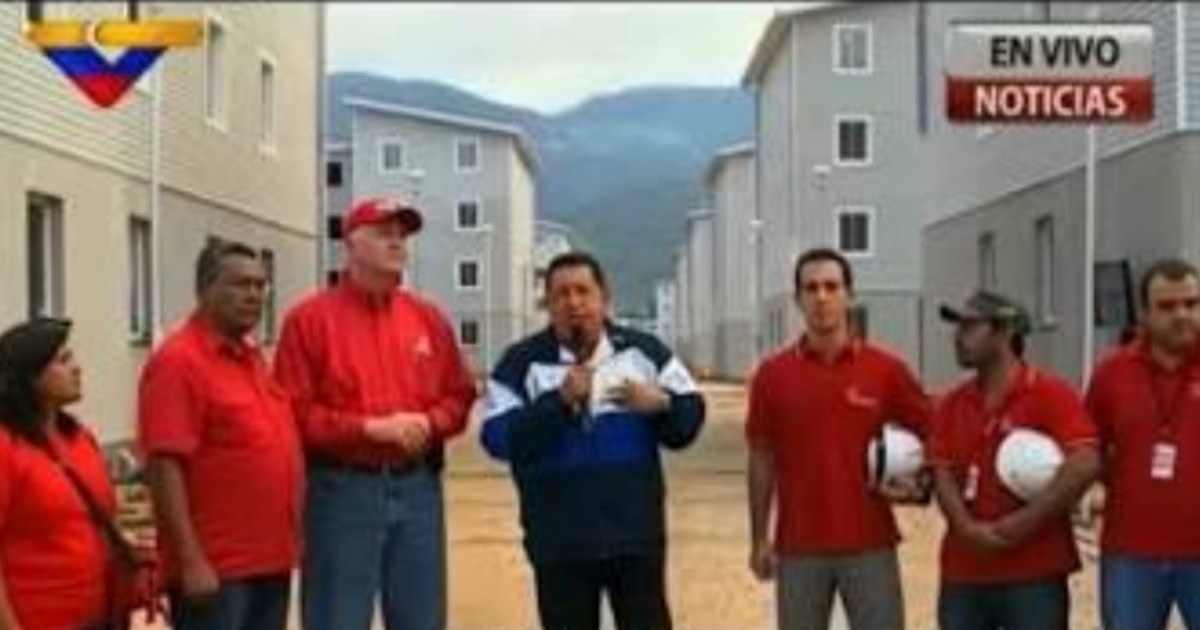
In 2012, Hugo Chávez took to a platform in Playa Grande, La Guaira state, to celebrate the handover of the Urbanismo Hugo Chávez Frías, a housing complex built with Turkish cooperation that promised to be a symbol that even the poorest could lead a dignified life.
Fourteen years later, that same complex is a field of rubble after the earthquakes of magnitudes 7.2 and 7.5 that shook Venezuela on June 24, 2026.
The correspondent for VPItv Johan Álvarez, who toured the area on Tuesday—13 days after the earthquake—documented the extent of the disaster: of the approximately 190 buildings in the development, nearly 80% completely collapsed.
"This urban area comprises at least 190 buildings, as nearly 80% of the constructions have totally collapsed," Álvarez noted, adding that the construction "does not meet international standards" and that the buildings "have been heavily criticized."
The complex, built by the Turkish company Summa as part of a bilateral agreement signed in 2011, housed approximately 3,400 families. According to a report by Milenio Televisión, the four-story buildings were constructed with lightweight materials—expanded polystyrene, aluminum, and thin sheets—instead of concrete and steel, without proper foundations and lacking beams or columns capable of supporting the weight of the structure.
"You can see how all of this is plastic; there are no foundations at the bottom, there is no type of groundwork, just a very thin layer of a very light material," described the reporter from Milenio TV while showing the remains of the houses.
During the inauguration, Chávez had celebrated the project as a success of international cooperation: "Thanks to the cooperation with Turkey, which is a Turkish company called Suma, working, bringing technology, bringing machinery, building together with us this residential complex by the sea."
What the then-president did not mention —and what investigations by Armando.info documented over a decade ago— is that the project was the result of a personal decision by Chávez, who was impressed by the works of Summa in Libya, and that the constructions never met Venezuelan seismic standards.
The promise of "anti-seismic" housing turned out to be one of the most costly lies of chavismo. Emanuel Figueroa, a resident of the complex, lost his wife and daughter when the building collapsed.
"They assured us that these homes would be strong, as they were earthquake-resistant, and we felt reassured," Figueroa stated in the Milenio TV report.
Without family and without a home, Figueroa no longer speaks as a supporter of the government. His message is direct: “Don’t believe in words, or in fanciful promises, because you will end up like us. We believed and thought that this was going to be good when it was bad; it was terrible. And the poorest once again found themselves without a house and most without family.”
The collapse of Urbanism Hugo Chávez has reopened the debate regarding the contracts of businessman Alex Saab with the Gran Misión Vivienda Venezuela, a program that, according to a report by Infobae, was linked to multimillion-dollar contracts with documented irregularities.
The official balance of the earthquake reported more than 3,500 dead and 16,740 injured, while the UN estimated over 50,000 missing. In La Guaira, the hardest-hit area, more than 17,000 people were left homeless following the collapse of 250 buildings.
Filed under: