
Related videos:
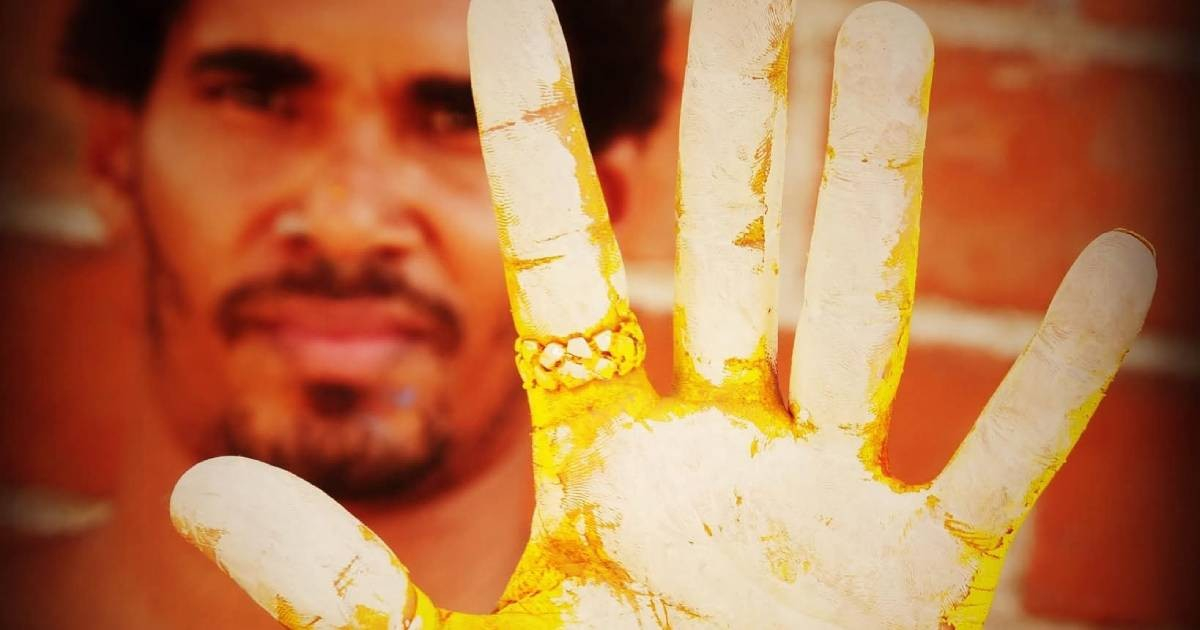
Luis Manuel Otero Alcántara was taken out this Tuesday from the maximum-security prison in Guanajay, Artemisa, amid a significant operation, according to activist Idelisa Diasniurka Salcedo Verdecia, who claimed to have received the information through a phone call from the prison itself.
"After a call received from prison, we are informed that Luis Manuel was removed from the Guanajay correctional facility in the midst of a heavy operation," wrote Salcedo Verdecia on .
So far, the location to which the artist and prisoner of conscience has been transferred is unknown, a situation that increases the uncertainty surrounding his case as only two days remain until July 9, the date on which, according to the sentence, his five-year prison term should come to an end.
The lack of information is precisely fueling one of the scenarios that human rights organizations have been warning about for months. Cubalex recently raised concerns about the risk that authorities might fabricate a new criminal charge to prevent their release, a practice that, according to the organization, has been previously used against other opponents and activists.
The case was presented to the UN General Assembly on Tuesday
The transfer coincides with a moment of significant international pressure on the Cuban regime.
During the extraordinary session of the United Nations General Assembly held this Tuesday, the U.S. ambassador to the UN, Mike Waltz, displayed photographs of several Cuban political prisoners and began his speech by mentioning Otero Alcántara.
"His crime was being an artist," stated the American diplomat while recalling that the founder of the San Isidro Movement remains imprisoned in a maximum-security facility despite the fact that his sentence is nearing its end.
Otero Alcántara was arrested on July 11, 2021, during the historic protests of 11J, and in June 2022, he was sentenced to five years in prison for offenses against the symbols of the homeland, contempt, and public disorder.
Amnesty International recognizes him as a prisoner of conscience.
His judicial process has been surrounded by questions. In April of this year, the Supreme People's Tribunal rejected a habeas corpus appeal submitted by Cubalex, which argued that the sentence should be deemed served when accounting for the time in pre-trial detention and the reductions allowed for good behavior.
In the weeks leading up to the scheduled date of his release, there were also reports of periods of communication breakdown with his family and lawyers.
"When will I be free?"
Despite remaining imprisoned, the artist has continued to denounce his situation.
In April, he published a letter titled "When Will I Be Free?" in The New York Times, and in May, he granted an interview to USA Today, where he defended the role of art as a tool for social transformation.
"We found a path in art, a reason to believe that art could change things, and we decided to dedicate our bodies to a change in Cuba," he then stated.
On June 12, Cubalex and the Studio of Luis Manuel Otero Alcántara launched an international countdown campaign toward the fulfillment of his sentence under the slogan:
"May each image be one day less. May each post be public vigilance."
The transfer also occurs in a context of growing concern over the human rights situation in Cuba. Prisoners Defenders reported in June a record of 1,281 political prisoners on the island, making the case of Luis Manuel Otero Alcántara one of the most visible symbols of repression against artists, activists, and opponents.
Filed under: