
Related videos:
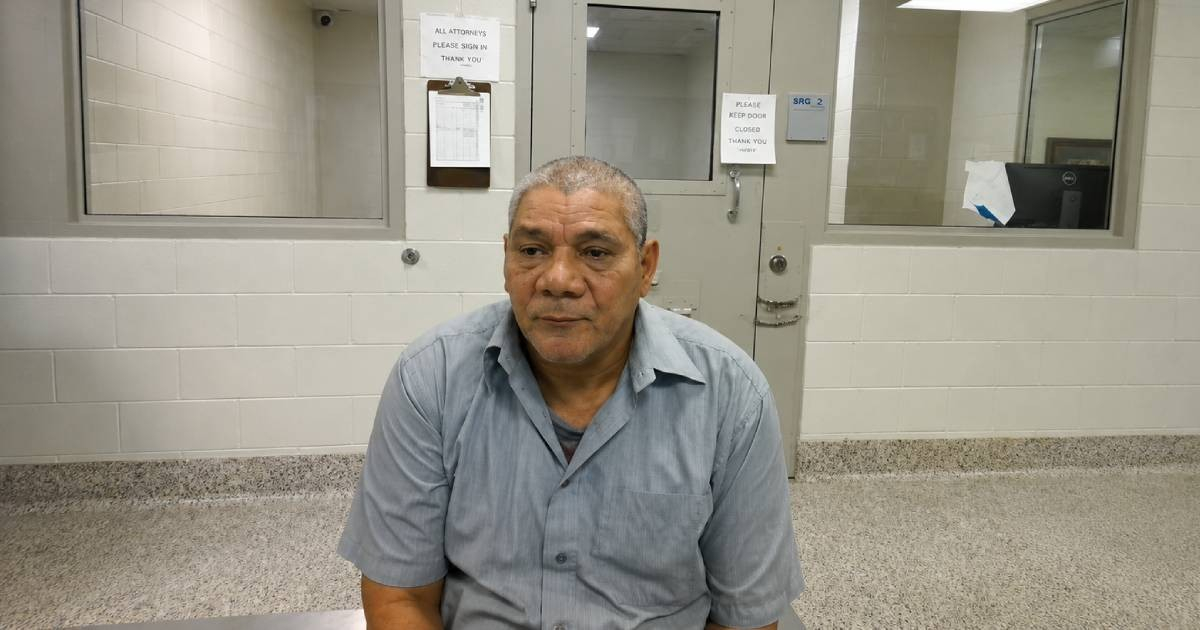
The U.S. Immigration and Customs Enforcement (ICE) announced this Wednesday the deportation of the Cuban citizen Luis Álvarez García, who was convicted in that country of attempted murder and possession of cocaine, a case that the agency presented as an example of the impact of the agreements reached with Cuba to accept the return of nationals with criminal records.
In a post shared on its social media account X, ICE explained that Álvarez García had remained under supervised release for years after serving his sentence in the United States because the Havana regime refused to accept back many of the Cubans who emigrated during the Mariel exodus in 1980.
"Álvarez García was released under a supervision order from ICE because he was freed from prison and Cuba was not repatriating Cubans from Mariel," noted the agency.
ICE added that the situation changed thanks to the diplomatic efforts initiated by the administration of Donald Trump.
"Thanks to President Trump's diplomatic efforts, criminal Cubans like Álvarez García can finally be sent home, and that's exactly where he's headed," he stated.
Years in freedom due to lack of agreements with Cuba
Álvarez García arrived in the United States during the Mariel exodus, which took place between April and October 1980, when over 125,000 Cubans emigrated from the port of Mariel to Florida.
After serving his sentence, he was placed under an ICE supervision order (form I-220B), a mechanism that requires foreigners with a deportation order to periodically report to immigration authorities when their expulsion cannot be carried out due to the home country’s refusal to accept them.
For decades, that was the situation for many Cubans who arrived during the Mariel exodus, whose deportation remained stalled due to the lack of cooperation from Havana.
Change of policy and increase in deportations
The scenario began to change on February 9, 2026, when Cuba accepted for the first time a flight with deportees that included dozens of citizens convicted of serious crimes in the United States. That plane transported 170 Cubans, among them at least 50 with criminal records, marking a turning point in migratory cooperation between the two countries.
The deportations of Cubans from the U.S. to the island have increased steadily during Donald Trump's second term. While under Joe Biden's administration there were 21 flights to Havana with 978 people deported, in less than 18 months of Trump's current presidential term, there have been 18 direct flights with 2,164 repatriated individuals.
Since the resumption of deportation flights in April 2023, a total of 3,142 Cuban citizens have been returned in 39 air operations, according to official figures from the U.S. Department of Homeland Security and the Ministry of the Interior of Cuba.
Meanwhile, arrests of Cuban migrants by ICE increased by 463% between late 2024 and early 2026, according to official data. More than 42,000 Cuban citizens have final deportation orders pending execution in U.S. territory.
Filed under: