
Related videos:
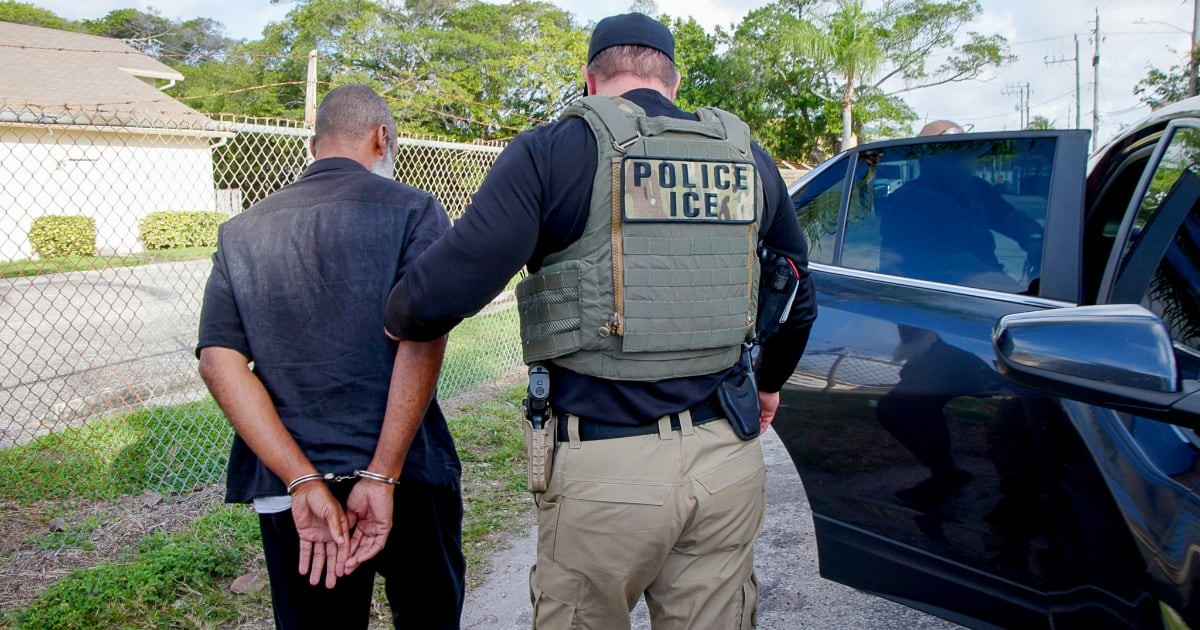
An analysis by the Cato Institute reveals the devastating impact of the Trump administration's immigration policies on Cubans in the United States: detentions of Cubans by Immigration and Customs Enforcement (ICE) surged by 463% from October 2024 to January of this year.
On the other hand, the approvals of permanent residency (green cards) for them collapsed by 99.8% during the same period.
The Cato Institute is a think tank based in Washington, D.C.; it is not affiliated with any political party and promotes public policies guided by principles of individual freedom, limited government, free markets, and peace.
The data, gathered in a report on arrests and residency approvals, illustrate the consequences of the current immigration policy of the White House, which has left tens of thousands of Cubans in an unprecedented legal limbo.
The report, which was accessed by journalist Daniel Benítez from Univisión 23, reveals that in January of this year, the U.S. Citizenship and Immigration Services (USCIS) received 7,086 applications for residency from Cubans, but only approved 15 and denied four, with thousands of cases on indefinite hold.
To quantify the decline, a comparison suffices: in February 2025, the last full month of the Biden administration, USCIS approved 10,984 permanent residencies for Cubans.
The mechanism behind this collapse is, according to the Cato Institute, deliberate and coordinated.
"Cuban immigrants have been subject to even more coordinated persecution. At the end of February 2025, USCIS suspended all immigration applications, including those for permanent residency, Temporary Protected Status, employment authorization documents, and other immigration benefit requests from applicants who entered under the parole programs for Cuba, Haiti, Nicaragua, and Venezuela, canceling their underlying parole status, once again to facilitate their arrest by ICE," the text states.
The suspension of procedures for beneficiaries of the CHNV parole turned thousands of migrants who had entered legally into direct targets of ICE, leaving them without valid immigration status.
Cuban individuals turned out to be the most affected for a specific reason: the Cuban Adjustment Act of 1966 grants them the right to apply for permanent residency after one year of legal presence in the country, bypassing the usual consular process.
"Cubans were the most affected because, under the Cuban Adjustment Act, they all met the requirements to obtain permanent residency and a green card," concludes the report from the Cato Institute.
However, what the Cuban Adjustment Act establishes following the USCIS pause was effectively put on hold: the administration cannot repeal the law—only Congress can do that—but it did block its enforcement by halting the processes and canceling the parole that provided legal support to applicants.
The case of José Miguel Suri Hernández illustrates this legal trap: he entered the United States legally via parole in 2024, was eligible for a green card under the Cuban Adjustment Act, and had his application pending, but he was detained by ICE in March 2026 because USCIS had suspended his case for seven months.
In December 2025, the suspension was extended to Cubans and nationals from another 18 -later 40- nationalities, related to the presidential travel restriction decree from June 2025.
In February, the director of ICE and the director of USCIS signed a joint memorandum authorizing the arrest of refugees with pending applications, revoking an internal policy that explicitly prohibited it.
Florida leads in the arrests of Cubans with 708 cases reported by December 2025, concentrated in the counties of Miami-Dade, Broward, and Collier, according to data from the Department of Homeland Security.
The ICE office in Miami leads immigration arrests in the United States since Trump took office, with an average of 120 daily detentions, according to an analysis by The New York Times cited by the organization Americans For Immigrant Justice.
The ICE office in Miami—covering Florida, Puerto Rico, and the Virgin Islands—has recorded 41,310 arrests since January 2025, of which 9,880 occurred so far in 2026, more than any other office in the country.
The detention of migrants in public spaces increased by 1,000 % in the United States during 2025, while arrests in the community rose by 600 %, according to the American Immigration Council.
Since January 2025, more than 4,883 Cubans have been deported from the United States, including on direct flights to Cuba and to third countries such as Mexico, South Sudan, and Eswatini.
In light of the backlog in procedures, lawyers filed a federal class action against USCIS for delays in over 100,000 Cuban residency applications, submitted in March 2026.
The Department of Homeland Security reports 42,084 Cubans with final deportation orders, a figure recorded in November 2025, which suggests that the migratory pressure on the Cuban community in the United States is unlikely to ease and may intensify in the coming months.
Filed under: