
Related videos:
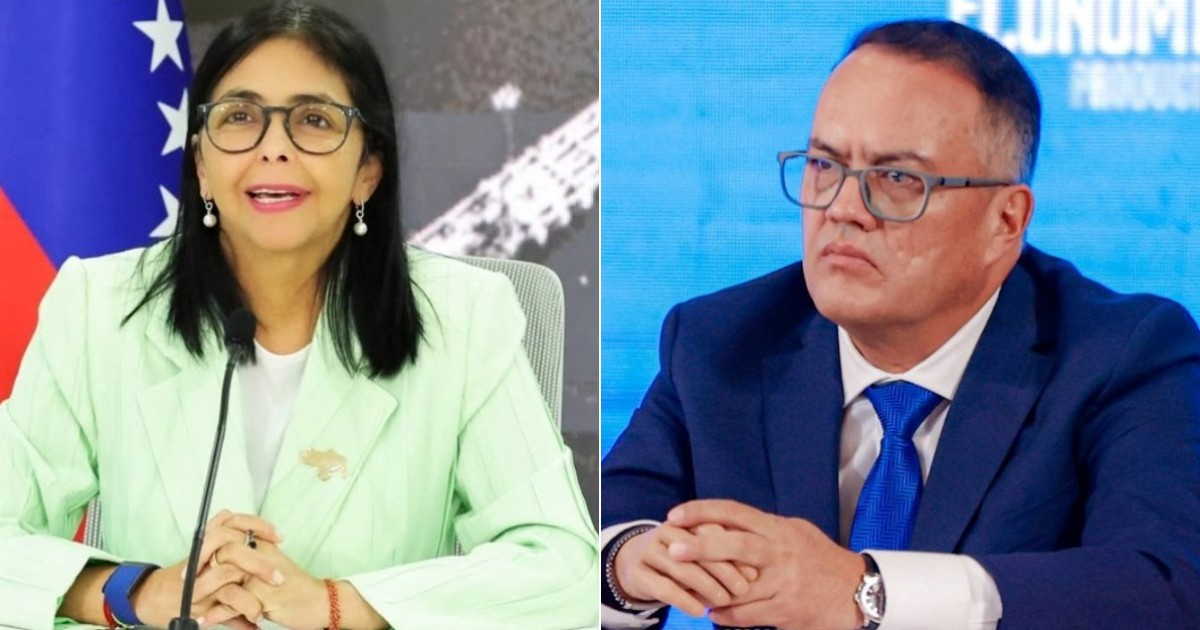
The acting president of Venezuela, Delcy Rodríguez, appointed José David Cabello -brother of the Minister of Interior and a key figure in Chavismo, Diosdado Cabello- as president of Petroquímica de Venezuela (Pequiven), the country's leading state-owned company in the petrochemical sector, in a move that further consolidates the Cabello family's control over Venezuela's strategic resources.
The announcement was made by Rodríguez through his official account on X, where he wrote: "I have appointed José David Cabello as the new president of Pequiven, who will take on the responsibility of continuing to strengthen this strategic company for the petrochemical, industrial, and productive development of our country."
The appointment marks the end of José David Cabello's 18-year tenure as head of the National Integrated Service of Customs and Tax Administration (Seniat), a position he held since February 2008 under the governments of Hugo Chávez and Nicolás Maduro.
What Rodríguez presents as a simple reshuffling of positions is, in fact, a new move in the family power structure of Chavismo: with this appointment, the Cabello clan simultaneously controls the Ministry of the Interior (Diosdado), the Ministry of Tourism (Daniella, daughter of Diosdado, appointed in February), and now the state petrochemical company.
The profile of José David Cabello is not exactly that of a technocrat: in May 2018, the Office of Foreign Assets Control (OFAC) of the U.S. Department of the Treasury sanctioned him for corruption, extortion, and money laundering through Seniat itself, noting that he shared illicit profits with his brother Diosdado. Canada also sanctioned him for acts of corruption and human rights violations.
The appointment of a government official currently facing sanctions from OFAC to oversee Pequiven raises serious questions about the feasibility of the negotiations that Rodríguez's interim government is conducting with companies such as Chevron, ExxonMobil, and Shell to open the Venezuelan energy sector to foreign capital, as part of its collaboration with the administration of U.S. President Donald Trump.
The movement occurs within an extraordinary political and humanitarian context.
Rodríguez has been acting president for six months following the capture of Nicolás Maduro by U.S. forces on January 3, and Venezuela is experiencing an unprecedented seismic disaster: the earthquakes on June 24 resulted in more than 3,535 deaths and 16,740 injuries according to official figures, with tens of thousands of people left homeless.
On the same day, Tuesday, Rodríguez announced other changes in the economic cabinet: he appointed Calixto Ortega Sánchez—who was previously the economic vice president and Venezuela's representative to the International Monetary Fund—as president of the Banco de Venezuela, and named Alejandro Puglia to head the International Center for Productive Investment.
To fill the position left by José David Cabello at Seniat, Rodríguez appointed Román Maniglia, who was until then the president of Banco de Venezuela, entrusting him with "the strengthening of revenue collection, fiscal discipline, and economic development."
These changes add to those made on Sunday, July 5, when Rodríguez appointed engineer Francisco Garcés as Minister of Transport, replacing Jacqueline Faría, who was tasked with the recovery of housing and infrastructure damaged by the earthquakes.
The pattern is clear: while Venezuela faces its worst seismic catastrophe in over a century, Rodríguez continues to rearrange the economic and strategic power of the State in favor of the trusted circle of chavismo, with the Cabello family as the main beneficiary.
Filed under: