
Related videos:
A Cuban identified as Luis A. García posted in the Facebook group Empresa Eléctrica Cuba UNE a complaint that sums up with devastating irony the situation being experienced on the island: "Cuba, the first territory free of food, water, electricity, freedom, happiness, and sanity in America. SOS Cuba."
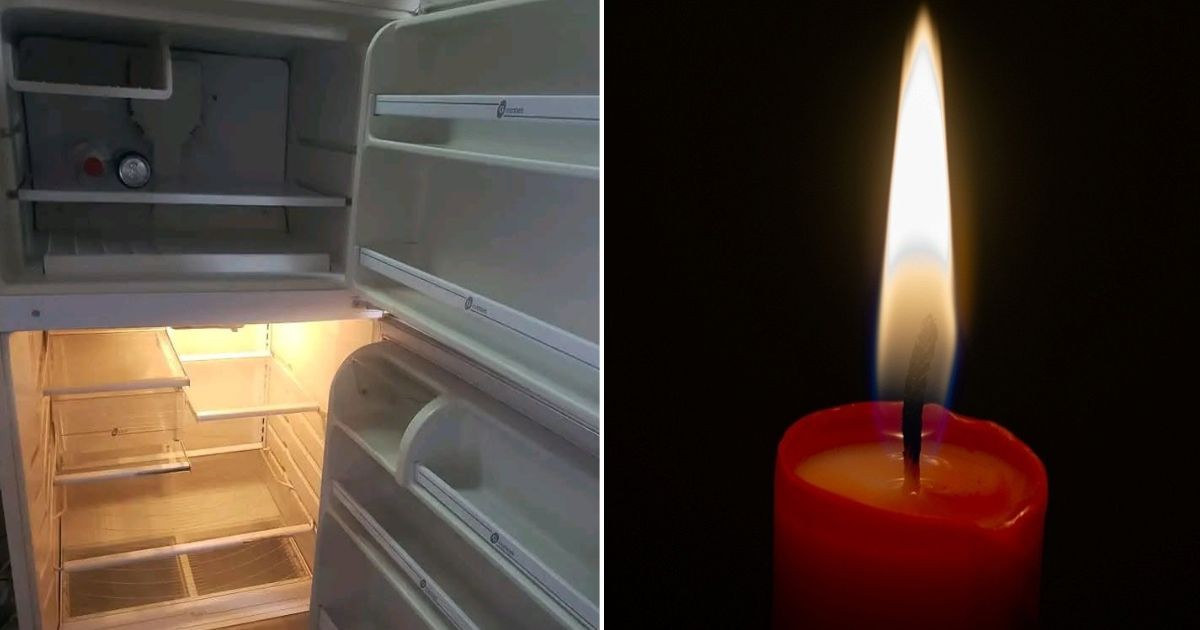
The post was accompanied by an image that says it all: a completely empty refrigerator, but with the interior light on, a sign that the power had just been restored after a long outage.
“After 68 hours without electricity, the service was finally restored, but only for an hour. Almost everything spoiled,” wrote García, describing a situation that is repeated in thousands of Cuban homes.
The post sparked a series of equally heartbreaking testimonials in the comments.
Adelaida Garcia Amable responded: "Lucky you, we still don't have electricity, it's been over 100 hours."
Alberto Maldonado added his own tally: "What a stroke of luck, today at 5 PM I reached 75 hours without power."
For her part, Lily Cami was more straightforward: "All my food went bad."
Similarly, Elizabeth Lugones expanded on the situation: "What we are living is inhumane, scarcity, hunger, misery, and corruption."
An anonymous commentator called to action: "Do you want to see how you have electricity and it doesn't go out? Then go out into the streets and demand what you are entitled to."
The context behind these complaints is the latest massive blackout recorded in Cuba in the last 18 months: on July 6, at 12:17 PM, when the National Electroenergetic System experienced its third total disconnection of the year, leaving approximately 9.6 million people without electricity.
The immediate cause was the unexpected shutdown of Unit No. 6 of the Nuevitas thermoelectric plant in Camagüey, which triggered a cascading disconnection leading to a generation deficit of 2,230 MW.
In Matanzas, power outages lasted up to 87 consecutive hours; in Granma, up to 72 hours; and in Havana, the average was 15 hours of daily service interruption, according to data from the electricity collapse monitoring report.
On July 7, Cuba was still experiencing a general blackout almost 24 hours later, with only 30.4% of the service restored in the capital.
The electricity crisis is exacerbating a food shortage that was already critical: according to the report "There is Hunger in Cuba 2025," more than 80% of Cuban households have lost refrigerated food due to a lack of electricity, and 48.3% reported direct food losses due to the absence of refrigeration.
The Minister of Food Industry acknowledged that by 2026 they have not been able to deliver oil, chicken, or yogurt through the standardized ration basket, while up to 20,000 tons of food donated by the UN remain undistributed due to lack of fuel.
The damage is not just material. A study published in 2026 in Social Science & Medicine, based on 415 Cuban adults, revealed that 55.4% experience extremely severe depression, 66% suffer from severe anxiety, and 65.8% endure extreme stress.
The psychologist Roxanne Castellanos Cabrera warned on July 5 that "in Cuba, aggression is being normalized as a means of managing life," comparing the social dynamics of the island to the novel Lord of the Flies, where humans under extreme conditions revert to primitive behaviors.
Filed under: