
Related videos:
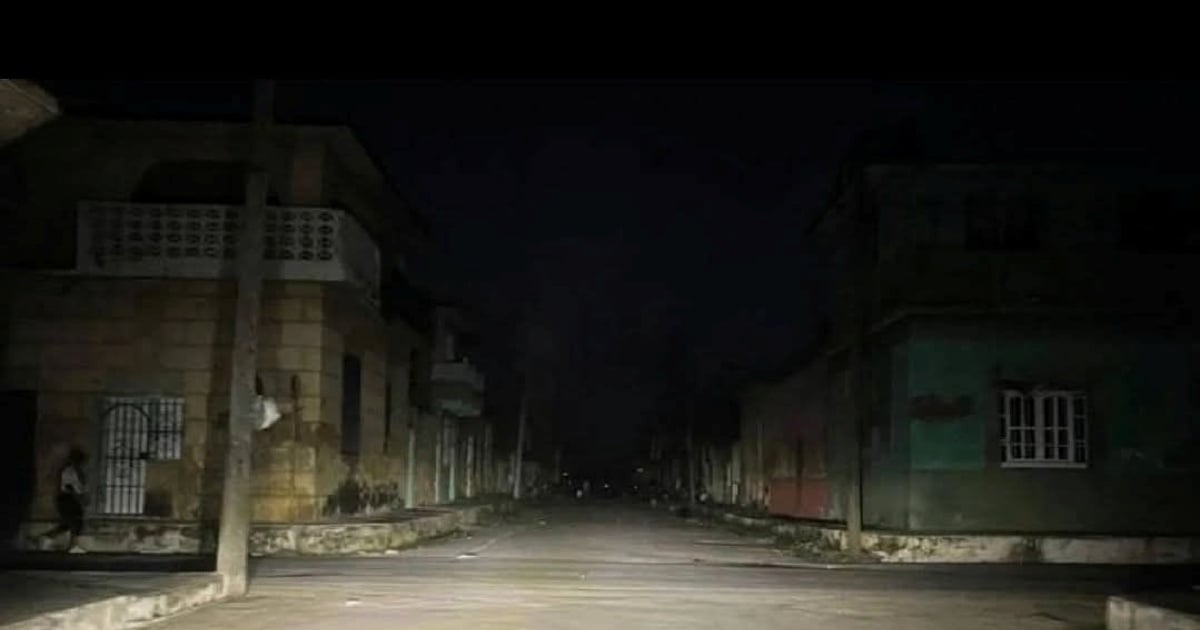
Cuba woke up this Tuesday engulfed in near-total darkness, with the National Electric Power System (SEN) still not recovered following the collapse that occurred on Monday at 12:17 PM local time, when the Electric Union (UNE) confirmed the total disconnection with a brief statement: "A total disconnection of the National Electric Power System has occurred. The causes are under investigation, and procedures for restoration are automatically being initiated."
The latest official report from the UNE dates back to more than eight hours before this Tuesday, when the state-run company reported that the Unit 2 of the CTE Ernesto Guevara was "online and increasing load" at 12:20 PM on Tuesday, accompanying the message with the hashtag #CubaNoSeRinde.
During the same period, the UNE reported that the Energás plants in Boca de Jaruco and Varadero were generating power steadily, and that the startup of Mariel 5 and Habana 2 was being initiated, while the microsystems —isolated networks with diesel generators and solar panels— continued to operate to ensure vital services such as hospitals, communication centers, and water supply.
Since then, no official update has reached the population, which remains in the dark without knowing when the supply will be restored.
The immediate cause of the collapse was the shutdown of Unit No. 6 at the Nuevitas thermal power plant in Camagüey, which triggered a cascading disconnection. The UNE noted that there were no failures reported in the operational thermal units at that time, leaving the origin of the event without a clear technical explanation.
This is the seventh total blackout of the SEN in the last 18 months and the third of 2026, marking the worst energy crisis in the recent history of the island. On Monday, the projected deficit reached between 2,200 and 2,230 MW, with an availability of only 1,000 MW against a demand of 3,100 MW.
The structural causes are multiple and cumulative: 106 distributed generation plants halted due to lack of fuel, representing 890 MW unavailable; over three months without receiving oil shipments; and the Antonio Guiteras thermoelectric plant — the largest in the country — with 17 disconnections so far in 2026 and without capital maintenance since 2010.
On the previous Sunday, 72% of the national territory experienced service outages during peak demand hours, with a maximum impact of 2,201 MW at ten o'clock at night. In some areas of Matanzas, outages have lasted up to 87 consecutive hours; in Havana, the average is around 15 hours daily without electricity.
The desperation of the population has led to protests. On July 2, residents of La Lisa gathered in front of the municipal headquarters of the Communist Party after more than 50 hours without electricity or water. On July 3, residents of Regla took to the streets amid a heavy police presence and internet blackouts in response.
Meanwhile, Miguel Díaz-Canel praised the workers of the UNE and attributed the crisis to a "genocidal energy blockade" from the United States, stating that Washington "is trying to induce a social explosion through suffocation." The U.S. Embassy in Havana issued a security alert following the collapse, advising its citizens to take immediate preparatory measures.
The most recent precedent of a total blackout occurred on March 16, 2026, lasting 29 hours and 29 minutes, and was already considered a critical threshold for the system at that time. This new collapse, with recovery progressing at a snail's pace and without any official timeline announced, threatens to surpass it.
Filed under: