
Related videos:
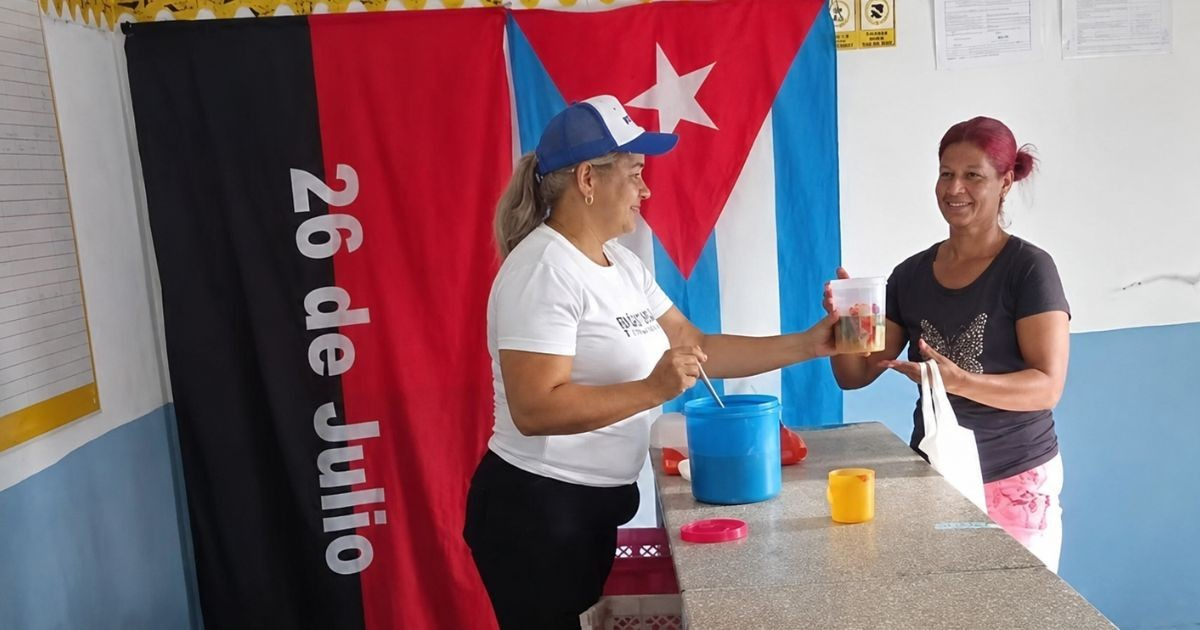
The warehouses and commercial units in Santa Clara have started to sell portions of rice, macaroni, spaghetti, and stew directly in the neighborhoods, a measure that the Cuban regime presents as a response to the food and energy crisis affecting Villa Clara.
The initiative operates through a network of sales points distributed across various popular councils of the provincial capital, with prices that the regime considers affordable: 45 pesos for a serving of rice and 60 pesos for a serving of spaghetti or elbow macaroni.
Mayelín Mesa Águila, the commercial director of the Municipal Trade Company, explained that production and sales encompass the popular councils of Hatillo, Centro, Condado, and Virginia, as well as areas such as El Capiro, Boquerones, La Aurora, La Ronda, and La Loma.
The central hub of the entire operation is La Fonda, located across from the XX Aniversario polyclinic in the Condado neighborhood, which prepares the rations and supplies the other sales units.
Mesa Águila acknowledged that the measure is not new: "This is not something new for us; we have been supporting food production for several months at different times, including caldosa, spaghetti, and elbow macaroni, in some units."
Regarding the demand, the management noted that "a large number of servings of broth, rice, and spaghetti are prepared daily, and they are very well received; everything sells out each day."
The initiative was supported by the First Secretary of the Communist Party in Villa Clara, Susely Morfa González, and the governor Milaxy Yanet Sánchez Armas, who instructed that these offerings reach the neighborhoods systematically.
This is not the first time that the stores in Villa Clara have turned to caldosa as a stopgap: in June, units of the Manicaragua popular council were already selling caldosa as a "new nutritious option," and in March, a store in that same locality donated caldosa to pregnant women at a maternity home.
Mesa Águila stated that the available stocks of rice, spaghetti, and elbow macaroni will be enough "at least to help a little with the situation the country is facing at this time."
The background of the measure is a historic energy crisis in Cuba: the electrical deficit exceeds 2,341 MW this Thursday, with blackouts lasting between 20 and 24 hours daily in Havana and cuts of up to 85 consecutive hours recorded in areas of Matanzas in June.
Without electricity to refrigerate food, families lose the few perishable items they manage to obtain within hours, making the caldosa—a thick soup made with root vegetables—a symbol of food emergency.
The situation is even more serious when compared to prices in the informal market: rice reaches 340 pesos per pound in Havana, compared to the 45 pesos charged by the bodega for a prepared portion, while chicken reaches 5,300 pesos and pork at 900 pesos per pound.
According to the Food Monitor Program, 96% of Cubans have lost purchasing power for food, and 78% of households reported that someone at home skipped at least one meal in 2026 due to a lack of food.
Filed under: