
Related videos:
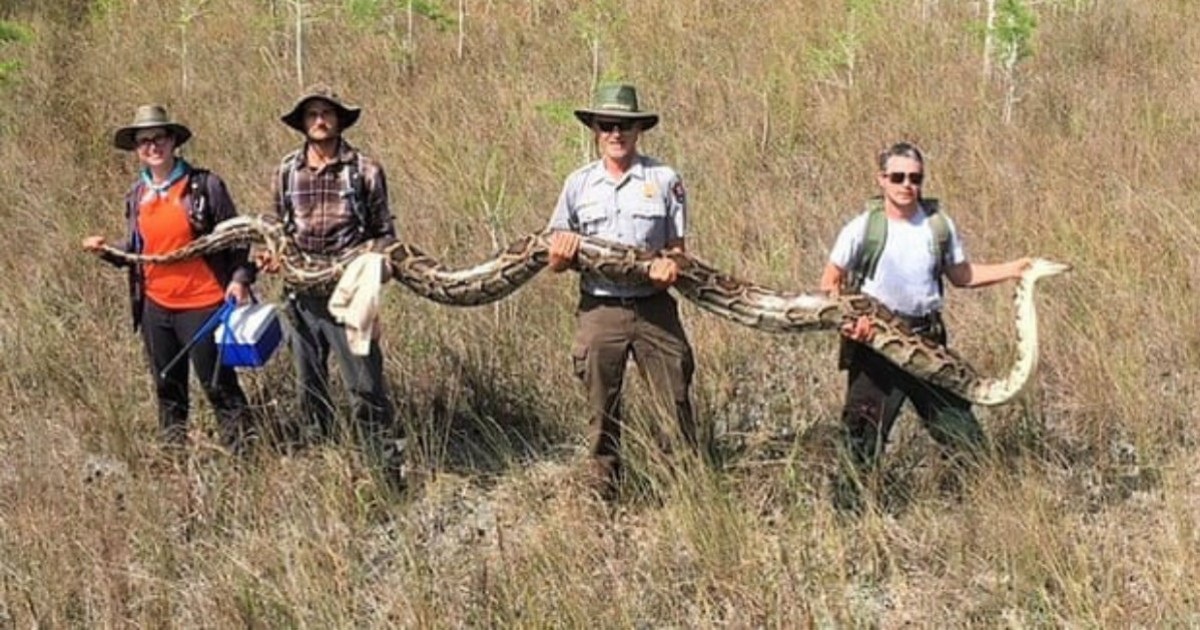
Florida once again puts a price on one of its biggest environmental issues. Starting at midnight this Friday, a new edition of the Florida Python Challenge will kick off, a competition that will award more than $25,000 in prizes, including $10,000 for the person who captures the most invasive Burmese pythons in the southern part of the state.
According to , the challenge organized by the Florida Fish and Wildlife Conservation Commission (FWC) will extend until 5:00 p.m. on July 19 and will take place in eight authorized areas, including Everglades National Park, the primary habitat of this species.
To participate, applicants must register by paying a non-refundable fee of 25 dollars, complete an online training course, and obtain a certification code before starting the hunt.
The goal of the contest is to reduce the population of the Burmese python, a species native to Southeast Asia that arrived in Florida through the exotic pet trade and now poses one of the greatest threats to the Everglades ecosystem.
These reptiles prey on more than 85 species of native animals, including birds, mammals, and reptiles, some of which are protected. Studies cited by the FWC indicate that in certain areas, populations of small mammals have decreased by up to 90% due to the expansion of these snakes.
A record last year
The 2025 edition was the most successful since the competition began in 2013.
A total of 934 participants, from 30 states in the United States and Canada, captured 294 pythons in just ten days, the highest number recorded to date.
The big winner was Taylor Stanberry, a resident of southwest Florida, who eliminated 60 snakes, about 20% of the total captured, becoming the first woman to win the grand prize in the history of the challenge.
After that result, the president of the FWC, Rodney Barreto, described the competition as a "great victory for native wildlife" and emphasized the role of citizens in protecting the ecosystem.
Strict rules for hunters
The regulations prohibit the use of firearms, dogs, or other animals during the capture. However, the use of air guns and captive bolt devices to humanely euthanize snakes is permitted.
In addition, each specimen captured must be delivered refrigerated or frozen to one of the official control points within 24 hours of its capture.
Since the Florida Python Challenge began over a decade ago, participants have removed more than 1,400 pythons. When adding the captures made by professional contractors hired by the state, the total exceeds 27,000 snakes removed from Florida since the year 2000.
In May, a Burmese python guarding 20 eggs was found under a sidewalk in Miami, highlighting how these reptiles are no longer confined to the wetlands of the Everglades and are beginning to appear in urban areas as well.
Summer also coincides with the peak activity period for these snakes. During the day, they tend to stay hidden, but at nightfall, they come out in search of food and frequently cross roads and highways, making it easier for participants to locate them.
Filed under: