
Related videos:
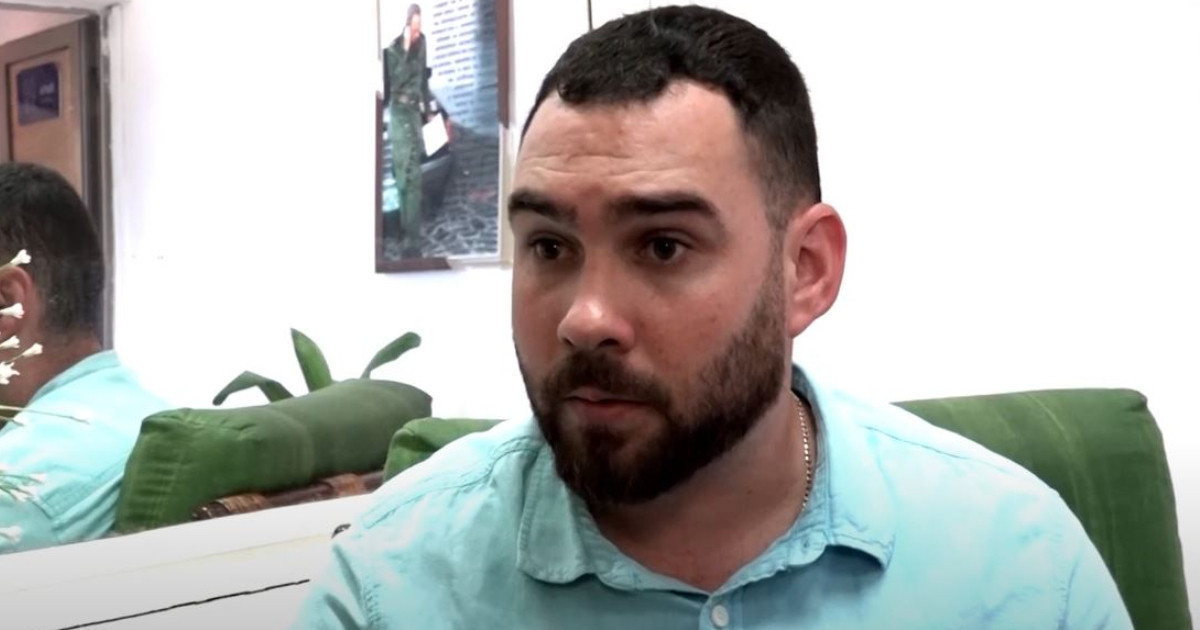
Elián González, a deputy of the National Assembly of People's Power of Cuba, blamed the media, especially those "operating from the United States," for distorting the image of the island before the world, during an interview published this Friday.
"What happens with Cuba is that the topic is heavily manipulated by the media coming from the United States, which speaks very poorly of us. The average Spaniard knows that there is communism in Cuba and that it is the worst," affirmed the 32-year-old deputy in an interview granted to the Spanish magazine Contexto y Acción (Ctxt).
González made these statements during a visit to Spain organized by the State Movement of Solidarity with Cuba (MESC), with the aim of "bringing to Spain the idea of what is happening in Cuba."
The once-raft child returned to his father in 2000 went further in referring to those who perceive Cuba as a dictatorship that represses its population.
"They believe that story, that rhetoric of Cuba as a country where there is a dictatorship and a population that is repressed," she stated.
The deputy argued that the lack of mobilization in Spain in support of Cuba is due to the information not reaching the public through the media, and he drew a comparison with the conflict in Gaza.
"We take the example of Palestine: that indeed reached us. They saw a massacred people, and popular mobilizations multiplied," he said.
However, González did not provide any self-criticism regarding the management of the Cuban regime. When the newspaper El Comercio previously asked him to point out the government's mistakes, he responded: "The truth is that it would be difficult for me to tell you. I wish I knew what needed to be done to get out of this situation."
This stance is consistent with previous statements. In October 2025, González stated that the Cuban government "does not make major mistakes" and blamed Washington for the entire crisis.
Regarding the reforms initiated by the ruling Miguel Díaz-Canel, González dodged the question of whether they represent a shift towards a mixed economic model and defended an ambiguous stance.
"We are not going to copy any model. We do not copy the Russian, we do not copy the Chinese. We are trying to build our socialism," he indicated.
The deputy described the current situation in Cuba as "the worst blockade experienced during the revolutionary phase" and labeled it as a "brutal, medieval siege with no legitimacy," while attributing the responsibility for the Cuban poly-crisis solely to U.S. sanctions, without mentioning the decades of mismanagement by the regime.
During his stay in Spain, González participated on July 5 at the Semana Negra in Gijón in a roundtable discussion alongside Fidel Castro Smirnov, the grandson of the dictator Fidel Castro (1926-2016), where he stated that being a revolutionary in Cuba "requires criticism, self-criticism, and creativity."
The event was interrupted by the young Cuban Adelainys Castán, who shouted "Murderers!" and sang "Homeland and Life" before being expelled from the event.
González also mentioned the vote on July 7 at the UN, where an urgent debate on the embargo against Cuba was approved with 136 votes in favor—a notably lower number than the 165 in October 2025—and 30 abstentions, double that of the previous year.
The deputy denounced that Secretary of State Marco Rubio sent a diplomatic cable pressuring ambassadors to block the debate, and called it "the height of hypocrisy."
The regime celebrated the outcome at the UN while hiding the fact that abstentions doubled, a detail that González also did not mention in his public statements.
Filed under: