Related videos:
A Cuban woman identified an anomalous-smelling and tasting rice on Facebook that she purchased at a Mipyme for 700 Cuban pesos per kilogram, warning the public about the product and generating a chain of similar reports from other consumers.
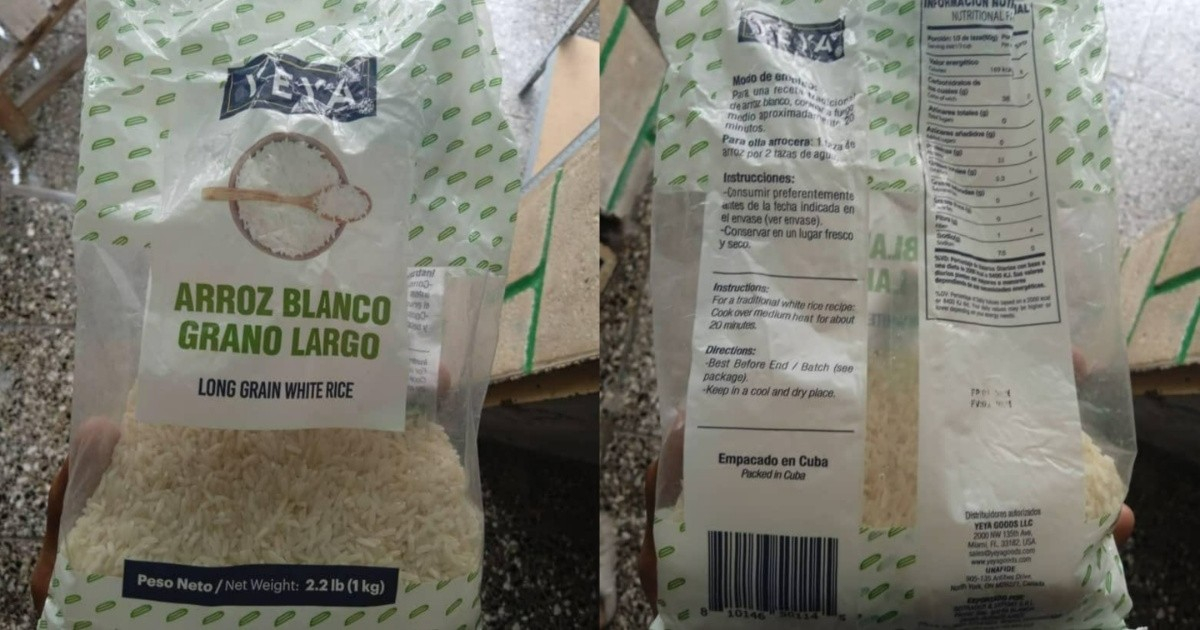
Zobeidy Lamata Sosa posted the complaint on her Facebook profile with photographs of the packaging, describing an experience that started with doubts and ended with certainty: "I urge the public to be aware of this rice; it has a taste and smell that I can't quite explain. It's not like anything I've previously tasted."
The complainant reported that on the first day she attributed the problem to the beans she cooked simultaneously, but when she prepared the rest of the package as yellow rice the next day, the bad taste and odor repeated. "I cooked it, and it turned out to have the same bad taste and smell, so we didn't eat it either," she wrote.
Upon closely inspecting the packaging, Lamata Sosa discovered the detail that sparked her questions: "the rice is packaged in Cuba. The rest of the questions that came to mind, you already know," she remarked with irony.
The product is long grain white rice weighing 2.2 lb (1 kg), marketed under the brands JETA and YEYA. According to the packaging, it is distributed by YEYA GOODS LLC, a company based in Miami, Florida, and exported from Argentina by SOTRADER & EXPORT S.R.L., located in Bahía Blanca, Buenos Aires. The visible dates indicate production in April 2026 and expiration in April 2028, so the product would not be expired at the time of the complaint.
That distribution chain—Argentinian rice, distributed from Miami and packaged in Cuba—is precisely what raises concerns about the quality controls applied in the local packaging process.
The post accumulated responses from other users who described similar experiences. Yadniel Hernandez wrote: "That rice is unfit to eat; it smells like fertilizer and won't go away, it releases a grease that could leave you stiff." Meanwhile, Anyi Martínez Cuenca elaborated: "I could smell a stench of the sea, seafood, an unbearable salty odor; I cooked it and it was even worse. Anyway... there’s no one who can eat that."
The case adds to a series of complaints about the quality of rice in state stores and in the private sector. In December 2025, a Cuban from Bayamo reported rice from the basic basket covered in mold and greenish stains. In March 2026, a resident of Camagüey reported foul-smelling rice from the store, attributed to reserves stored for long periods under poor conditions.
Mipymes, legalized in Cuba since 2021, have become the primary channel for accessing food for those who can afford it in the wake of the collapse of the state distribution system. However, they have also faced complaints regarding spoiled products: rancid cookies, chocolates, and ice creams. In June 2026, several Mipymes were removed from the informal market "Los Chinos" in Holguín due to unsanitary conditions and foul odors.
The Minister of Domestic Trade, Betsy Díaz Velázquez, publicly acknowledged that the State cannot guarantee the delivery of basic products such as rice, leaving the population caught between a failing state system and a private market that does not always ensure quality.
Filed under: