The National Electroenergetic System (SEN) of Cuba experienced another total disconnection this Tuesday at 11:05 AM, the fifth of the year, and the authorities ruled out any human responsibility in the incident.
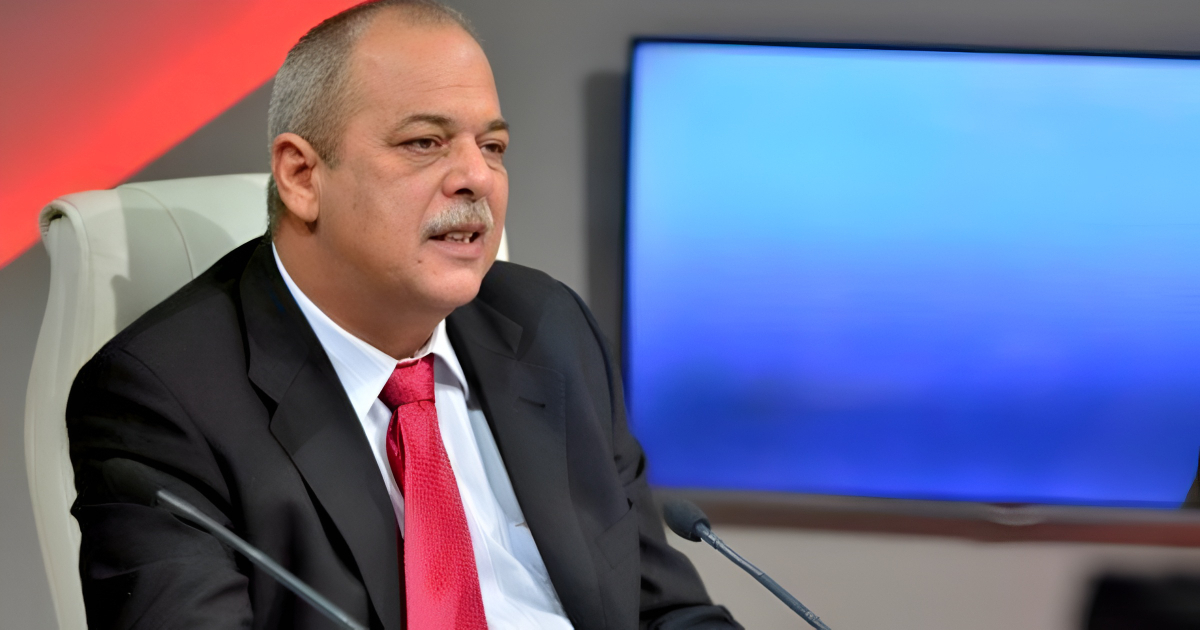
After the collapse, the Minister of Energy and Mines, Vicente de la O Levy, appeared before the press and stated: "These have not been operational errors. The Electric Union has the technical capacity, knowledge, dedication, and a strong sense of belonging. Our workers are laboring tirelessly, and the system will recover."
According to the headline, the failure was caused by fluctuations within the national grid that forced the shutdown of one generating unit, triggering a cascading disconnection of several others until the total collapse occurred.
De la O Levy also rejected that the exodus of workers from the sector is the cause of the problem: "I have also heard that this situation is attributed to the exodus of workers. It is true that, like in any other organization, we do have staff turnover, but that has not resulted in a loss of knowledge."
This statement contrasts with data from the electric sector itself: between 2021 and 2022, about 15,000 workers left their positions due to low salaries.
As in previous occasions, the minister attributed the crisis to the fuel shortage and restrictions on access to spare parts, linking them directly to the measures taken by the government of Donald Trump. "We say it and we will say it again: there is a complete absence of fuel and we do not have access to spare parts for our thermoelectric units or for those of Energás," he warned.
The regime specifically blames two executive orders signed by Trump —14380 from January and 14404 from May— and the sanctions imposed in June by Secretary of State Marco Rubio against the state oil company CUPET.
The collapse of the SEN further exacerbated the condition of the Antonio Guiteras Thermal Power Plant, the largest in the country, which was already suffering from a pre-existing structural weakness.
The event caused a leak in its boiler, the extent of which is still being assessed. "We need to wait for it to cool down before we can make a decision. At that point, the public will be informed whether the repair will take two, three, four days, or however long is necessary," explained De la O Levy.
The "Guiteras" has gone 16 years without major maintenance and has experienced at least 17 unscheduled shutdowns so far in 2026.
At the time of the appearance, the reconnection process was progressing from Energás Boca de Jaruco towards Santa Cruz del Norte and certain areas of Havana. The plan also included reaching Varadero, Cienfuegos, Nuevitas, and Felton later on.
Meanwhile, the minister revealed an alarming fact about the infrastructure of the Cuban capital: out of a sample of 1,500 transformers in Havana, 755 were overloaded beyond 7% of their capacity.
Extrapolated to the 33,000 transformers in the city, it is estimated that about 13,000 are in critical condition.
To address this situation, 15 additional brigades from other provinces will arrive in the capital this Wednesday, and arrangements have been made to double the local production of transformers.
The minister concluded his appearance with a warning about the immediate future: "This is the path of the energy transition. We have no fuel and no external support, but we are designing a strategy towards energy sovereignty. It is a long, challenging road that requires a great deal of sacrifice."
Related videos:
Filed under: