The state media Cubadebate published a report on Monday that documents, with its own data, the collapse of the digital payment system in Cuba.
An official journalist recorded 23 consecutive refusals to accept transfers in farmers' markets and private businesses in Alamar, in East Havana, the area that, according to official statistics, accounts for the highest volume of retail sales in the country.
More than twenty establishments in zones 6, 7, and 8 of Alamar were visited over a period of two months. In each one, the response was the same: transfers are not accepted.
What is particularly striking about the report is not just what it documents, but who publishes it: a media outlet of the regime itself, just three weeks after Miguel Díaz-Canel declared that Cuba needs "more agile, more digital, and more accessible banks" so that managing money is not "an obstacle course."
The article identifies a repertoire of excuses that merchants repeat for refusing to accept electronic payments. "The card is full" is the most common, although it is technically absurd: magnetic cards do not store money; they only identify the bank account.
Other justifications include arbitrary limits of 1,000 pesos per customer, restricted hours ("only in the morning," "until noon") and power outages, an excuse that, according to Cubadebate itself, persists even when there is electricity.
The most revealing one, however, is another: "my supplier does not receive transfers."
The owner of a small and medium-sized enterprise with three months of activity in Old Havana explains the vicious circle: "Wholesale suppliers have warehouses full of containers. They don't accept transfers because they buy in dollars. How are they going to pay another country via transfer in CUP? They can't."
That structural knot drags the retailer down: without the ability to convert their digital balance into cash on a commercial scale, operating with transfers becomes unfeasible.
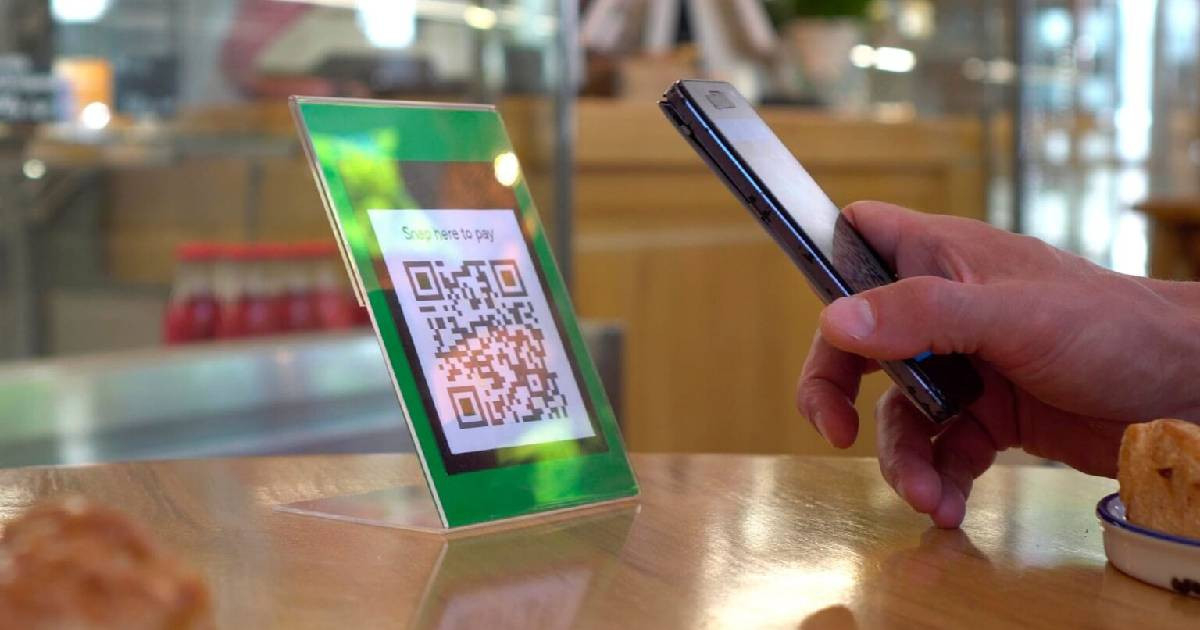
Additionally, the QR codes visible in many businesses do not correspond to tax accounts but rather personal ones: “No one uses the ONAT account. Everyone uses their personal account. That is called tax evasion, but no one monitors it.”
Cubadebate itself concludes that "the street has already built its own parallel financial system," an admission that stands in stark contrast to the regime's promises.
The Vice President of the Central Bank of Cuba, Alberto Quiñones Betancourt, declared in June 2024 that "no business can claim the right to refuse payment by the method chosen by the customer."
Two years later, banking integration clashes with a reality where less than 10% of private businesses in provinces like Sancti Spíritus regularly accept transfers, and only 3.77% of transactions in Cuba are digital in 2026, three years after the regime mandated obligatory banking integration.
The situation worsened further on June 6th when Visa and Mastercard suspended operations in Cuba due to U.S. sanctions against GAESA and its financial subsidiary FINCIMEX, stemming from the Executive Order signed by Trump on May 1st. This measure eliminated the last available international payment channel with cards on the island.
This means that if a person needs to buy a product in dollars in Cuba, they will likely have to pay in cash and purchase that currency on the informal market, using Cuban pesos in cash, not by transfer.
Meanwhile, the shortage of cash jeopardizes the payment of salaries and pensions in several provinces. Granma reported in June that it lacked physical money to pay pensions to 111,000 retirees.
As if that weren't enough, around 1.7 million pensioners across Cuba receive less than ten dollars a month and line up from five in the morning to collect their payments, fully aware that this amount barely covers their needs.
Many of these elderly individuals do not master the new technologies needed to make transfers. They go to the bank to withdraw cash and, often, they are not attended to at the branches. They endure long lines, humiliations, and hours of waiting in the intense heat. Although they have money in their bank accounts, they cannot access it.
Related videos:
Filed under: