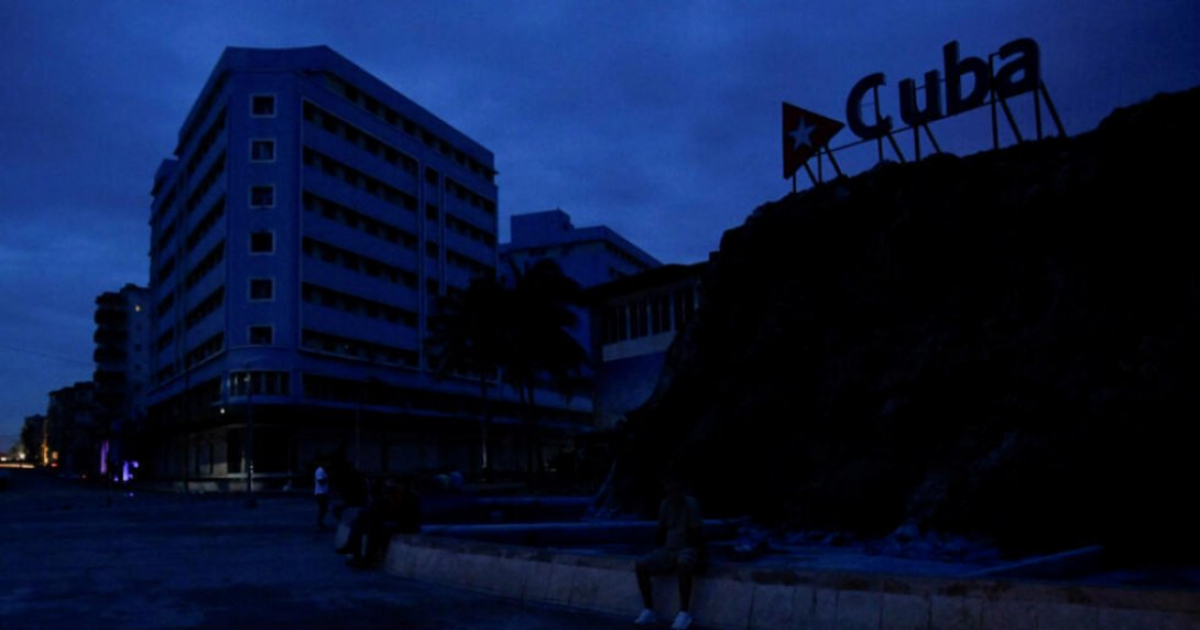
The Electric Union (UNE) assured this Tuesday on its social media that "Cuba does not give up," following the new total collapse of the National Electro-Energy System (SEN).
The state agency noted that it is preparing plans to create microsystems and once the conditions are met, it will begin the energization of essential facilities.
Many Cubans immediately noticed the hashtag in the official message: #CubaNoSeRinde. It comes at a time when people can no longer endure the effects of the ongoing power outages.
The new mass blackout occurred at 11:05 AM. This is the fifth total blackout of 2026 and the tenth in 24 months, highlighting an unprecedented energy crisis.
The fourth collapse occurred on July 10 due to a failure in the 220 kV line between Santa Clara and Sancti Spíritus, just four days after the third, which was recorded on July 6. Three disconnections in eight days highlight the deterioration of the system.
Before the collapse, the UNE projected a deficit of between 1,990 and 2,020 MW, with 1,155 MW available against a maximum demand of 3,150 MW. On Monday, the impact reached 1,775 MW at 9:50 PM.
Units six and eight of the Máximo Gómez thermoelectric plant in Mariel; unit two of Lidio Ramón Pérez in Felton; and unit three of Antonio Maceo in Renté are still out of service.
In addition, 106 distributed generation plants remain idle due to a lack of fuel, with 890 MW unavailable, along with the barges in Regla, Melones, Mariel, and Moa.
The causes include aging thermoelectric plants, fuel shortages, and a lack of investment. Each recovery requires the creation of regional microsystems before reconnecting the large plants.
Meanwhile, Miguel Díaz-Canel requested to "better organize the blackouts," without announcing any structural solutions. In July 2026, power outages average between 20 and 24 hours a day, with some areas experiencing more than 72 consecutive hours without service.
Related videos:
Filed under: