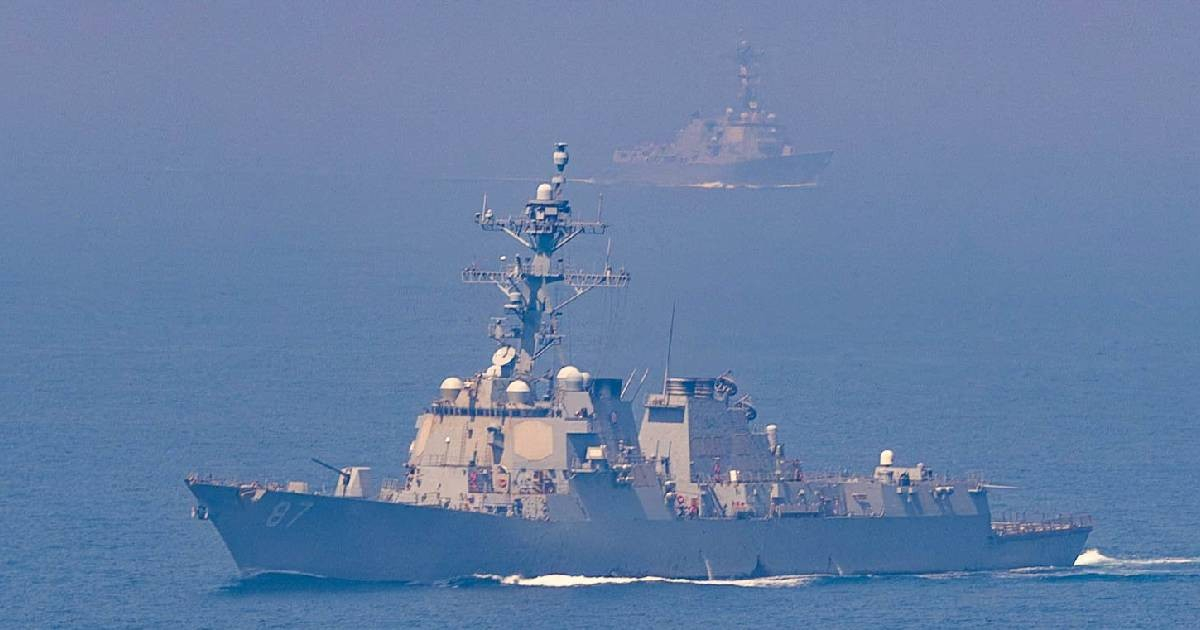
The United States Central Command (CENTCOM) started on Monday at 4:45 p.m. Eastern time, the third consecutive night of attacks against Iran, by direct order of President Donald Trump, with the stated aim of degrading Iran's military capability in the Strait of Hormuz.
In its official statement, CENTCOM specified that the bombings "will continue to impose a high cost on Iranian forces and degrade their ability to attack innocent civilians and commercial shipping in the Strait of Hormuz."
In less than a week, the three rounds of U.S. attacks have struck more than 300 Iranian military targets, including missile and drone facilities, naval capabilities of the Islamic Revolutionary Guard Corps (IRGC), ammunition depots, communication networks, and coastal surveillance posts.
The immediate trigger for this new escalation was the attack by the IRGC on the container ship GFS Galaxy, flying the Cypriot flag, on July 12 in the Strait of Hormuz.
The ship, with 11 Indian crew members on board, suffered a fire and damage in the engine room; ten crew members were rescued and one remains missing, according to the Indian government.
Iran justified the aggression by claiming that the GFS Galaxy was sailing on an "unauthorized route" with its navigation systems turned off.
This attack adds to a series of assaults by the IRGC against commercial vessels that broke the provisional ceasefire signed in Switzerland on June 18 and 19, 2026, which established a 60-day truce and the reopening of the Strait.
On July 8, following the Iranian attacks on three commercial ships on the 6th and 7th of that month, Trump declared the agreement "terminated" and ordered bombings of over 80 Iranian targets, including anti-air systems, radars, and more than sixty small vessels of the IRGC.
Meanwhile, Trump reinstated the naval blockade against Iran starting this Tuesday, imposing a 20% tax on traffic through the Strait of Hormuz. Tehran described the measure as "piracy."
In response to the bombings this week, Iran launched ballistic missiles and drones against military bases of the United States and its allies in Jordan, Kuwait, Bahrain, Oman, Qatar, and the United Arab Emirates.
During this offensive, CENTCOM employed maritime drones in combat for the first time, used against the Iranian port of Bandar Abbas.
The conflict between both powers originated on February 28, 2026, with Operation Epic Fury, a joint campaign by the United States and Israel that targeted over 1,000 Iranian sites, including nuclear facilities. Since then, Iran has closed the Strait of Hormuz multiple times—on March 4, June 11, and again in July—collapsing up to 97% of maritime traffic and driving global oil prices higher.
The Strait of Hormuz accounts for about 20% of global crude oil trade, making each closure a direct shock to the global economy.
On July 10, Israel alerted the United States about a supposed Iranian plan to eliminate President Trump, a factor that adds an additional dimension to the ongoing escalation and that Washington has not publicly ruled out as an element in its military decision-making.
Related videos:
Filed under: