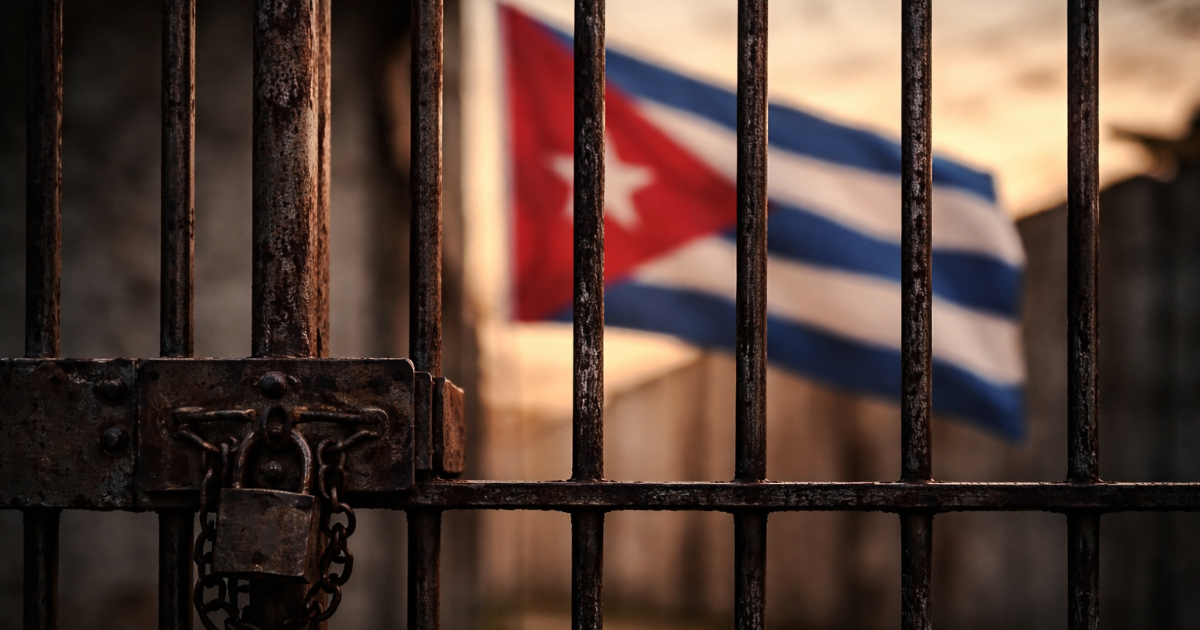
The Cuban human rights organization Cubalex documented 319 repressive events and 608 incidents of harassment across the Cuban territory during June 2026, according to their monthly report published this week, which describes a month characterized by the simultaneous collapse of basic services and a state response focused on control under the narrative of a "state of war."
The repression was not limited to organized activism: 52% of those affected were activists, but the remaining 48% were ordinary citizens who took to the streets to demand solutions to the energy, water, and health crises.
The report also establishes a new historical record for protests: 253 demonstrations throughout the month, 20 more than the previous record set in March 2026, with a daily average of eight events. The peak was reached on June 19, when 31 protests were recorded in a single day, surpassing the 30 on May 13 and marking the highest peak since Cubalex began documenting them in 2022.
Havana concentrated 176 of those demonstrations, particularly intense in the municipalities of Plaza de la Revolución, Diez de Octubre, and Playa. Santiago de Cuba, with 35 protests, and Villa Clara, with 17, established themselves as the second and third centers of mobilization on a national scale.
Protest actions included pot-banging, burning trash and tires, street blockades, stone-throwing at police stations and banks, graffiti against the government and against Raúl Castro, and at least one instance of repression involving riot police.
Violations against individuals deprived of liberty topped the repressive statistics with 138 incidents. The Special Prison Kilo 8 in Camagüey once again emerged as the correctional facility with the highest concentration of abuses, recording 23 documented events, where identified officials maintained a pattern of beatings, malnutrition, isolation, and denial of medical care against political prisoners.
A total of 52 incidents of arbitrary detentions were recorded, with at least 95 victims. According to Prisoners Defenders, as of the end of June, Cuba had accumulated 1,306 political prisoners, including 40 minors, 16 of whom are detained in adult prisons. During the month, 32 new political prisoners were added, among them six adolescents aged between 15 and 17 years.
The structural trigger of the crisis was the energy situation. On June 25, a record electricity deficit of 2,208 MW was recorded, leaving about 70% of the country without electricity. Areas in Matanzas experienced up to 85 consecutive hours without supply. Cubalex warned that the prolonged blackouts "interrupted the pumping of drinking water, hindered food preservation, limited mobility, and compromised the operation of health centers."
In that context, the organization documented 28 homicides in June, of which 10 were femicides. One of the women was allegedly killed by her ex-partner during a blackout in Camagüey, a pattern that illustrates how the energy crisis exacerbates the risk conditions for women.
In response to the escalation of protests, the regime approved on June 18 and 19 a package of 176 Economic and Social Transformations that includes the end of universal rationing, an increase in the minimum wage from 2,100 to 3,210 pesos, and greater autonomy for the private sector. Cubalex stated that these measures "prioritize the reorganization of the economic model and fiscal control over the immediate protection of the most affected individuals" and warned that their main risk lies in "shifting the burden of resolving structural shortages onto families, local governments, and the non-state sector without first ensuring access to food, water, health, transportation, and decent work."
Related videos:
Filed under: