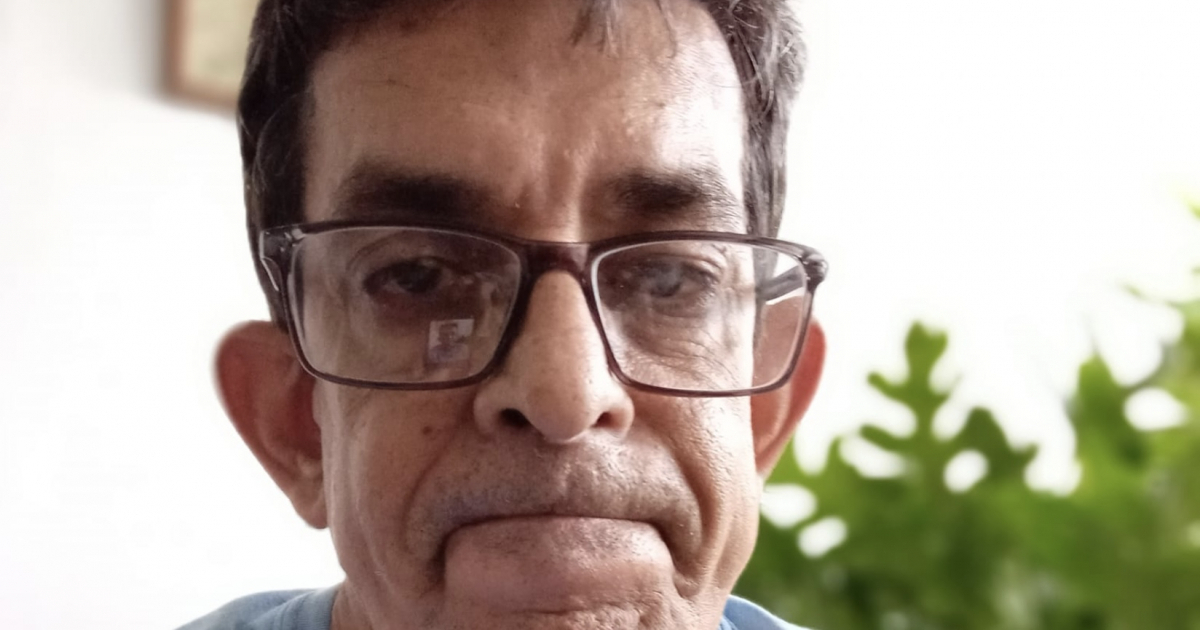
The comedian Ulises Toirac shared on his Facebook profile this Thursday an anecdote titled "A Portrait Without Discomfort": a vivid, amusing, and sweaty account of what it means to cross Havana on foot and in a rickshaw in the heat of July while carrying about forty pounds.
The text posted on his Facebook begins with a statement that any Habanero would agree with without hesitation: "Walking in July through Havana at noon is an extreme experience. But there's no other way."
Toirac needs to travel from the Playa municipality to Vedado for several days, bringing items to and from Fajardo Hospital. The route involves going up 42nd Street to 41st, crossing the "old and patched-up" bridge over the Almendares, and reaching D Street. To avoid going bankrupt in the process, he combines walking with rides in riquimbili, which he refers to as "resistive creativity (not to be confused with creative resistance)."
The hill between 23rd Street and the hospital is the most dramatic point of the story. "This hill is killing me, and my sneakers look like two match heads," he writes, with that blend of complaint and laughter that characterizes him.
In the midst of the odyssey, the moment that gives soul to the text emerges. A taxi driver drops him off at the corner of the park at 23 between C and D, and when Toirac asks him how much he owes, the man responds without hesitation: "You've made me laugh many times in my life to come and charge you now."
Toirac insists on paying —“it’s his job,” he clarifies, and not an easy one, with those pothole-filled streets and fuel prices— but the riquimbilero wraps up the matter with a smile: “This is a gift. It’s a pleasure and an honor.” And he drives off.
Regarding the riquimbilis, those artisanal vehicles that have become one of the most commonly used forms of informal transport in the capital, Toirac has a clear opinion: "They have somewhat salvaged the transportation situation in the city," although he acknowledges that their fares, the lowest among the available options, are still unaffordable for many. "There are people who have to tighten their sandals (which are not sold cheaply either) and walk long distances on foot, with their hand on their wallet, feeling a mix of tenderness and anger," he writes.
The collapse of Havana's public transport serves as the silent backdrop for the entire story: since February 6, 2026, the fuel shortage has rendered over 60% of urban buses out of service, and the riquimbilis have shifted from being a curiosity to a necessity.
Toirac finally reaches the top of the hill, exhausted, sets the bag down under a tree to catch his breath, and encourages himself with the same spirit he's used throughout: "Come on, you can do it!"
Related videos:
Filed under: