Related videos:
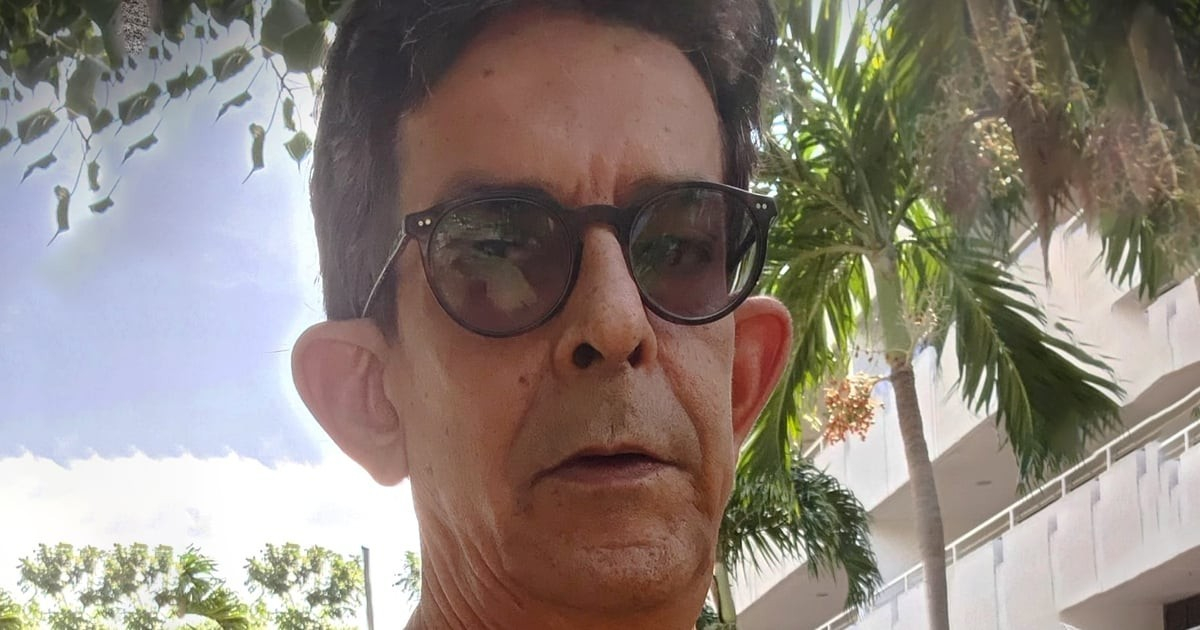
The Cuban comedian and actor Ulises Toirac published a stark reflection this Sunday on Facebook about life under blackouts in Cuba, accurately portraying the survival routine of millions of Cubans and concluding with a direct political statement against those who govern the country.
Toirac describes the daily life of someone navigating their home guided by "the light of some rechargeable bulb," managing water "with the strictness that comes from not knowing when you will have the opportunity again," and living with "the guillotine of darkness" hovering over their mind every time electricity returns.
The comedian uses the neologism "sobremurió" to refer to someone close who passed away "from natural causes," weary of misery and frustrated day by day "with a useless life that led him to anonymity even from himself."
It also describes Cuban children arguing in the street with "thin, sweaty, and dirty bodies."
The actor questions why ETECSA's towers go out of service during outages because their batteries are dead, leaving those who pay for that service in dollars without communication.
"The most painful thing is that it has no end. It will continue indefinitely, getting worse each time because there are no solutions to the Holocaust," wrote Toirac, in what constitutes one of the harshest diagnoses made by a public figure within the country regarding the crisis that is consuming Cuba.
The reflection concludes with an unambiguous political critique: "Look at how you suffer, watching people from both sides, well-fed and vibrant, deciding what is best for you."
The reflection for this Sunday comes after several days of critical positions from Toirac. On July 4, he demanded the release of all political prisoners and days later, he questioned what kind of revolution decides who should step forward.
Cuba is experiencing the worst moment of the energy crisis in its history. On July 8, the National Electroenergetic System recorded a historic deficit of 2,341 MW, impacting 73% of the population simultaneously.
On July 10, the fourth total blackout of the year occurred, the eighth in two years, with only 935 MW available against a demand of 3,100 MW. In the province of Matanzas, the outages have reached 87 consecutive hours; in Havana, the average is 15 hours daily.
The causes are structural: thermal plants between 40 and 60 years old without maintenance, 106 distributed generation plants halted due to lack of fuel, and the interruption of Venezuelan oil supply since January 2026.
The regime's response has been striking in its emptiness. The Prime Minister Manuel Marrero Cruz attributed the crisis to the U.S. embargo, labeling it a "genocide," while ignoring that the collapse is a result of decades of underinvestment and mismanagement by the regime itself.
Days before the collapse, Miguel Díaz-Canel limited himself to asking for the blackouts to be "better organized", without announcing any measures to increase generation capacity.
This Saturday, marking the fifth anniversary of the 11J protests in 2021, there were reports of protests with pots and pans in Guanabacoa and in Old Havana, where residents shouted "we want freedom, not power."
Filed under: