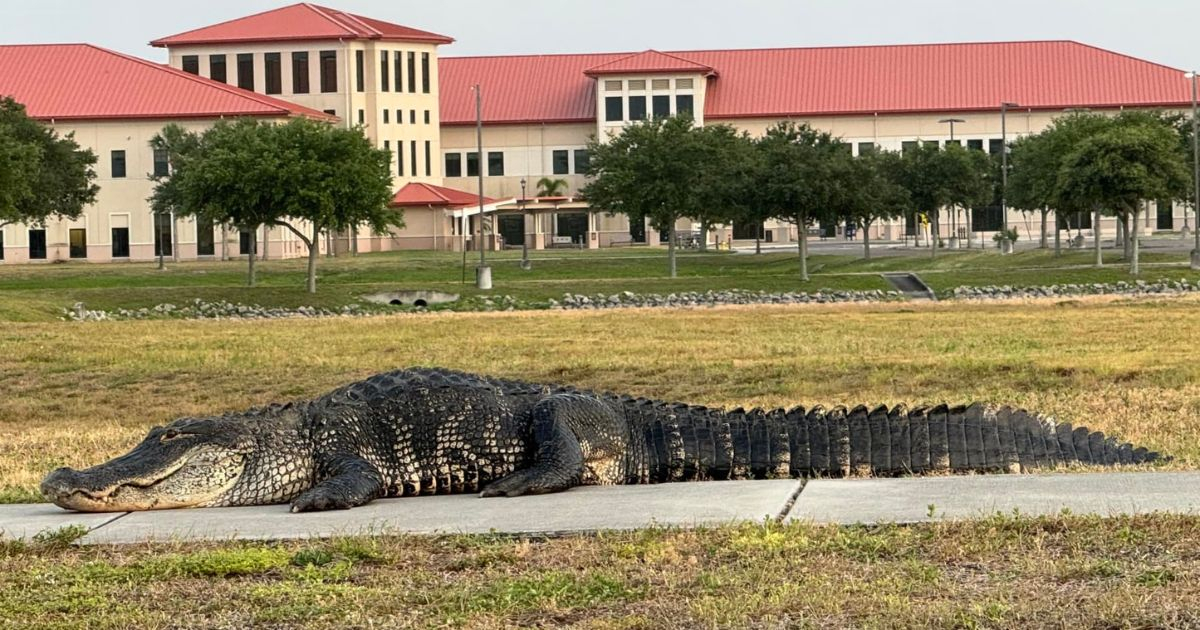
A series of three alligator attacks in less than two weeks in central Florida has reignited the debate on prevention after a 31-year-old woman was killed and a child lost a hand in incidents that occurred just 24 hours apart.
Brittany Clark, a resident of Orlando,
Her boyfriend, Chance Allison, desperately tried to free her from the jaws of the reptile and performed cardiopulmonary resuscitation on the shore, but Clark died from massive bleeding before reaching the hospital.
The person who called emergency services described the injuries as "horrible."
Clark suffered bites on both arms; it was the first fatal attack recorded in Seminole County and the 33rd in the state's history since 1948.
Allison stated to NBC News that no one warned them of the danger: "No one told us not to go in. We spoke with someone who only mentioned that they used to take their dogs there, but nothing else."
One day earlier, on June 27, Brodie Terry, an 11-year-old boy from Pennsylvania vacationing in Florida, lost his right hand when a 2.62-meter alligator attacked him while he was returning a fish to the water at Nelson Fish Camp in Marion County.
His father lunged at the reptile and tried to force its mouth open, but the animal performed the so-called "death roll" and severed the child's hand.
Brodie underwent several emergency surgeries and returned to Pennsylvania for rehabilitation after being discharged.
The first incident in the series occurred on June 21, when a 19-year-old was bitten while practicing surface diving in the Rainbow River, also in Marion County.
The authorities temporarily closed the river and captured the alligator responsible.
In light of the accumulation of incidents, Dr. Frank Mazzotti, a wildlife ecology professor at the University of Florida, emphasized to CNN that most of these encounters are avoidable.
"Many bites can be prevented if humans are aware of their surroundings and minimize risky behaviors," warned Mazzotti, co-author of a study published in 2025 in the journal Human–Wildlife Interactions which concluded that 96% of alligator attacks in Florida are attributed to risky human behaviors.
The research, conducted alongside specialists from Centre College (Kentucky), identified that swimming in areas known to have alligators accounts for 48% of the cases, while deliberately entering waters inhabited by these reptiles accounts for the highest proportion of fatal attacks.
"Situational awareness and informed decisions, especially during recreational activities in crocodile territory, can help protect both people and wildlife," Mazzotti concluded.
Florida is home to approximately 1.3 million alligators and averages around eight unprovoked bites per year, according to the Fish and Wildlife Conservation Commission (FWC).
In 2025, 13 attacks were recorded, two of which were fatal, remembered CNN.
Authorities attribute the increase in sightings in 2026 to the severe drought affecting the state, the worst in the Everglades in 25 years, which reduces the available habitat and forces the reptiles to move towards inhabited areas.
The FWC recommends maintaining a minimum distance of six meters from alligators, swimming only in designated areas and during the day, and reporting dangerous animals to 866-FWC-GATOR.
Related videos:
Filed under: