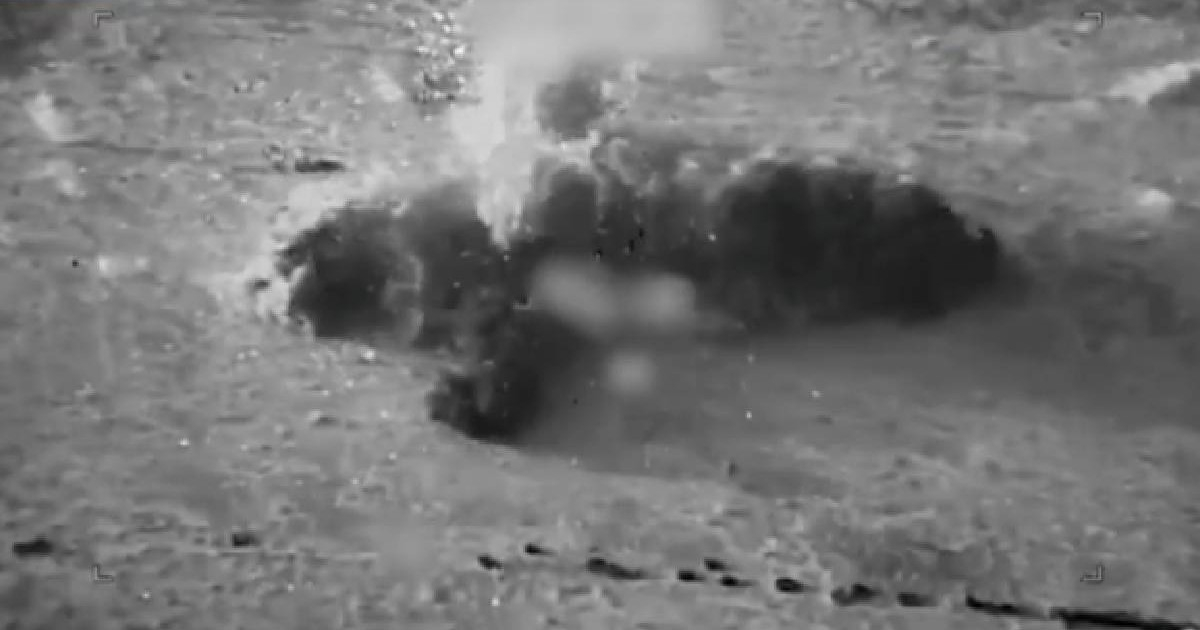
The United States Central Command (CENTCOM) confirmed this Thursday the onset of a new wave of airstrikes against Iran, the fifth consecutive night of bombardments since President Donald Trump declared the ceasefire over on July 8, according to reported by Fox News correspondent Lucas Tomlinson from Tel Aviv.
The attacks began at 2:00 p.m. Eastern time and were ongoing at the time of the report, adding to three previous waves carried out on Wednesday. "Central Command says that the airstrikes started about 35 minutes ago, at 2:00 p.m. Eastern time, and all indications are that they are continuing," Tomlinson noted.
In the operation, F-35 fighters deployed from bases in the region are involved, along with F-18 and F-35 aircraft onboard the aircraft carriers USS George H.W. Bush and USS Abraham Lincoln.
A central element of the campaign is the naval blockade in the Strait of Hormuz: footage was released of an oil tanker whose chimney was destroyed by Hellfire missiles, likely fired from a drone or an Apache helicopter. As a result, Iran has not attacked any commercial vessels in the Strait over the past three days.
The White House spokesperson, Caroline Levitt, confirmed that Iran has expressed its desire to negotiate, but warned that Trump will not tolerate new aggressions. "They have made it clear that they still want to reach an agreement with the president. We are in talks with them, but the president will not allow them to fire upon ships in the strait without facing consequences," she stated.
Levitt went further in assessing the cumulative military impact: “Throughout this process, the president has shown, not only to Iran but to the entire world, that we can strike Iran at any time, anywhere, and their defensive capability has been essentially eliminated.”
Tomlinson, however, warned about the skepticism generated by Iranian signals: "We have been here before. We have heard claims from Iran that they are willing to talk. The ceasefire has ended and major combat operations have resumed."
The conflict was reactivated on July 8, when Trump declared the Memorandum of Islamabad terminated during the NATO summit in Ankara, following the attacks by the Islamic Revolutionary Guard Corps (IRGC) against three commercial vessels in the Strait of Hormuz on July 6 and 7, in a flagrant violation of the agreement signed on June 17.
Since the resumption of bombings, the U.S. has struck over 300 Iranian military targets in a week, including missile facilities, drones, naval capabilities of the IRGC, ammunition depots, and communication networks. Iran responded with attacks on U.S. bases in Kuwait and Bahrain, resulting in at least one death and 60 injuries.
On Wednesday, Trump gathered his security team in the White House Situation Room to plan a broader offensive phase, which could include attacks on Iranian bridges and power plants, while Iranian state media reported on Thursday that bombings reached Qeshm Island and other locations in the south of the country.
Related videos:
Filed under: