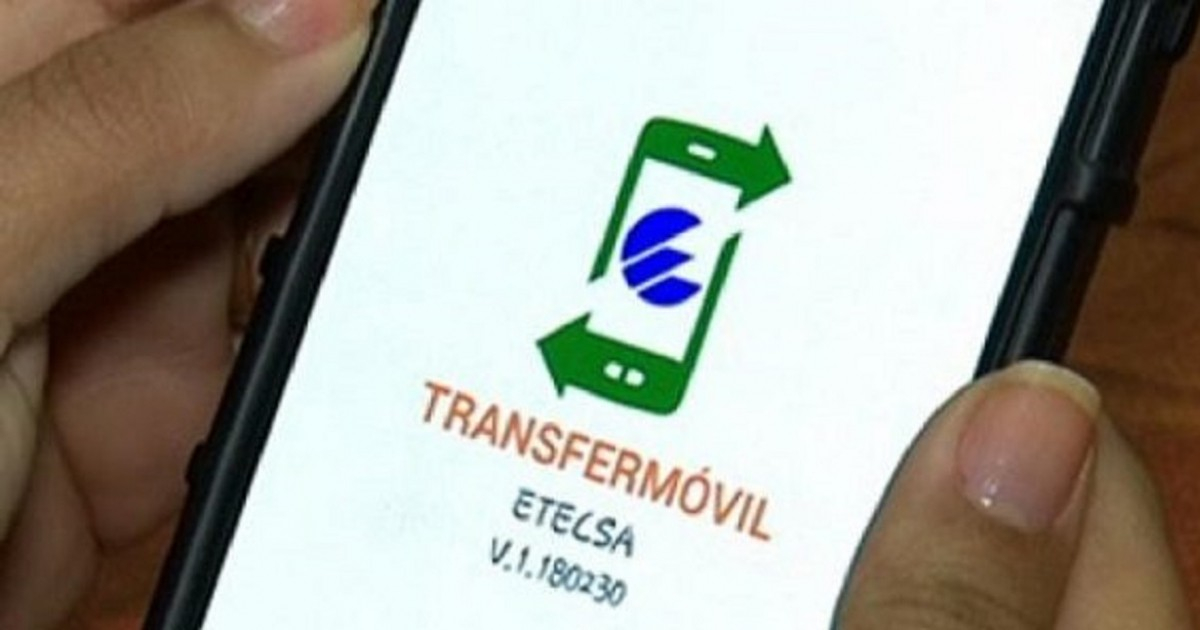
A Cuban citizen publicly reported that he has been trying to pay a fine through Transfermóvil for over two weeks without success, due to a system failure that prevents him from completing the transaction. The situation has reignited criticism of the banking policy promoted by the regime, which forces businesses and private workers to accept electronic payments while the state itself is not always able to process them.
The affected individual, identified on Facebook as Jesús G. Iznaga, explained that for more than 15 days he has been trying to pay a fine of 150 pesos, but the ETECSA payment app always returns the same message:
"The payment of the fine has failed. This fine ticket has not yet been submitted to any authority."
The ticket, identified by the number 555691, had already expired when he publicly filed his complaint, even though during that time he attempted to pay it multiple times through digital means.
The failure does not appear to be an isolated case. The system relies on the official who imposed the fine to register the voucher in the centralized platform of the Ministry of Finance and Prices within the established timeframe. If that procedure is not completed, Transfermóvil cannot validate the payment.
According to data from the system itself, this problem occurs frequently: there are 9,523 failed payment attempts for fines compared to 5,263 completed transactions.
Beyond the technical issue, Iznaga questioned what he considers a contradiction of the Cuban government.
While the State mandates by decree that self-employed workers and private businesses must accept electronic payments, under the threat of fines and even the closure of their establishments, he claims that he cannot even pay a government fine using the same mechanism.
"Individuals are compelled by decree to accept transfers under the threat of severe fines and other measures because there is no cash for retirees, workers, and non-productive staff. So, why can't I pay a fine for a violation with fictional money just like the money I receive daily?" he wrote.
The citizen also questioned the administrative fate of the stub if the system assures that it is not registered with any organization.
"If the heel is not in any organization, where would the money go if I am going to pay it in cash? Something is not right," he stated, although he clarified that he is not accusing any particular person.
Hours later, he published a second message that was even more critical.
"Another lie from the National Bank of Cuba and the Government. They impose fines through Transfermóvil to force you to pay in cash, while on the other hand, they compel individuals to accept transfers. In other words: do what I say, but not what I do."
Banking with limited results
The complaint coincides with a time when even official media have acknowledged the difficulties of banking in Cuba.
Despite several years of implementing this policy, by July 2026 only 3.77% of transactions in the country were conducted through digital means.
In the first quarter of 2025, the State collected more than 1 billion pesos from 425,012 fines, but only one in four was paid through electronic channels.
Meanwhile, Decree-Law 91/2024 maintains fines of up to 60,000 pesos, in addition to the temporary or permanent closure of businesses, for those who refuse to accept digital payments.
Iznaga concluded his complaint by directly holding the authorities responsible for the system's failures.
"You need to see this, gentlemen. This has nothing to do with imperialism or the embargo. It's a problem for Cuba and Cubans. No one is going to come from outside to destroy us; we are destroying ourselves. Enough of patriotic speeches. What we need are solutions, and not necessarily for 2050, as the Minister of Energy said."
Related videos:
Filed under: