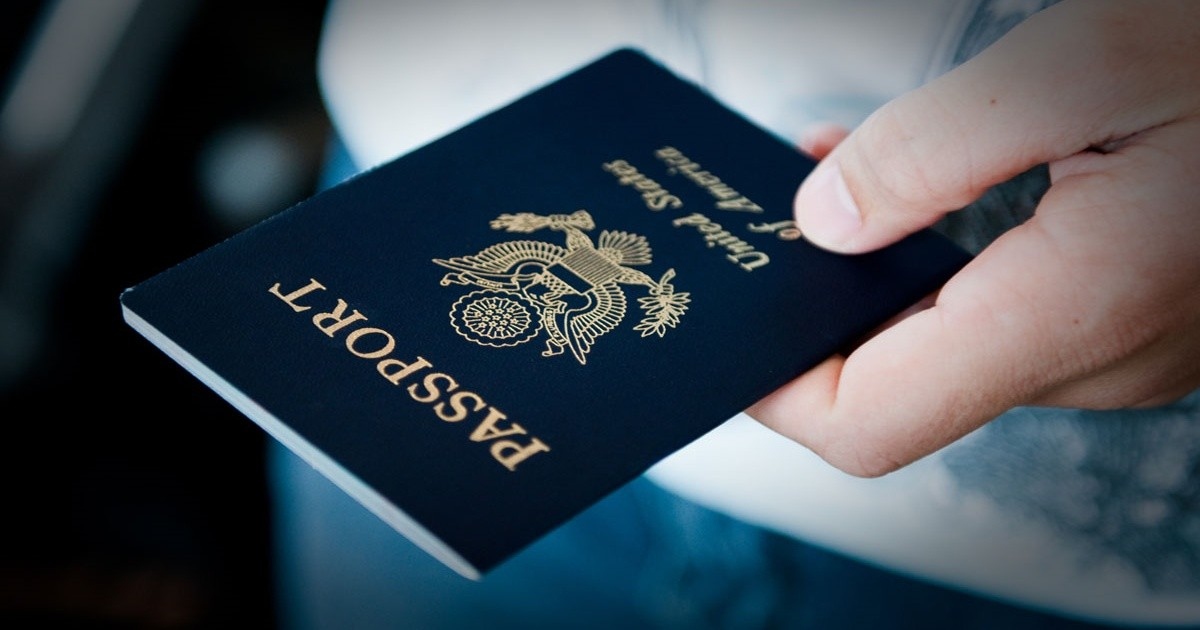
The U.S. Department of State reminded U.S. citizens with dual nationality that they must use a valid U.S. passport to enter and exit the country, a requirement that also applies to minors.
U.S. citizens must enter and exit the United States with a U.S. passport. This requirement also applies to U.S. citizens, including children, who have dual nationality, stated the official account TravelGov.
The warning, issued during the summer travel season, aims to prevent individuals with dual nationality from attempting to travel to the United States using only the passport issued by their other country.
The State Department also reminded that U.S. citizens with dual nationality should not apply for an Electronic System for Travel Authorization (ESTA) using their foreign passport.
The ESTA is intended for eligible foreign travelers under the Visa Waiver Program, not for United States citizens.
According to the notice, the Department of Homeland Security routinely denies or cancels ESTA applications when it determines they belong to American citizens with dual nationality.
«If you are a U.S. citizen or national, living abroad and planning to travel to the United States, make sure to do so with a valid U.S. passport», TravelGov added.
The authorities recommended renewing the document before traveling if it is expired or about to expire.
They also advised checking the requirements of the destination country, as some require that the passport remains valid for up to six months after the planned date of entry or exit.
For the Cuban-American community, it is important to distinguish between two different legal situations.
Cuban-Americans must present their U.S. passport to return to the United States. They do not need and cannot use the ESTA to enter the country, even if they also hold a Cuban, Spanish, or any other nationality passport.
The situation is different for Cuban citizens who hold a Spanish passport or one from another country included in the Visa Waiver Program, but who are not U.S. citizens.
These individuals are considered foreign by U.S. immigration authorities and may apply for ESTA if they meet all the requirements.
However, with limited exceptions, those who have traveled to or stayed in Cuba since January 12, 2021, are not eligible to use the Visa Waiver Program and must apply for a U.S. visa.
This restriction has led to cancellations of ESTA authorizations for Cuban travelers holding European passports.
Therefore, it is not necessarily the Cuban dual nationality itself that prevents obtaining the ESTA, but factors such as having remained in Cuba since that date and the answers provided during the application.
Immigration lawyers have advised affected travelers to not submit applications without confirming their eligibility first.
The warning also arises amid the debate generated by the Exclusive Citizenship Act of 2025, introduced on December 1, 2025, by Republican Senator Bernie Moreno from Ohio.
The proposal seeks to prohibit dual citizenship in the United States and would require those who hold two nationalities to choose one. However, it remains in the Senate Judiciary Committee, has not been approved, and has no legal force.
Dual citizenship remains legal in the United States. The Department of State asserts, based on precedents from the Supreme Court, that a person cannot lose U.S. citizenship without voluntarily performing an act accompanied by the intention to renounce it.
On the other hand, the immigration advisory firm Henley & Partners reported that inquiries from Americans interested in obtaining another residency or citizenship increased by 183% year-on-year during the first quarter of 2025.
The figure only reflects the inquiries received by that company and does not constitute an official statistic for the entire U.S. population.
Related videos:
Filed under: