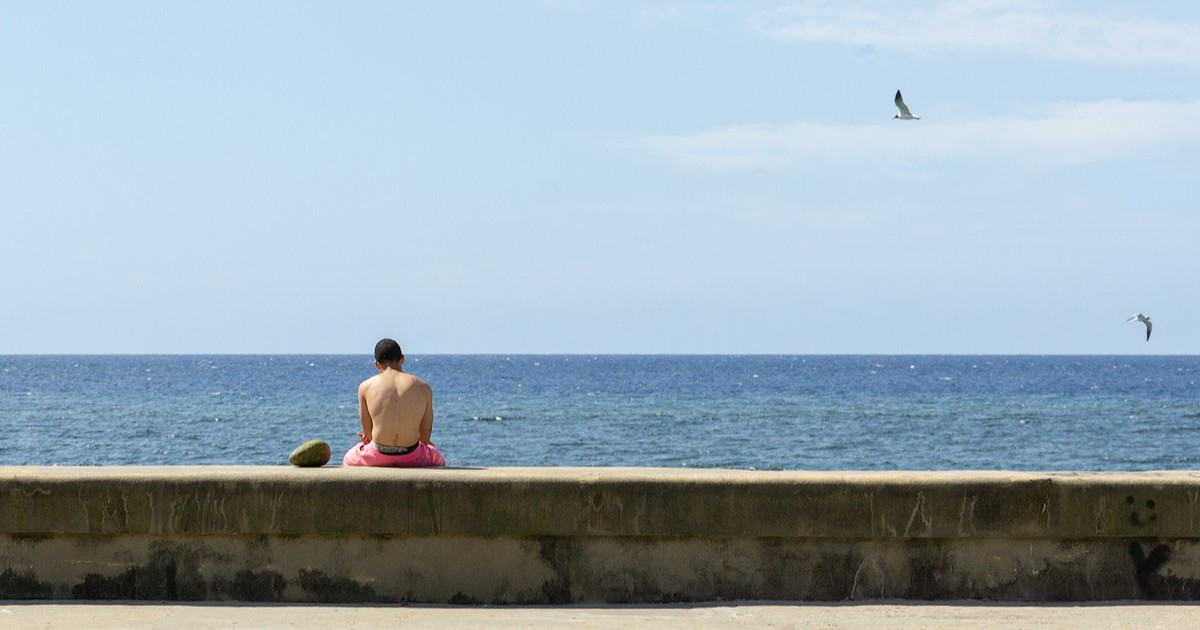
Walking over 15 kilometers to the beach, connecting the television to a portable battery to watch the World Cup, or taking the kids to the aquarium: this is how the Cuban summer of 2026 unfolds amid power outages and shortages.
Summer has become a test of endurance for millions of families seeking any morsel of enjoyment amid the worst energy crisis in the country's recent history.
"There are very few options; but what can we do, we can't go elsewhere. Here we have to stay until there is a change," summarized a Cuban in statements to the agency EFE.
The woman was spending the afternoon on a stretch of coast in the Playa municipality, which she reached on foot because there is no public transportation in the capital.
He acknowledged in a resigned tone that "Cubans love to party," and shared that to follow the 2026 World Cup, he had to connect the television to a portable power station or find out the results online.
In eastern provinces like Las Tunas, power outages exceed 72 consecutive hours. A woman from Las Tunas confessed that she was able to take advantage of a medical trip to Havana to take her children to the National Aquarium.
"We came for medical reasons, but we're trying to make sure the kids enjoy themselves and see the things that are not available back in Las Tunas, because there isn't much to do in the East," he expressed.
The most extreme case was recounted by a 60-year-old Havana resident who walks from Old Havana to the so-called 'Playita de 16' in Miramar, a distance of over 15 kilometers, to treat an ulcer with seawater due to a lack of money for medication.
"We have no electricity, we have no light, we have no water, we have nothing," he affirmed.
The few recreational alternatives available reflect the extent of the collapse. Childhood is one of the most affected sectors. The 2025-2026 school year ended early between June 15 and June 30 due to a lack of fuel and school transportation, leaving children at home with no accessible entertainment options.
The phrases "Mom, I'm bored" and "Mom, I'm hungry" have become symbols of the Cuban summer in 2026, even though it's an issue that has been experienced in many households for years.
While the regime approves packages of economic reforms whose effects are yet to be felt, Cubans continue to look for ways to survive the summer with what they have: a dirty street, a park without trees, a distant beach, and heat, a lot of heat.
Related videos:
Filed under: