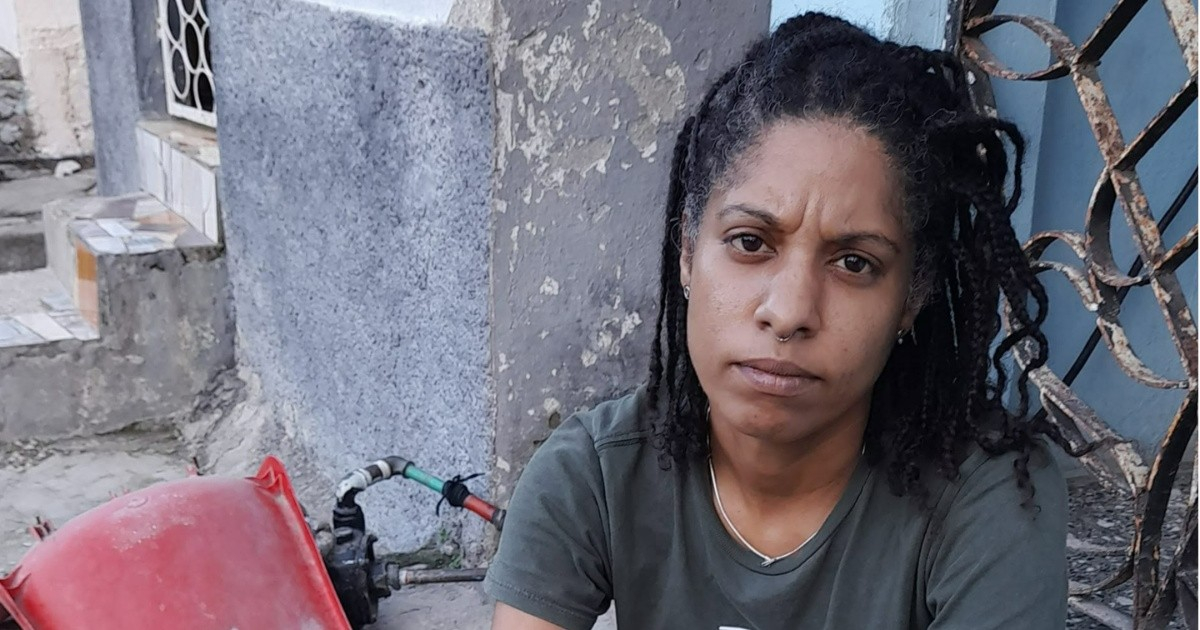
Gisselle Ordóñez Milián, known on social media as Zea Gisselle, reported to Martí Noticias that she was subjected to two hours of institutional pressure and "psychological torture" during an interrogation at the Sixth Unit of the Revolutionary National Police in Marianao, which she attended after highlighting the protests in her neighborhood against the blackouts on Facebook.
The citation, issued by the MININT with less than 24 hours' notice, referred to the event as an "interview," a term that Gisselle herself described as a "euphemism to avoid saying interrogation."
The young woman, 40 years old and a resident of the Zamora neighborhood, went accompanied by her young son as she had no one to leave him with. Authorities prevented the minor from entering, which created the first point of tension during the meeting.
The interrogation was conducted by two officials from the Directorate of Counterintelligence (DSE) identified as "Antonio" and "Luisito," alongside the criminal instructor "Andy."
During the meeting, the agents accused her of exercising "social leadership," publishing content deemed "enemies" on social media, organizing and directing local protests, and being linked to a cartel that appeared in a medical office near her home.
They also questioned her about alleged foreign financing and about photographs that the officials deemed an affront to national symbols.
Gisselle rejected all the accusations and refused to undergo a handwriting test in print, arguing that her writing could be used fraudulently to incriminate her in other matters.
Regarding the replication of her publications in independent media, the activist defended that "she cannot control nor is it her place to dictate how third-party platforms disseminate the information she shares openly."
The agents also resorted to emotional blackmail concerning the custody of her child, a tactic that Gisselle described as common for mothers in dissenting situations.
This is not the first time she has faced reprisals: on June 1, she was arrested, handcuffed, and threatened with the separation from her child during a previous protest in Zamora.
At the end of the interrogation, the instructors demanded that she sign a warning notice. Gisselle took advantage of the lines on the document to write in her own handwriting her commitment not to change her way of thinking or violate the Penal Code, which caused significant discomfort among the agents.
The organization Cubalex publicly denounced the case on Friday, describing it as a procedure characterized by "threats, intimidation, and the use of a minor as a means of pressure."
The Zamora neighborhood has been one of the epicenters of popular protests in Havana during 2026, driven by the energy crisis: since July 9, the area has been in continuous blackout without water, fuel, or mobile communications.
At the end of the interrogation, the agents warned Gisselle that she would be summoned again to Villa Marista, the headquarters of State Security, with the warning that "the procedure there would be different."
Related videos:
Filed under: